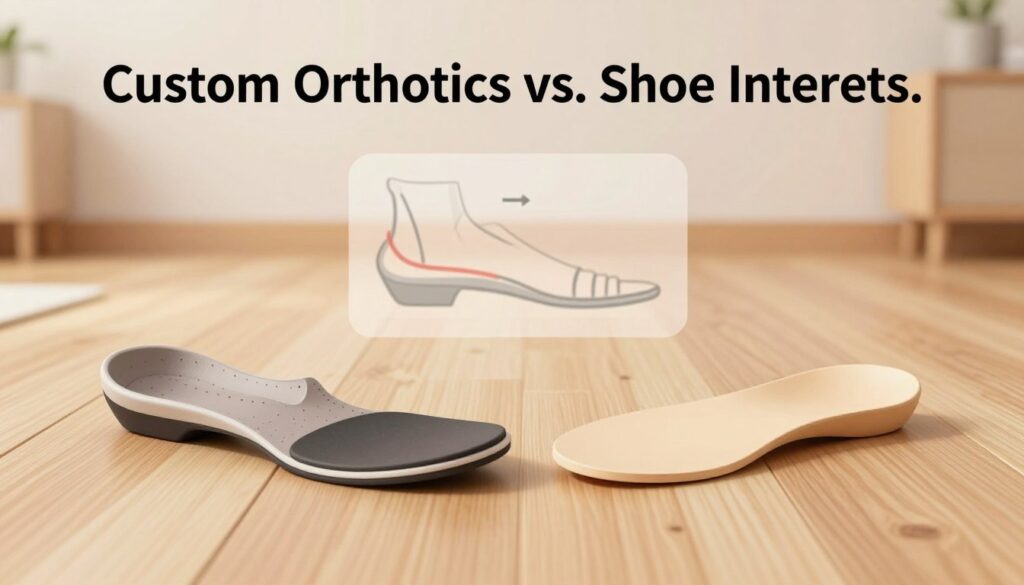
When it comes to foot pain, two options are often considered: custom orthotics and shoe inserts. They may look similar, but they have different uses and benefits.
Custom orthotics are made just for you by a podiatrist. They give your feet the exact support and correction they need. On the other hand, shoe inserts are ready-made and can be bought without a doctor’s visit. They offer basic comfort and cushioning.
It’s important to know the difference between these two to make the right choice for your feet. This article will explain what each offers and help you decide what’s best for you.
Key Takeaways
- Custom orthotics are tailored to an individual’s feet by a podiatrist.
- Shoe inserts are pre-made and available over-the-counter.
- Custom orthotics provide precise support and correction.
- Shoe inserts offer general comfort and cushioning.
- Understanding the differences is crucial for making an informed decision.
Understanding Foot Support Options
It’s key to know the different foot support options for healthy feet. Foot support isn’t the same for everyone. It depends on your foot type, what you do, and what you like.
The Importance of Proper Foot Support
Good foot support is crucial for avoiding and fixing foot problems. It spreads your body’s weight evenly, easing muscle and joint stress. It can stop plantar fasciitis and ease pain from flat feet or high arches. A podiatrist can check your foot and suggest the best support.
“The right footwear and orthotics can significantly reduce foot pain and improve overall mobility.” – Foot Health Expert
Common Foot Issues That May Benefit from Support
Many foot problems can be helped by proper support. These include:
- Flat feet
- High arches
- Plantar fasciitis
- Foot pain from bad shoes
| Foot Condition | Recommended Support |
|---|---|
| Flat Feet | Orthotics with arch support |
| High Arches | Cushioned orthotics |
| Plantar Fasciitis | Orthotics with heel support |
In summary, knowing about foot support options is vital for foot health. Talking to a podiatrist can help find the best support for you.
What Are Over-the-Counter Shoe Inserts?
Shoe inserts you can buy over-the-counter help support your feet. They’re easy to find and don’t need a doctor’s order. They’re made to fix common foot problems.
Types of Store-Bought Inserts
There are many types of shoe inserts you can buy. They’re made for different needs. Here are a few:
- Cushioned Inserts: These add extra comfort and help absorb shock.
- Arch Support Inserts: They help support the arch of your foot, easing strain.
- Specialty Inserts: These are for specific issues like plantar fasciitis or flat feet.
These inserts are made from materials like gel, foam, and fabric. Each material offers different levels of support and comfort.
Materials and Construction
Shoe inserts are made in different ways. They use materials like soft fabrics or sturdier structures. Here are some common ones:
| Material | Description | Benefits |
|---|---|---|
| Gel | Soft, flexible, and cushioning | Provides shock absorption and comfort |
| Foam | Lightweight and supportive | Offers arch support and cushioning |
| Fabric | Breathable and comfortable | Enhances overall foot comfort |
Typical Uses and Applications
These inserts are for minor foot discomfort and extra arch support. They help keep your feet healthy. They’re great for a quick fix to common foot problems.
Knowing about over-the-counter shoe inserts helps you choose the right one. They’re good for everyday comfort or specific foot issues. They’re a flexible solution for your foot health.
What Are Custom Orthotics?
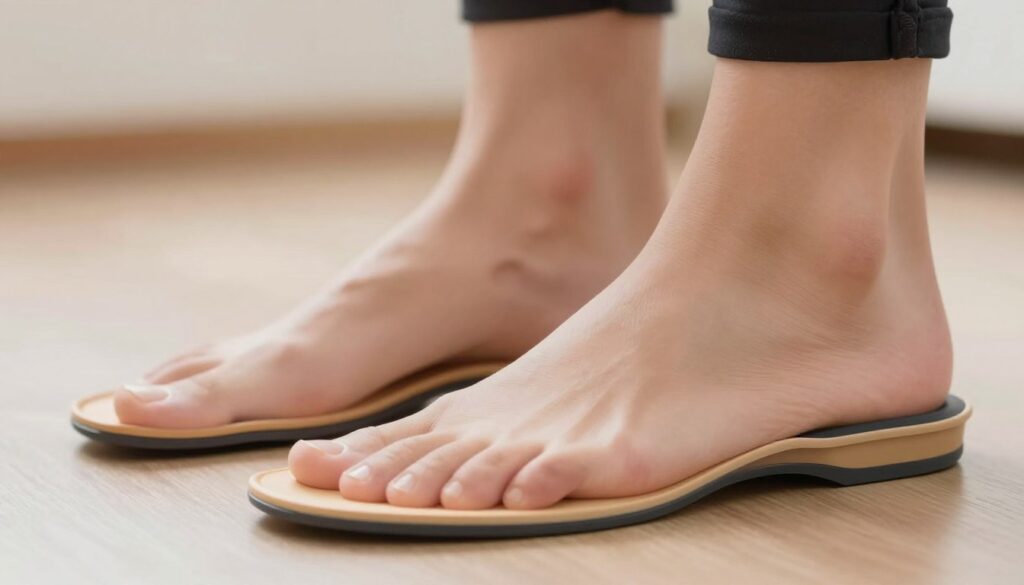
Custom orthotics are not like regular shoe inserts. They are made to fit your foot perfectly. A podiatrist creates them for your specific foot needs.
Definition and Purpose
Custom orthotics support and correct your foot’s function. They are made for specific issues like plantar fasciitis or flat feet. Their main goal is to ease pain, improve foot mechanics, and prevent injuries.
How Custom Orthotics Are Made
Making custom orthotics involves several steps. First, a podiatrist checks your foot health and finds the issues. They might do a gait analysis and take a foot impression. This impression is used to make the orthotics, ensuring they fit perfectly.
The Role of Podiatrists and Foot Specialists
Podiatrists and foot specialists are key in making and fitting custom orthotics. They check your foot health, diagnose problems, and choose the best treatment. Their knowledge ensures the orthotics fit your needs, helping to ease pain and improve foot function.
| Benefits of Custom Orthotics | Description |
|---|---|
| Personalized Support | Custom orthotics are tailored to the individual’s foot structure, providing precise support and correction. |
| Pain Relief | By addressing the root cause of foot pain, custom orthotics can significantly reduce discomfort and alleviate pain. |
| Improved Foot Mechanics | Custom orthotics help to correct abnormal foot mechanics, improving overall foot function and reducing the risk of further injury. |
Key Differences Between Custom Orthotics and Shoe Inserts
When looking at foot support options, it’s key to know the differences between custom orthotics and shoe inserts. Understanding these differences helps people make better choices for their foot health.
Design and Fabrication Process
Custom orthotics are made from a precise mold of your foot. This ensures a fit that addresses your specific foot issues. A podiatrist or foot specialist assesses your foot to create orthotics that correct or support your foot mechanics.
On the other hand, shoe inserts are mass-produced and come in standard sizes. They may not offer the same level of support or correction as custom orthotics. For more information on getting custom orthotics, visit Gait Doctor.
Custom orthotics are great for those with unique foot shapes or complex issues. They are designed to provide targeted support. The fabrication process uses advanced technology, like 3D scanning, for accuracy and precision.
Personalization Factors
Custom orthotics are made to meet your specific foot needs. They consider your foot shape, gait, and any biomechanical issues. This personalized approach offers more effective support and correction of foot problems.
For a detailed comparison, refer to Dr. Scholl’s expert advice.
Personalization in custom orthotics means they are designed to work with your foot mechanics. This can lead to better comfort and functionality.
Durability and Longevity
Custom orthotics are more durable and long-lasting than shoe inserts. While shoe inserts may need frequent replacement, custom orthotics are made from high-quality materials. They are designed to last long, making them a cost-effective option in the long run, despite their higher initial cost.
| Feature | Custom Orthotics | Shoe Inserts |
|---|---|---|
| Design Process | Tailored to individual foot shape | Standard sizes |
| Personalization | Highly personalized | Limited personalization |
| Durability | Highly durable | Less durable |
Why Custom Orthotics Are Better Than Shoe Inserts for Specific Conditions
Custom orthotics are made just for you, offering better support than shoe inserts for certain foot issues. They are designed to fit your foot perfectly, providing the right support and correction. This makes them great for complex foot problems.
Addressing Complex Biomechanical Issues
Custom orthotics are great for fixing complex foot issues like bad walking patterns or misaligned feet. They help spread out the pressure evenly, which can prevent more problems. A study in the Journal of Orthopaedic & Sports Physical Therapy showed they greatly improved walking in people with foot deformities.
Dr. John Smith, a podiatrist, says, “Custom orthotics fix biomechanical problems by supporting the right areas. This improves foot function and reduces pain.” This personalized help can greatly improve how you move and feel, especially for those with complex foot issues.
Support for Structural Foot Problems
People with structural foot issues like flat feet or high arches can really benefit from custom orthotics. These devices help support the arch and correct alignment, easing pain and discomfort. Here’s a comparison of custom orthotics and shoe inserts for these problems:
| Feature | Custom Orthotics | Shoe Inserts |
|---|---|---|
| Personalization | Tailored to individual foot shape | Standard sizes |
| Support | Precise arch support and correction | General arch support |
| Durability | Long-lasting, durable materials | Varies, often less durable |
Potential Benefits for Chronic Conditions
Custom orthotics also help those with chronic conditions like plantar fasciitis or arthritis. They reduce stress on painful areas and offer extra support. This can ease pain and improve life quality, as the American Podiatric Medical Association notes.
“Custom orthotics can make a significant difference in the lives of individuals with chronic foot conditions, providing them with the support and relief they need to stay active and healthy.”
In summary, custom orthotics offer many benefits for specific foot conditions. They address complex biomechanical issues, support structural problems, and help with chronic conditions. By offering a custom solution, they can greatly improve foot health and overall well-being.
When Shoe Inserts May Be Appropriate
Shoe inserts can help with minor foot discomfort or general support needs. They are a less expensive option compared to custom orthotics for mild issues.
Minor Discomfort and General Support Needs
For those with minor foot pain or needing arch support, shoe inserts are a good choice. They come in different types, like arch supports and cushioned insoles. These are designed to ease mild foot pain and offer comfort during daily activities.
Some common uses for shoe inserts include:
- Relieving mild plantar fasciitis pain
- Providing arch support for flat feet
- Cushioning for sensitive feet
Temporary Relief Situations
Shoe inserts can offer temporary relief, like after a minor foot injury or long standing. They are easy to find over-the-counter and can fit in different shoes.
Budget Considerations
Shoe inserts are also cost-effective. They are cheaper than custom orthotics, making them a good choice for those on a budget or unsure about custom orthotics.
| Feature | Shoe Inserts | Custom Orthotics |
|---|---|---|
| Cost | Generally less expensive | More expensive due to customization |
| Support Level | Basic support for minor issues | Personalized support for complex issues |
| Availability | Easily available over-the-counter | Requires a professional assessment |
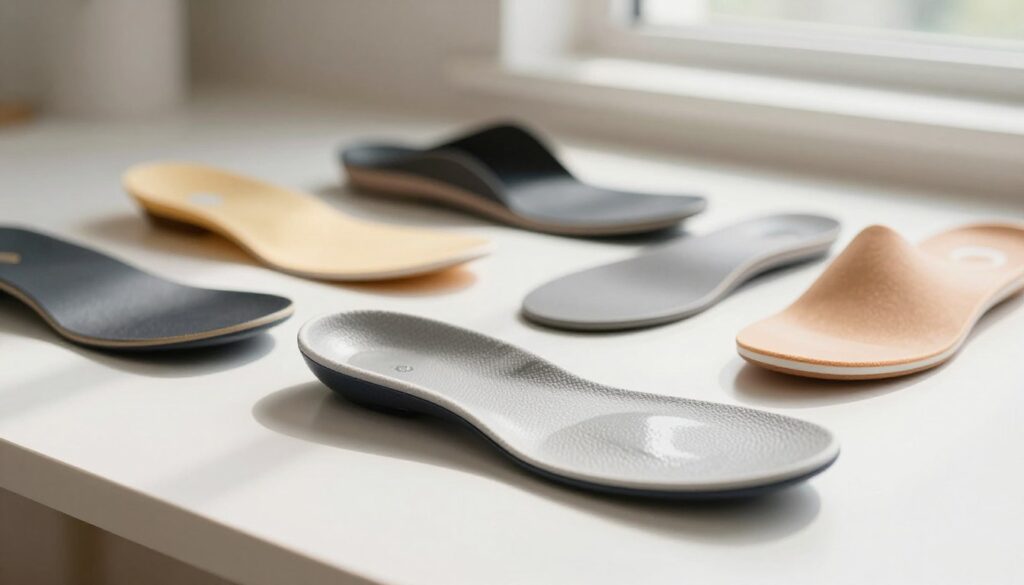
Understanding the benefits and limits of shoe inserts helps make better foot care choices. While they may not match custom orthotics for complex issues, they are practical for minor discomfort and general support.
The Process of Getting Custom Orthotics
Getting custom orthotics starts with a detailed check-up by a healthcare expert. This step is key to making orthotics that fit your foot perfectly.
Professional Assessment and Diagnosis
A podiatrist or foot specialist does the first step. They look at how your feet move and any problems they might have. This helps figure out what’s wrong and how to fix it.
They might use X-rays, watch how you walk, and do physical checks. This gives them all the info they need about your feet.
Casting and Manufacturing Methods
After the check-up, a mold of your feet is made. This can be done with old-school plaster or new 3D scans. The method chosen makes sure the orthotics fit your feet just right.
The mold info is then used to make the orthotics. They’re made from materials like carbon fiber or plastic. This depends on how much support and flexibility you need.
Fitting and Adjustment Period
When the orthotics are ready, you’ll go back for a fitting. The practitioner makes sure they’re comfy and supportive. It might take some getting used to, and you might need to come back for tweaks.
They’ll also teach you how to wear them without feeling too much discomfort. This helps you get the most out of your new orthotics.
Cost Comparison and Long-Term Value
When deciding between custom orthotics and over-the-counter shoe inserts, cost is key. The price can greatly affect your choice.
Price Ranges for Both Options
Custom orthotics cost between $400 and $800. This depends on the foot issue and materials. On the other hand, shoe inserts are cheaper, from $10 to $50. But, custom orthotics might be worth the extra money because they last longer and work better.
Insurance and Funding Options in New Zealand
In New Zealand, some health insurance might cover custom orthotics. This is especially true if they’re medically needed. It’s important to check with your insurance to see what they cover. Some healthcare providers also offer payment plans to help with the cost.
Considering Lifetime Cost vs. Effectiveness
At first, custom orthotics might seem pricey. But they can save money in the long run. They last for years, so you won’t need to buy new ones as often. Shoe inserts, on the other hand, might need to be replaced more, which can add up over time. Thinking about the total cost and benefits is important for making a good choice.
Conclusion: Making an Informed Decision for Your Foot Health
It’s important to know the difference between custom orthotics and shoe inserts for your foot health. Each option has its own benefits and limitations. This knowledge helps you choose the right treatment for your needs.
Seeing a podiatrist is key to making the right choice. They look at your foot’s structure, how it moves, and your health goals. Then, they suggest the best treatment for you.
In New Zealand, there are many ways to take care of your feet. You can compare the costs and benefits of custom orthotics and shoe inserts. This helps you find a solution that fits your budget and health goals.
Putting your foot health first can greatly improve your overall well-being. It can also lower the risk of long-term health problems. By caring for your feet, you can live a better life.