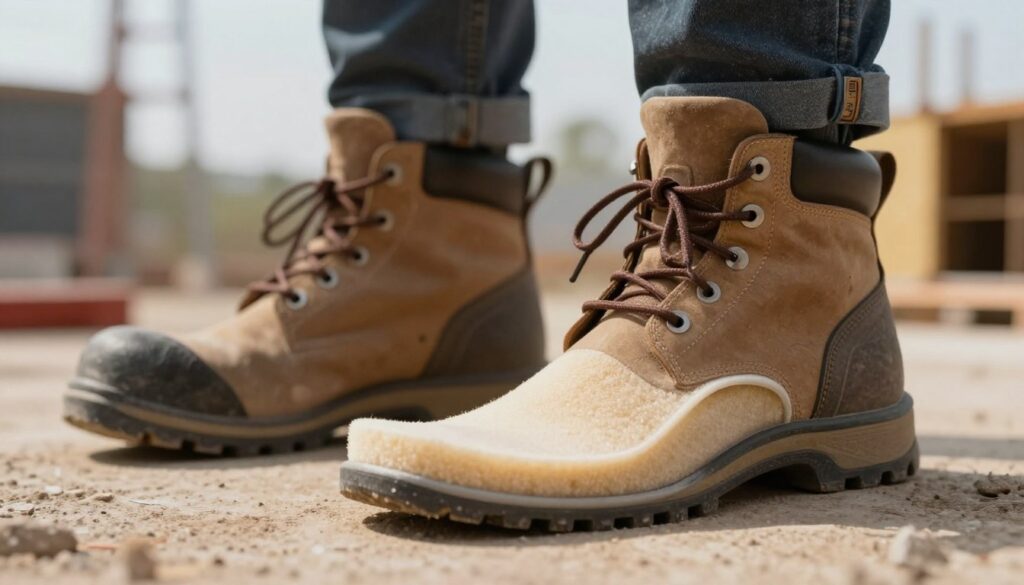
Proper foot support is key for those who are on their feet all day, especially in tough jobs. Inadequate foot support can lead to discomfort and fatigue, which might cause long-term problems. Orthotics are important for keeping feet healthy by offering the right support and stability.
Work boot orthotics are made to improve foot stability and lessen strain during long work hours. They add extra support, helping to solve common problems caused by bad shoes.
Key Takeaways
- Proper foot support is essential for comfort and health.
- Orthotics can provide necessary support and stability.
- Work boot orthotics can enhance foot stability.
- They can help reduce strain during long work hours.
- Additional support can alleviate common footwear issues.
The Daily Demands on Workers’ Feet
Daily work can really affect workers’ feet. People in different jobs face unique challenges that harm their foot health.
Common Workplace Foot Stressors
Workers often stand for long times, wear boots that don’t fit right, and walk on uneven floors. These things can make their feet tired and sore. They can also make foot problems worse or cause new ones.
The Impact of Extended Standing on Various Surfaces
Standing for long times on hard floors is hard on the feet. It gets worse when the floor is uneven or sloping. This can make ankles unstable and increase the chance of falling.
How Standard Work Boots Affect Foot Mechanics
Work boots protect feet but can also mess with how they work. Boots that don’t fit well or lack support can cause problems like overpronation or supination. This affects how the foot moves and works.
What Are Work Boot Orthotics?
It’s important to know what work boot orthotics are to see their benefits. These are special inserts made for workers’ feet. They offer extra support and comfort.
Definition and Purpose
Work boot orthotics are made to solve foot problems from wearing regular work boots. They aim to give enhanced arch support and better foot mechanics.
They are made to fix different foot issues. This way, workers can do their jobs without pain.
How They Differ from Regular Insoles
Unlike regular insoles, work boot orthotics provide targeted support. They fix specific foot problems like overpronation or supination.
They come in custom-made or off-the-shelf types. This meets different needs and preferences.
Materials and Construction Features
The materials in work boot orthotics vary, like foam, plastic, and carbon fiber. Each has its own benefits, like being durable or flexible.
| Material | Benefits | Common Use |
|---|---|---|
| Foam | Cushioning, Lightweight | General comfort |
| Plastic | Supportive, Durable | Custom orthotics |
| Carbon Fiber | Strong, Lightweight | High-performance orthotics |
Knowing about the materials and construction helps workers choose the right orthotics.
Potential Benefits of Work Boot Orthotics
Orthotics for work boots offer many benefits. They can make workers more comfortable and productive. These orthotics support the feet and solve foot problems, helping workers in many industries.
Enhanced Arch Support Possibilities
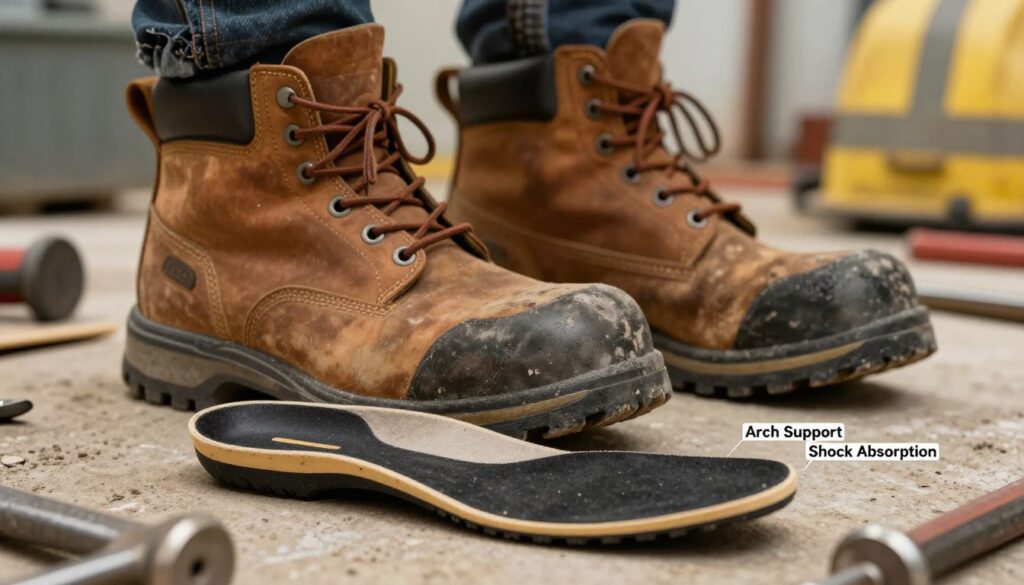
Work boot orthotics give enhanced arch support. This is key for those who are on their feet a lot. Good arch support cuts down on fatigue and discomfort.
These orthotics add extra support. This helps workers stay comfortable all day.
Improved Weight Distribution
Work boot orthotics also help with improved weight distribution. This is great for those who are on their feet a lot or work on uneven surfaces. They spread out the weight, easing pressure on the foot.
Shock Absorption Properties
The shock absorption properties of these orthotics are a big plus. They soak up the shock of each step. This reduces stress on the feet and joints.
This is especially good for workers who walk or run a lot on hard surfaces.
Alignment Assistance Options
Lastly, work boot orthotics offer alignment assistance. They help keep the foot in the right position in the boot. This can prevent injuries and improve foot health.
Common Foot Issues That May Respond to Orthotic Support
Many workers in New Zealand face foot problems that orthotics in work boots can help with. Orthotics are key in treating various foot conditions. They improve comfort and productivity at work.
Plantar Fasciitis Considerations
Plantar fasciitis causes pain in the heel and foot’s bottom due to inflammation. Orthotic support can ease this pain by adding arch support and cushioning. It helps reduce stress on the plantar fascia.
Flat Feet and Overpronation
Flat feet, or fallen arches, lead to overpronation. Orthotics can correct overpronation by supporting the arch and stabilizing the foot. This reduces injury risk and discomfort from flat feet.
High Arches and Supination
People with high arches may experience supination, causing ankle instability. Orthotics for high arches can help by adding cushioning and support. They promote a neutral foot position.
Heel Pain and Metatarsalgia
Heel pain and metatarsalgia (ball of the foot pain) are common. Orthotics can help by redistributing pressure and providing targeted support. For example, metatarsal pads can reduce pressure on the ball of the foot.
Orthotic support can help workers with common foot issues. It can reduce discomfort and improve foot health. It’s important to talk to a healthcare professional to find the right orthotics for your needs.
Types of Work Boot Orthotics Available in New Zealand
In New Zealand, workers have many options for work boot orthotics. They can choose from over-the-counter, custom-made, and semi-custom types. Each type meets different foot care needs and work settings.
Over-the-Counter Options
Over-the-counter orthotics are ready-made and come in standard sizes. They are a budget-friendly choice for basic foot support. You can find them in shoe stores or online.
Custom-Made Orthotics
Custom-made orthotics are made just for you. A podiatrist or healthcare professional creates them based on your foot’s shape and needs. They are great for those with specific foot problems or severe issues.
Creating custom orthotics involves a detailed process. Practitioners do gait analysis and foot exams. They design an orthotic that fits your needs perfectly.
Semi-Custom Alternatives
Semi-custom orthotics are a compromise between ready-made and custom-made. They are tailored to fit your foot but are more affordable than custom ones.
Material Variations and Their Applications
Work boot orthotics come in different materials. Each material offers unique support, cushioning, and durability. Here are some common ones:
- EVA (Ethylene-Vinyl Acetate): It’s great for cushioning and shock absorption.
- Polyurethane: It’s durable and good for heavy wear.
- Plastic: It’s supportive and often used in custom orthotics for precise control.
Knowing about the different types of work boot orthotics and their materials helps New Zealand workers choose the right foot care and support.
Selecting the Right Work Boot Orthotics for Your Needs
Finding the right work boot orthotics can greatly improve your foot health. Choosing them needs careful thought about several things. You must know your foot type, think about your work place, and check if they fit with your boots.
Understanding Your Foot Structure
It’s key to know your foot structure when picking orthotics. People with flat feet or high arches need different kinds of support. Experts say, “Custom orthotics are great for those with special foot shapes or problems.” Talking to a specialist can help figure out the best orthotic for you.
Considering Your Specific Work Environment
Your job setting affects the orthotics you need. For example, those who stand a lot on hard floors might need orthotics that absorb shock better. A guide on the best insoles for work stresses the importance of matching orthotics to your job’s needs.
Boot Compatibility Factors
It’s important that your orthotics fit well with your boots. Think about how thick the orthotics are and if they fit in the boot.
“The best orthotics are those that fit seamlessly into your work boots without causing discomfort or altering the boot’s fit.”
When to Consult a Podiatrist or Foot Specialist
If you’re not sure what orthotics you need, see a podiatrist or foot specialist. They can check your foot, suggest the right orthotics, and make sure they fit in your boots.
Installation and Adjustment Period for Work Boot Orthotics
Putting work boot orthotics in the right way means knowing about different boots and how feet work. This knowledge helps make sure the fit is both comfy and works well.
Fitting Orthotics in Different Boot Styles
Fitting orthotics into work boots can change based on the boot’s design. For example, boots with removable insoles are easy to fit. But, boots without these might need the orthotics trimmed to fit right.
Realistic Adjustment Period Expectations
Workers should know what to expect when adjusting to new orthotics. It usually takes a few days to a couple of weeks for the feet to get used to them.
Signs That Modifications May Be Needed
If you still feel uncomfortable after a while, it might mean you need changes. Talking to a chiropractor who specializes in orthotics can help figure out what to do next.
| Boot Style | Installation Ease | Adjustment Period |
|---|---|---|
| Boots with Removable Insoles | Easy | 1-2 weeks |
| Boots without Removable Insoles | Moderate to Difficult | 2-3 weeks |
Maintaining and Extending the Life of Your Work Boot Orthotics
To get the most out of your work boot orthotics, regular maintenance is key. Proper care can make them last longer and keep your feet supported.
Cleaning and Care Recommendations
Cleaning your work boot orthotics regularly is a must. Use a soft brush or cloth to wipe away dirt and debris. For a deeper clean, mild soap and water work well, but make sure to dry them thoroughly to avoid damage.
Recognizing When Replacement Is Necessary
Even with good care, work boot orthotics have a limited life span. Look for signs like visible wear, reduced support, or if they no longer fit in your boots. These are clear indicators it’s time for a new pair.
| Maintenance Task | Frequency | Benefits |
|---|---|---|
| Cleaning | Weekly | Removes dirt and debris, preventing damage |
| Inspection | Monthly | Identifies wear and tear early |
| Drying | After cleaning | Prevents moisture damage |
Strategies for Maximizing Orthotic Lifespan
To make your work boot orthotics last longer, consider using two pairs and switching between them. This lets each pair dry out fully. Always store them in a cool, dry place when not in use.
By following these easy maintenance and care tips, you can extend the life of your work boot orthotics. This ensures they keep supporting your feet for a long time.
Complementary Approaches to Foot Support for New Zealand Workers
Improving foot support for New Zealand workers involves several steps. These include choosing the right shoes, doing exercises, and making ergonomic changes at work. While work boot orthotics are key, other methods can also boost foot health.
Appropriate Footwear Selection for Different Industries
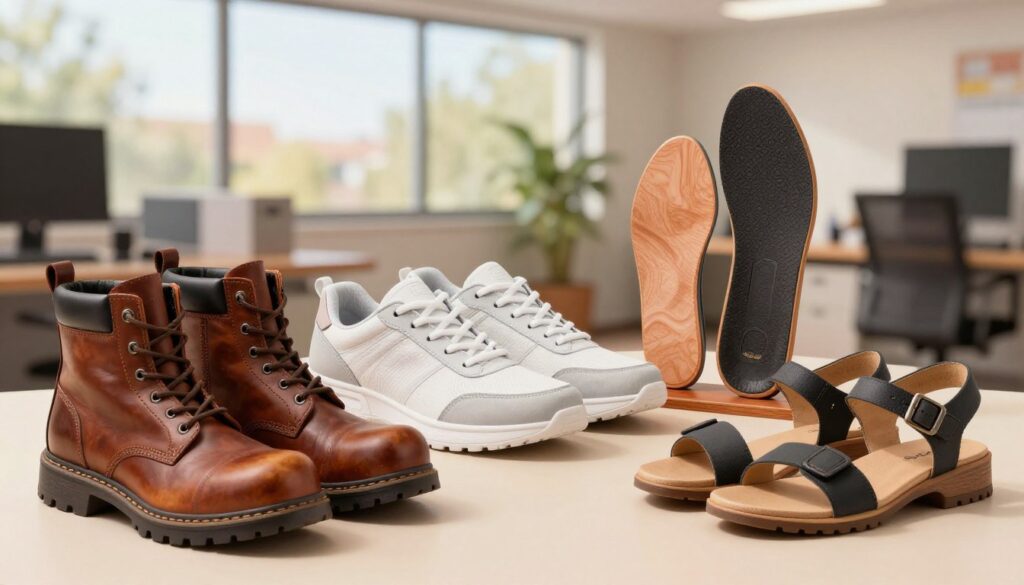
Choosing the right shoes is vital for workers in different fields. Each job has its own safety needs. For example, construction workers need boots with steel toes and slip-resistant soles. Meanwhile, manufacturing workers might need shoes with extra arch support.
Foot Strengthening Exercises
Exercises that strengthen the feet are very important. Simple moves like toe curls, heel raises, and toe spreads can help. “Regular foot exercises can greatly lower the chance of foot injuries and enhance foot function,” say podiatrists.
Workplace Ergonomics Considerations
Workplace ergonomics is also crucial for foot health. It’s important to set up workspaces to promote good posture and reduce foot strain. This includes adjusting work heights, using ergonomic mats, and taking breaks to stretch and move.
Rest and Recovery Strategies Between Shifts
Rest and recovery are key for workers who stand a lot. Elevating feet during breaks, using ice packs, and keeping feet clean can help. These steps are important for recovery.
By using these methods, New Zealand workers can get better foot support and health. This can help lower the risk of foot injuries at work.
Conclusion: Making an Informed Decision About Work Boot Orthotics
Work boot orthotics can greatly benefit workers who are on their feet for long hours. Knowing the benefits and types of orthotics helps make a smart choice. This choice depends on your foot needs and work environment.
Before choosing work boot orthotics, look at your foot shape, work setting, and boot fit. This info is key to picking the best orthotics. You might choose over-the-counter, custom, or semi-custom options.
Proper care and maintenance of orthotics can make them last longer. Wearing the right shoes, doing foot exercises, and improving your workspace ergonomics also helps. These steps support your feet and improve comfort.
Deciding on work boot orthotics means considering their benefits and your personal needs. With the right knowledge, workers in New Zealand can improve their foot health. This reduces the chance of foot problems at work.