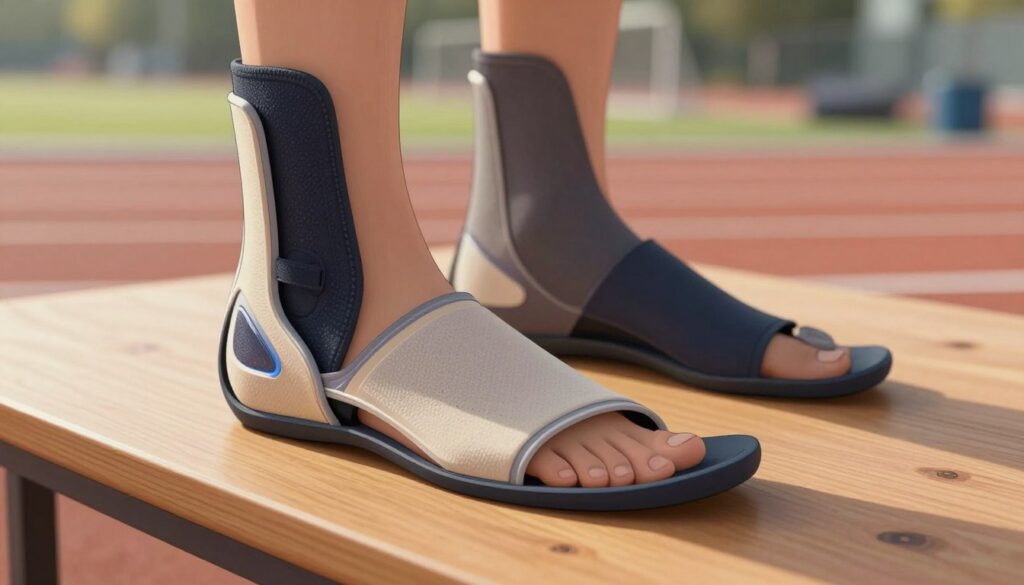
Athletes and people who are always on the move often face pain and discomfort from sports injuries. Orthotics are key in helping manage these issues. They let people keep up their performance.
Those with plantar fasciitis or foot problems find relief with custom orthotics. They offer specific support and ease the pressure on sore spots. Orthotics help fix uneven movement and cut down on repeated stress, making them a great tool for sports injury care.
Key Takeaways
- Custom orthotics provide tailored support for unique foot structures and gait.
- Orthotics help control foot motion, ensuring proper alignment and reducing strain.
- They minimize excessive pronation and address biomechanical asymmetries.
- Orthotics can be used preventively for individuals with flat feet or a history of plantar fasciitis.
- Expert professionals, like Dr. Sherry Roach, specialize in diagnosing and treating conditions with custom orthotics.
Understanding Sports Injury Orthotics
Sports injury orthotics are special devices for the foot, ankle, and lower limb during sports. They help athletes manage and recover from injuries.
What Are Sports Injury Orthotics?
Sports injury orthotics support and align the foot and ankle. They ease pain and discomfort from sports injuries. A practitioner helps choose the right orthotics for you.
Different Types of Sports Orthotics
There are many sports orthotics, each for different needs. The main difference is between custom and over-the-counter (OTC) options.
Custom vs. Over-the-Counter Options
Custom orthotics fit your foot perfectly, offering precise support. OTC orthotics provide general support and don’t need a prescription.
| Features | Custom Orthotics | Over-the-Counter Orthotics |
|---|---|---|
| Fit | Precise fit based on individual foot shape | Standard sizes, may not fit perfectly |
| Support | Targeted support for specific issues | General support |
| Cost | Generally more expensive | More affordable |
Knowing the difference between custom and OTC orthotics is key. Custom orthotics give precise support, but OTC options are cheaper for general support.
The Science Behind Sports Injury Orthotics
To understand sports injury orthotics, we must explore the biomechanics at play. These devices aim to fix biomechanical problems that can cause injuries.
Biomechanical Principles
Biomechanics is key to sports injury orthotics. It studies the body’s structure, function, and movement. Orthotics use these principles to fix or support abnormal movements that might harm us.
How Orthotics Affect Gait and Movement
Orthotics can change how we walk and move. They offer support and correct our alignment. This helps lower injury risk and boosts performance.
The Role of Pressure Distribution
Pressure distribution is vital for orthotics to work well. Good orthotics spread pressure evenly. This lessens strain on sensitive spots and aids in healing.
| Biomechanical Aspect | Effect of Orthotics |
|---|---|
| Gait Alignment | Improved alignment reduces injury risk |
| Pressure Distribution | Redistributes pressure to reduce strain |
| Movement Patterns | Corrects abnormal movements |
Common Sports Injuries That May Benefit From Orthotics
Orthotics are key in managing sports injuries. They help athletes recover and perform better. Many injuries can get better with orthotic support.
Lower Limb Injuries
Many athletes suffer from lower limb injuries. These include shin splints and runner’s knee. Orthotics can help by aligning the foot and ankle. This reduces strain on the lower limbs.
Foot-Related Conditions
Conditions like plantar fasciitis and Achilles tendonitis are common. Orthotics offer support and cushioning. They help ease pain and aid in healing.
Overuse Injuries
Overuse injuries happen from too much stress on muscles and joints. Orthotics provide extra support. They also lessen the impact on injured areas.
The table below lists common sports injuries that can benefit from orthotics:
| Injury Type | Orthotic Benefit |
|---|---|
| Shin Splints | Reduces strain on the lower leg |
| Plantar Fasciitis | Provides arch support and cushioning |
| Runner’s Knee | Helps realign the foot and reduce knee strain |
Knowing how orthotics help with these injuries can guide athletes. They can decide to use orthotics in their training and recovery.
Plantar Fasciitis and Orthotic Support
Plantar fasciitis causes pain in the heel and the bottom of the foot. It may benefit from orthotic support as part of treatment. This condition is due to inflammation of the plantar fascia, a tissue that supports the arch of the foot.
How Orthotics May Help Reduce Plantar Fascia Strain
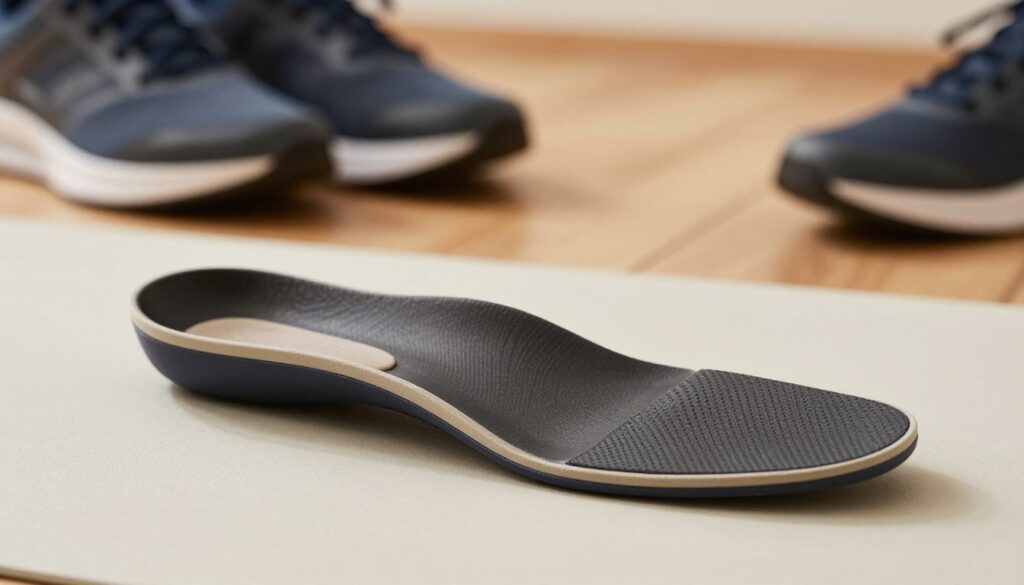
Orthotics can help reduce strain on the plantar fascia. They provide extra support and cushioning. This helps spread pressure evenly across the foot, reducing stress on the plantar fascia.
This can lead to less pain and inflammation. It’s a key part of treating plantar fasciitis.
Research on Orthotic Effectiveness for Plantar Fasciitis
Research shows orthotics are effective for plantar fasciitis. Studies found custom orthotics can greatly reduce pain and improve function. While results vary, orthotics are seen as a valuable treatment option.
Combining Orthotics with Other Treatment Approaches
For the best results, orthotics are used with other treatments. This includes stretching, physical therapy, and changing footwear. A comprehensive treatment plan can tackle the root causes of plantar fasciitis.
Addressing Shin Splints with Specialized Orthotics
Understanding why shin splints happen is key to treating them with orthotics. Shin splints, also known as medial tibial stress syndrome, are common in runners and athletes. They are caused by too much use.
Potential Biomechanical Causes of Shin Splints
Many biomechanical factors can lead to shin splints. These include overpronation, supination, and bad training methods. Research shows that bad walking mechanics are a big factor.
Orthotic Features That May Support Recovery
Special orthotics can help with shin splints by fixing biomechanical problems. They have:
- Arch support to lessen overpronation
- Cushioning to soak up shock
- Custom designs for each foot
These features help spread out pressure and lessen stress on the shin.
Gradual Return to Activity with Orthotic Support
Coming back to activity after shin splints needs to be slow. Orthotics offer extra comfort and safety. A slow return helps avoid injury and builds strength.
| Orthotic Feature | Benefit for Shin Splints |
|---|---|
| Arch Support | Reduces overpronation and stress on the shin |
| Cushioning | Absorbs shock and reduces impact on the lower leg |
| Customized Design | Provides a tailored fit to address individual biomechanical issues |
Knee Pain Management and Orthotic Intervention
Orthotics are seen as a possible fix for knee pain linked to foot mechanics problems. The link between foot mechanics and knee pain is clear. Abnormal foot mechanics often causes knee pain.
The Connection Between Foot Mechanics and Knee Pain
Bad foot mechanics can change how we walk, leading to knee pain. For example, overpronation or supination can mess with knee alignment. This causes discomfort and pain. Foot orthotics can offer support and fix these foot issues.
How Orthotics May Help Improve Knee Alignment
Orthotics can fix foot mechanics, improving knee alignment and reducing pain. They spread out foot pressure, easing knee joint strain. A study found that foot orthotics can cut knee pain in people with patellofemoral pain syndrome.
“The use of foot orthotics can significantly reduce knee pain in individuals with patellofemoral pain syndrome.”
Patellofemoral Pain Syndrome Considerations
Patellofemoral pain syndrome is common in athletes, causing pain around or behind the patella. Orthotics can help by aligning the knee better and easing stress on the patellofemoral joint. It’s key to talk to a healthcare expert to find the right treatment.
Materials and Technologies in Sports Injury Orthotics
The world of sports injury orthotics has seen big changes. New materials and technologies have been added. These help athletes perform better and recover faster by offering support and protection.
Common Materials and Their Properties
Orthotics are made from different materials, each with its own benefits. Polypropylene and polyethylene are favorites because they’re tough and flexible. They can be shaped to fit your foot perfectly, giving you the support you need.
Shock-Absorbing vs. Supportive Designs
Orthotics can either soak up shock or offer support. Shock-absorbing orthotics use materials that lessen the impact on joints. On the other hand, supportive designs aim to fix biomechanical problems. The right choice depends on the injury and what the athlete needs.
Innovative Features in Modern Orthotics
Today’s orthotics come with cool tech like customizable carbon fiber and advanced cushioning systems. These features make orthotics more effective in treating injuries. “The right orthotic can make a big difference in an athlete’s recovery and performance,” says a top sports medicine expert.
Sports Injury Orthotics for Runners
Orthotics are key in managing and preventing running injuries. Runners often face overuse injuries from repetitive stress. Orthotics help by supporting the body and improving how it moves.
Common Running Injuries That May Benefit From Orthotics
Plantar fasciitis, shin splints, and runner’s knee are common injuries. They can be caused by overuse, bad foot mechanics, or poor shoes. Orthotics can help by spreading out pressure and supporting the body.
| Injury | Orthotic Benefit |
|---|---|
| Plantar Fasciitis | Reduces stress on the plantar fascia |
| Shin Splints | Provides support to reduce strain on the lower leg |
| Runner’s Knee | Helps improve knee alignment and reduce pain |
Selecting the Right Orthotic for Running Activities
Choosing the right orthotic depends on the runner’s type, biomechanics, and injury. Custom orthotics are best because they fit the runner’s foot and style. Always get advice from a healthcare professional.

Integration with Running Footwear
Orthotics work best with the right running shoes. The right shoe adds support and cushioning. Runners should pick shoes that match their orthotics and running style.
Using orthotics with the right shoes and training can lower injury risk. It also improves performance.
Court and Field Sport Applications
For athletes in court and field sports, orthotics are key. They offer the support needed for quick changes in direction. Sports like basketball, tennis, and soccer require fast lateral movements and quick starts. These actions can stress an athlete’s lower limbs a lot.
Basketball, Tennis, and Soccer Considerations
Athletes in these sports need orthotics that support lateral movement and quick turns. These orthotics spread pressure evenly across the foot. This helps lower the risk of injuries.
Orthotic Solutions for Lateral Movement Sports
Orthotics for these sports give extra support to the foot’s arch and ankle. They help athletes make sharp cuts and quick changes without getting hurt. These orthotics are made from materials that balance support and flexibility.
Balancing Performance and Protection
Designing orthotics for court and field sports is a big challenge. It’s about balancing performance enhancement with injury protection. Good orthotics should prevent injuries and help athletes perform at their best.
The Assessment Process for Sports Orthotics
Finding the right sports orthotics starts with a detailed assessment process. This first step is key to figuring out what each person needs. It could be to fix an injury or boost performance.
Professional Evaluation Methods
A deep orthotics evaluation uses many professional methods. Experts might look at how you walk and move with gait analysis and biomechanical checks. A study on PMC shows these steps are vital for making orthotics that fit just right.
What to Expect During an Assessment
At an assessment, you’ll get a close look at your foot and gait. They might check for leg length issues or muscle imbalances too. The expert will watch how you move and might use special tools to measure things.
The Importance of Proper Diagnosis
Proper diagnosis is the base of good sports orthotics. Without it, the orthotics might not fix the real problem. This could lead to more pain or injury. A right diagnosis means the orthotics will really help you.
Knowing about the assessment process helps see how sports orthotics can help. It’s all about getting the right fit for your needs.
Adapting to Your New Sports Orthotics
Getting used to new sports orthotics takes time and patience. It’s important to know about the challenges you might face and how to deal with them.
The Break-in Period
The time it takes to get used to new orthotics varies. It can be a few weeks for your feet to adjust to the new support. Start by wearing them a little each day to help your feet get used to them.
Potential Adjustment Challenges
Some people might feel discomfort or pain at first. This could be because of the new way your foot moves or the extra support. Listen to your body and adjust how often you wear them.
“Proper adaptation to orthotics can significantly enhance athletic performance and reduce injury risk.”
Signs That Modifications May Be Needed
If you keep feeling pain or discomfort, it might mean you need to make changes. Look out for signs like redness, blisters, or feeling unstable. It’s important to talk to a healthcare professional about these issues.
| Signs | Possible Causes | Actions |
|---|---|---|
| Persistent Pain | Insufficient Support | Consult a Professional |
| Redness or Blisters | Poor Fit | Adjust or Modify |
| Instability | Inadequate Alignment | Re-evaluate Orthotic Design |
Knowing how to adapt and what challenges you might face helps you use your new sports orthotics better.
Conclusion: Integrating Orthotics Into Your Recovery Plan
Orthotics are key in managing injuries and helping with recovery. They offer support and stability to injured spots. Knowing about different types of sports injury orthotics helps people make smart choices for their recovery.
A good recovery plan with orthotics can ease issues like plantar fasciitis, shin splints, and knee pain. It’s important to get a proper assessment for the right orthotic solution.
When starting with new orthotics, a slow introduction and possible tweaks might be needed. Adding orthotics to your recovery plan can make your rehab better. This way, you can get back to your sport or activity with confidence.
Using orthotics for injury management lets people perform well and lowers the chance of more injuries. A full recovery plan, including orthotics, is key to the best results.