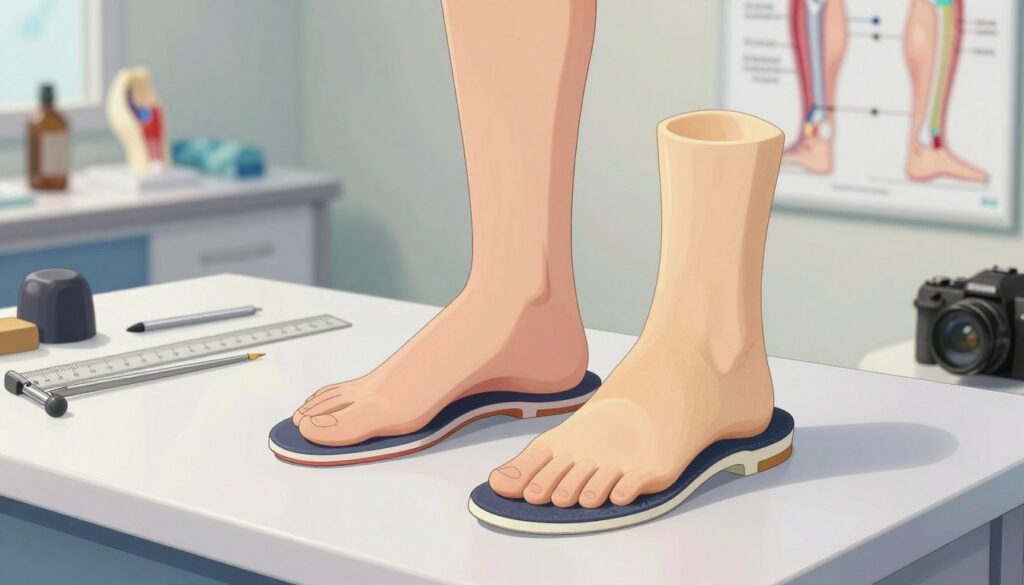
Leg length discrepancy can cause a lot of discomfort and affect how you move. People with this issue often feel pain and struggle with everyday tasks. It’s important to know how custom orthotics can help manage this problem.
Getting a professional check-up from a podiatrist or foot specialist is key. They can spot leg length discrepancies and suggest the right treatment. Customized orthotics can make a big difference in how comfortable and mobile you feel.
Key Takeaways
- Leg length discrepancy can cause pain and mobility issues.
- Custom orthotics can help alleviate discomfort and improve mobility.
- A professional assessment is necessary for proper diagnosis and treatment.
- Orthotic solutions come in various forms, including custom insoles and ankle-foot orthoses.
- Selecting the right orthotic involves considering individual needs and preferences.
Understanding Leg Length Discrepancy
It’s key to understand leg length discrepancy to tackle related issues that impact daily life. This condition means one leg is longer than the other.
Types of Leg Length Discrepancy
There are two main types: structural and functional. Structural means the bones in one leg are actually longer. Functional is when the bones are the same length, but other issues make one leg seem longer or shorter.
Common Causes and Prevalence
Many things can cause leg length discrepancy, including:
- Injuries or trauma to the legs
- Infections that affect bone growth
- Congenital conditions present at birth
- Neuromuscular conditions that affect muscle tone and strength
Research shows it’s quite common, affecting many people to different extents.
How Leg Length Discrepancy Affects Biomechanics
It can greatly affect how our body moves, leading to:
- Changes in how we walk, which can wear down joints unevenly
- Strains on other parts of the body as we try to compensate
- Possible long-term problems like chronic pain or joint disease
The impact on biomechanics highlights the need for accurate diagnosis and treatment to avoid long-term issues.
Signs and Symptoms That May Indicate a Leg Length Discrepancy
Leg length discrepancy can show in many ways. People with this issue might feel pain in their lower back, hips, or legs. This pain comes from the body trying to adjust to the difference.
Pain can range from mild to severe. It often gets worse when you walk or stand for a long time.
Another sign is limping or an odd way of walking. This is because of the leg length difference. As one expert says,
“A leg length discrepancy can significantly affect an individual’s gait, potentially leading to further complications if not addressed.”
Functional Limitations
People with this issue might find it hard to walk or stand for a long time. They might get tired faster because their body has to work harder to adjust.
When to Seek Professional Assessment
If you’re always in pain or notice you’re limping, get help from a doctor. They can figure out what’s wrong and suggest how to fix it. Getting help early can stop more problems and help you feel better.
Spotting the signs early helps a lot. Getting a professional to check you out is the first step to finding the right treatment.
How Leg Length Discrepancy Is Assessed
Assessing leg length discrepancy involves several steps. These include clinical evaluation, imaging, and gait analysis. A detailed assessment is key to finding the right treatment, like orthotics.
Clinical Evaluation Methods
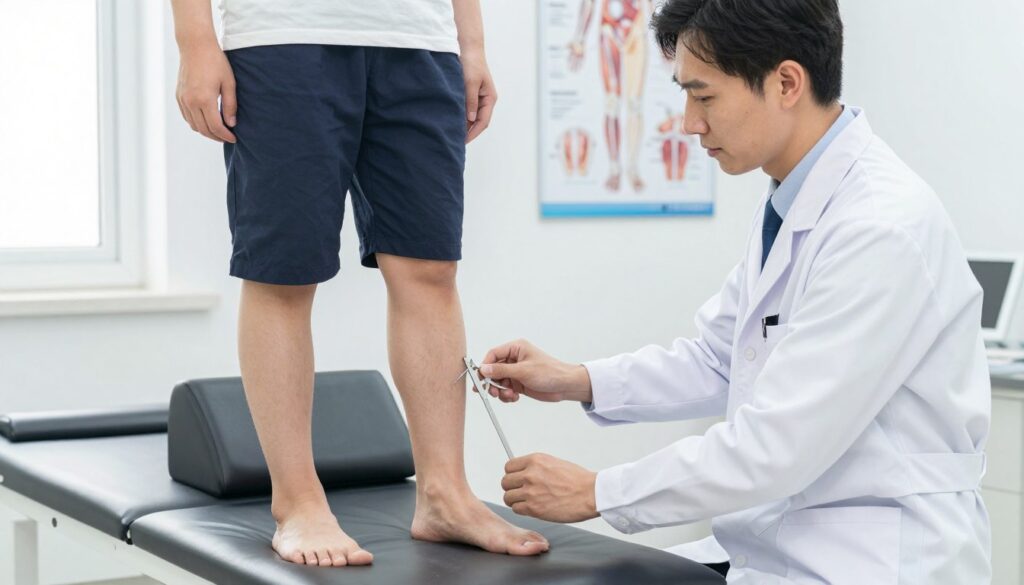
The first step is a clinical evaluation. A podiatrist or orthopedic specialist will measure your legs. They use tools like tape measures to find any differences.
Imaging Techniques
Imaging, like X-rays, gives a precise leg length measurement. These images show bones and joints clearly. X-rays help measure the femur and tibia lengths accurately.
Gait Analysis
Gait analysis is also crucial. It looks at how you walk to spot any issues linked to leg length difference.
Static Assessment
In a static assessment, you stand or sit still. This lets the practitioner check leg alignment and spot any differences.
Dynamic Assessment
A dynamic assessment watches you walk or move. It shows how the leg length difference affects your gait and biomechanics. This helps understand the functional impact of the discrepancy.
By using these methods together, healthcare professionals can fully understand the leg length discrepancy. They can then create a good treatment plan.
Orthotics for Leg Length Discrepancy: Mechanism and Benefits
For those with leg length discrepancy, orthotics might help. They support and balance the body. This can ease discomfort from unequal leg lengths.
How Orthotics May Help Balance the Body
Orthotics offer support for leg length differences. They help distribute weight evenly. This reduces strain on the longer or shorter leg.
By doing this, orthotics can improve posture. They might also lower the risk of musculoskeletal problems.
Potential Benefits for Posture and Alignment
Orthotics can improve posture by aligning legs and pelvis. This is key for joint health and a healthy gait. It also eases strain on the back and hips.
Using orthotics for leg length discrepancy can bring several benefits:
- Enhanced balance and stability
- Reduced discomfort and pain
- Improved posture and alignment
- Potential reduction in the risk of secondary musculoskeletal issues
Limitations and Realistic Expectations
Orthotics have their limits. They’re not a fix for everyone. Their success depends on the discrepancy’s severity and how well you adapt to them.
It’s key to have realistic hopes for orthotics. They can manage the condition but are part of a larger treatment plan. This plan might include physical therapy and lifestyle changes.
Types of Orthotics Used for Leg Length Discrepancy
People with leg length discrepancy often need orthotics to feel better and move easier. Orthotics help support and balance the legs, making life better.
Heel Lifts and Their Applications
Heel lifts are a common solution for leg length issues. They add a lift to the shoe’s heel to match leg lengths. They can be made from rubber, plastic, or leather, and are tailored to fit each person.
Benefits of Heel Lifts:
- Easy to implement and adjust
- Can be transferred between different shoes
- Available in various thicknesses to accommodate different discrepancies
Full-Length Shoe Inserts
Full-length shoe inserts are another option for leg length issues. They support the whole foot and spread out pressure. They’re great for those with big leg length differences or need extra arch support.
Key Features:
- Provide comprehensive foot support
- Can be customized to address specific foot conditions
- Help in improving balance and reducing strain on the foot and ankle
Custom vs. Over-the-Counter Options
There are custom and over-the-counter (OTC) orthotics to choose from. Custom orthotics fit your foot perfectly, offering better support and comfort.
Custom Orthotics: Fit your foot exactly, address complex issues, and meet your unique needs.
OTC Orthotics: Easier to find and less expensive, OTC orthotics are a good start for mild issues or if you’re unsure about custom ones.
External Shoe Modifications
Shoe modifications can enhance orthotics’ effect. This includes changes to the sole or heel of the shoe.
Sole Modifications
Sole modifications add or change the sole to fit orthotics better. This improves your gait and reduces shoe wear.
Heel Modifications
Heel modifications, like adding a lift or changing the shape, customize the shoe. This is especially helpful for those with big leg length differences.
In conclusion, there are many orthotics for leg length discrepancy, each with its own benefits. Knowing your options helps you choose the best treatment.
The Process of Getting Custom Orthotics
Getting custom orthotics starts with a detailed assessment by a healthcare professional. This first step is key to figuring out what you need. It helps decide if custom orthotics are right for you.
Initial Assessment with a Healthcare Professional
Your journey to custom orthotics begins with a visit to a podiatrist or orthotist. They will look at your condition, medical history, and how you live. They’ll decide if you need custom orthotics and what kind you should get.
Casting and Measurement Techniques
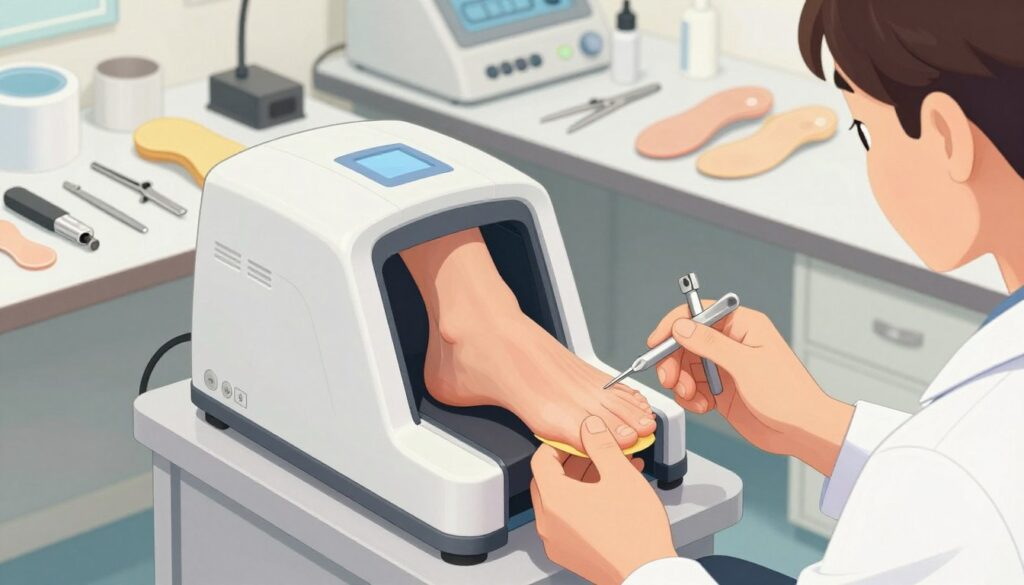
After deciding on custom orthotics, precise measurements and casts are taken. This can be done in several ways, like plaster casting or digital scanning. These methods capture the exact shape and size needed for your orthotics.
Fitting and Adjustment Period
Once your orthotics are made, you’ll come back for a fitting. The healthcare professional will check how they fit and make any needed changes. It’s normal for some tweaks to be necessary as you get used to wearing them.
Follow-up Care and Modifications
Regular check-ups are important to see how you’re doing and make any needed changes. This care ensures your orthotics keep supporting and feeling good over time.
The healthcare professional plays a big role in guiding you through this process. They make sure your custom orthotics fit your needs perfectly. Knowing the steps helps you understand the personal care that custom orthotics provide.
Complementary Approaches to Managing Leg Length Discrepancy
There are many ways to help with leg length discrepancy besides orthotics. These methods aim to improve muscle function and lessen pain.
Physical Therapy Interventions
Physical therapy is key in managing leg length discrepancy. Therapists create custom exercise plans. These plans strengthen muscles, improve flexibility, and reduce pain.
They use various techniques like manual therapy, stretching, and strengthening exercises.
Targeted Exercise Programs
Exercise programs tailored for leg length discrepancy are vital. They balance muscle strength and flexibility between legs. Exercises focus on hip, knee, and ankle stability, and core strengthening.
Examples of exercises include:
- Single-leg squats to improve balance and strength
- Calf raises to enhance ankle stability
- Core exercises like planks to improve overall posture
Other Conservative Treatment Options
Other treatments include chiropractic care, massage therapy, and acupuncture. These aim to reduce pain, improve joint mobility, and enhance well-being. While their effectiveness varies, they’re often used with orthotics and physical therapy.
When Further Medical Consultation Might Be Appropriate
Knowing when to seek further medical advice is crucial. If symptoms don’t improve or get worse, it’s time to see a healthcare professional. They can suggest more treatments or adjust your current plan.
| Complementary Approach | Benefits |
|---|---|
| Physical Therapy | Improves strength, flexibility, and reduces pain |
| Targeted Exercise Programs | Balances muscular strength and flexibility |
| Chiropractic Care | Reduces pain and improves joint mobility |
Living with Orthotics: Practical Considerations
Starting your journey with orthotics means understanding a few key things. For those with leg length discrepancy, orthotics can be a big help. But, there are important points to keep in mind for them to work well.
Footwear Selection and Compatibility
Finding the right shoes is key when you have orthotics. The shoes need to work well with the orthotics, giving enough room. It’s best to pick shoes with removable insoles for a good fit.
Here are some things to think about:
- Depth: The shoe should be deep enough for the orthotic without putting pressure on your foot.
- Width: Make sure the shoe is wide enough for the orthotic to fit comfortably.
- Material: Choose shoes made of breathable materials for better comfort.
Activity Modifications and Adaptations
Wearing orthotics might mean changing how you do some activities. Orthotics can make moving around easier and more comfortable. But, some activities might need to be done differently to avoid discomfort or injury.
Maintenance and Replacement Guidelines
Keeping your orthotics in good shape is important. Regular cleaning and checking for wear can spot problems early. For more tips on caring for your orthotics, check out https://gaitdoctor.co.nz/orthotics-questions-answers/.
Knowing when to replace your orthotics is also key. You should get new ones every 2-3 years or sooner if they show a lot of wear.
Potential Challenges and Solutions
There can be challenges when you’re living with orthotics, like feeling uncomfortable at first. Knowing about these challenges and how to solve them is important.
Comfort Issues
Some people might feel uncomfortable when they first start wearing orthotics. This can usually be fixed by slowly getting used to wearing them.
Adaptation Period
How long it takes to get used to orthotics can vary. It’s important to listen to your healthcare professional for advice. They can help you adjust smoothly to wearing orthotics.
Conclusion
Leg length discrepancy can really affect someone’s life. It can cause pain, change how they stand, and affect how they move. Orthotics can help by providing support and balance.
Orthotics can improve posture and reduce muscle strain. They also help with mobility. There are many types, like heel lifts and custom shoe inserts, to fit different needs.
Seeing a healthcare professional is key to finding the right orthotics. They will look at your situation and suggest the best treatment. Orthotics work best when used as directed by a professional.
This info is for learning, not a replacement for doctor’s advice. If you think you have leg length discrepancy, see a healthcare expert. They can give you advice that fits your needs.