Runners are always looking for ways to get better and avoid injuries. One thing they’re trying is custom orthotics. These are made to help with foot biomechanics. They offer extra support and fix biomechanical problems, which can make running smoother and easier on the body.
Good foot biomechanics are key for runners to do well and stay injury-free. Custom orthotics give personalized support based on your foot and how you run. This can make your running better and lower the chance of getting hurt.
Key Takeaways
- Custom orthotics can enhance running performance by supporting proper foot biomechanics.
- They can help prevent injuries by correcting biomechanical issues.
- Personalized support is tailored to an individual’s foot shape and running style.
- Improved running mechanics can lead to better overall performance.
- Custom orthotics can reduce the strain on muscles and joints.
Understanding Running Biomechanics and Foot Function
Knowing how running works is key to doing better and staying injury-free. The foot, with its 26 bones, 33 joints, and over 100 muscles, is very important in this process.
The Gait Cycle Explained
The gait cycle is the series of steps we take when walking or running. It has two main parts: stance and swing.
Stance Phase Considerations
In the stance phase, the foot touches the ground. It absorbs shock and holds up our body weight. This part is crucial for runners because it affects how well and comfortably they run.
Swing Phase Dynamics
The swing phase happens when the foot is off the ground. It swings forward, getting ready for the next step. Keeping the swing phase smooth is important for a good gait.
Common Biomechanical Patterns in Runners
Runners have different ways of landing their feet. Knowing these patterns helps spot problems and improve running.
Individual Variations in Foot Strike
How runners land their feet varies. Some land on their heels, others on their midfoot, and some on their forefoot. Each way affects how efficient and safe running is.
| Foot Strike Pattern | Characteristics | Implications |
|---|---|---|
| Heel Strike | Landing on the heel with the foot striking the ground first | Higher impact on joints |
| Midfoot Strike | Foot lands flat, with the middle part striking the ground first | More evenly distributed impact |
| Forefoot Strike | Landing on the ball of the foot | Reduced impact on joints, potentially more strain on calf muscles |
What Are Custom Orthotics and How They Differ from Off-the-Shelf Insoles
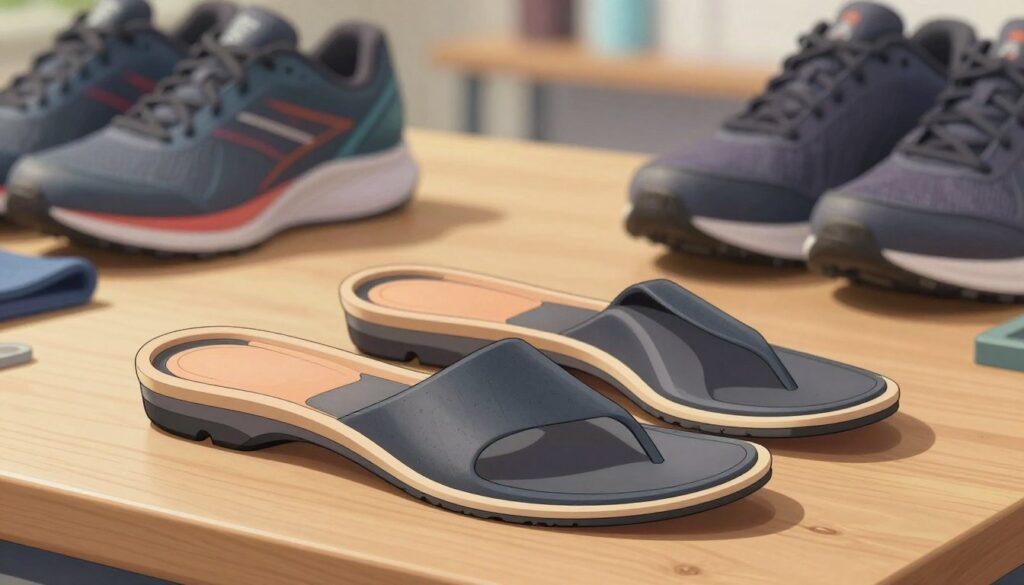
Custom orthotics are made to fit each runner’s needs. They are not like generic insoles. Instead, they are made to solve specific foot problems and improve running.
Definition and Manufacturing Process
Custom orthotics are bespoke devices made for each person’s feet. The process starts with a podiatrist or orthotic specialist. They check how the runner’s feet move and walk.
Materials Commonly Used
Custom orthotics use different materials like ethylene-vinyl acetate (EVA) and polyurethane. The choice depends on the support, flexibility, and durability needed.
Digital vs. Traditional Casting Methods
There are two ways to make custom orthotics: digital and traditional casting. Digital uses a 3D scanner, while traditional uses a plaster cast. Digital is more precise, but traditional offers a hands-on feel.
Key Differences Between Custom and Pre-Made Options
Custom orthotics offer more personalized support than off-the-shelf insoles. They are made for specific foot problems. Off-the-shelf insoles are more general.
Fit Considerations
Custom orthotics fit each person’s feet perfectly, making them more comfortable and supportive. Off-the-shelf insoles are standard sizes and might not fit as well.
Durability Factors
Custom orthotics last longer than off-the-shelf insoles because they are made from better materials. How long they last depends on how much they are used and how well they are taken care of.
| Feature | Custom Orthotics | Off-the-Shelf Insoles |
|---|---|---|
| Personalization | Highly personalized | Generic |
| Support Level | Tailored to individual needs | Standard support |
| Durability | Highly durable | Variable durability |
The Potential Benefits of Custom Orthotics for Runners
Custom orthotics can help runners in many ways. They can improve how a runner’s foot aligns and feel more comfortable. Runners often notice they run better and feel more at ease with these orthotics.
Support for Proper Alignment
Custom orthotics offer tailored support for each runner’s foot. This personalized support helps keep the foot in the right position while running. It might lower the chance of getting hurt.
Potential Impact on Running Efficiency
Custom orthotics can also make running more efficient. They support the foot and fix any biomechanical issues. This can lead to improved performance as runners go on.
Possible Comfort Improvements
Runners often feel more comfortable with custom orthotics. Studies show that those using orthotics felt 1.27 points more comfortable than those without. This comfort comes from better pressure distribution, shock absorption, and foot support.
- Better pressure distribution
- Enhanced shock absorption properties
- Improved overall foot support
Pressure Distribution Effects
Custom orthotics ensure even pressure on the foot. This makes running more comfortable and can prevent foot problems.
Shock Absorption Properties
They also absorb shock better. This reduces the stress on joints, making running easier on the body.
Custom orthotics are a great help for runners. They support the foot, improve running efficiency, and boost comfort. These benefits address many common issues runners face.
Common Running-Related Foot Conditions That May Respond to Orthotic Support
Runners often face foot issues that can be helped by custom orthotics. These problems can affect how well they run and how comfortable they feel. Orthotics are made to support the foot and ease pain, which can make running better and lower injury risks.
Plantar Fasciitis Considerations
Plantar fasciitis is a common issue for runners. It causes pain in the heel and the bottom of the foot due to inflammation. Orthotics can play a crucial role in managing this condition.
How Orthotics May Help
Custom orthotics can help with plantar fasciitis by offering arch support and cushioning. This reduces stress on the plantar fascia. It can aid in healing and lessen pain.
Achilles Tendinopathy Management
Achilles tendinopathy affects runners, causing pain and swelling in the Achilles tendon. Orthotic support can help manage this condition.
Supportive Approaches
Orthotics can offer heel support and lessen strain on the Achilles tendon. They adjust the foot’s biomechanics. This can reduce tendon stress, aiding in healing.
Metatarsalgia and Forefoot Pain
Metatarsalgia is pain in the ball of the foot, common among runners. Custom orthotics can help by spreading pressure evenly across the foot.
Potential Relief Mechanisms
Orthotics provide metatarsal support and cushioning. This reduces pressure on the painful area. It can ease pain and discomfort from metatarsalgia.
How Custom Orthotics May Help Address Pronation Variations
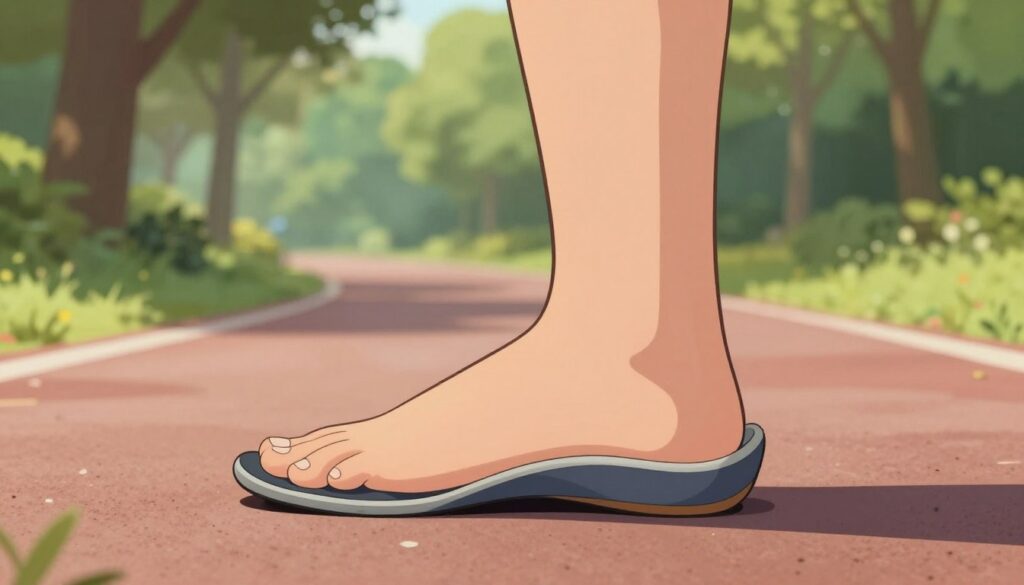
Pronation and supination are key parts of a runner’s biomechanics. Pronation is when the foot rolls inward, and supination is when it rolls outward. Both are important for a natural running gait. But, if these movements vary too much, it can cause discomfort or injury.
Understanding Overpronation Patterns
Overpronation happens when the foot rolls inward too much. This can lead to problems like plantar fasciitis. Custom orthotics can offer extra support to help.
Support Mechanisms
Orthotics for overpronation often have medial arch support. This helps counteract the foot’s excessive rolling. It helps runners keep their foot in a more neutral position while running.
Addressing Underpronation (Supination) Tendencies
Underpronation, or supination, is when the foot rolls outward too much. This can cause less shock absorption and stress on the ankle and leg.
Cushioning Considerations
Runners with underpronation need custom orthotics with extra cushioning. These orthotics help absorb shock and lower injury risk. They provide more comfort and support.
| Pronation Type | Custom Orthotic Feature | Benefit |
|---|---|---|
| Overpronation | Medial Arch Support | Reduces excessive foot rolling |
| Underpronation (Supination) | Enhanced Cushioning | Improves shock absorption |
The Assessment Process: What to Expect When Getting Custom Orthotics
The process to get custom orthotics for runners involves several steps. These steps help find the best orthotics for each runner.
Initial Consultation with a Podiatrist or Orthotic Specialist
The first step is an initial consultation with a podiatrist or orthotic specialist. This meeting is key. It lets the specialist know what the runner needs and worries about.
Gait Analysis and Measurement Techniques
A detailed gait analysis is a big part of the process. It includes both static and dynamic checks. These help understand how the runner moves.
Static vs. Dynamic Assessment
Static assessment looks at the foot when it’s still. It checks the foot’s shape when standing or sitting. On the other hand, dynamic assessment watches how the foot moves. This is often done through gait analysis.
| Assessment Type | Description | Key Observations |
|---|---|---|
| Static Assessment | Evaluation of foot structure at rest | Foot alignment, arch height |
| Dynamic Assessment | Observation of foot function during movement | Gait patterns, pronation/supination |
Follow-Up Appointments and Potential Adjustments
After making the custom orthotics, follow-up appointments are needed. They check if the orthotics fit right and make any needed changes.
The Adaptation Period: What New Orthotic Users Should Know
When runners start using custom orthotics, their body needs time to adjust. “Many people experience a period of adjustment when they start using custom orthotics,” says Dr. Jane Smith, a podiatrist specializing in sports medicine. This adjustment helps the feet and lower limbs get used to the new support.
Typical Timeline for Adjustment
The time it takes to adjust can vary. But most runners adjust in 2-4 weeks. It’s important to slowly add the orthotics to their running routine.
Gradual Introduction Strategies
Runners can start by wearing the orthotics for short times during the day. Slowly increasing how long they wear them may help lessen discomfort. A good plan is to start with short runs or walks and then increase the distance.
Managing Temporary Discomfort
Some runners may feel temporary discomfort, like foot pain or tiredness. This discomfort can often be managed by adjusting the orthotics or changing how they run.
When to Seek Follow-up Care
If discomfort doesn’t go away or gets worse, seeing a podiatrist or orthotic specialist is key. They can check if the orthotics fit right and make any needed changes. As one study participant was given instructions on how to use the orthotics, following these guidelines can support a smooth transition.
Understanding the adaptation period and using a gradual introduction strategy can help runners get the most out of their custom orthotics. This way, they can enjoy the benefits while avoiding discomfort.
Research and Evidence Supporting Orthotic Use in Runners
The scientific world is still studying how orthotics help runners. They look at how orthotics change running and how they affect performance. This research helps us understand the good and bad of using orthotics for runners.
Current Scientific Studies and Findings
Recent studies have looked at how custom orthotics affect running. They check if orthotics make running better, more comfortable, and safer.
Performance-Related Research
Some studies show orthotics can make running more efficient. They help by changing how the foot hits the ground and reducing bad foot movements. “Orthotics can play a crucial role in enhancing running performance by providing support and stability,” a study in a sports medicine journal says.
Injury Prevention Studies
Other studies have looked at how orthotics prevent injuries. A study found that “orthotics improved comfort and reduced injury rates” in runners. This shows they might help prevent common injuries.
Limitations of Existing Research
Even though we have research, it has its limits. Many studies have small groups or problems with how they were done. This makes it hard to apply their findings to everyone.
Individualized Responses to Orthotic Intervention
Runners react differently to orthotics because of their unique needs.
“The effectiveness of orthotics can vary significantly from one individual to another, underscoring the need for personalized assessment and fitting.”
This shows why it’s key to work with health experts. They can find the best orthotics for each runner.
When Custom Orthotics May Not Be the Optimal Approach
Custom orthotics are great for many runners. But, they’re not always the best choice. Runners should know that other options can offer better support or save money.
Alternative Supportive Approaches to Consider
Runners have many choices besides custom orthotics. These include:
- Footwear Modifications: Changing running shoes or adding features like arch support can help.
- Strengthening Programs: Exercises that strengthen the foot and ankle muscles can improve running and reduce injury risk.
Footwear Modifications
Changing shoes can be simple. Try a different model or brand for better arch support or cushioning. Some runners might also want to add orthotic-friendly shoes to their collection.
Strengthening Programs
Strengthening exercises can improve foot mechanics. Focus on the intrinsic foot muscles and ankle muscles. This can increase stability and lessen foot strain.
When to Seek Different Professional Perspectives
If custom orthotics or other measures don’t work, it’s time to see other experts. A sports medicine specialist or physical therapist can offer a deeper understanding of your needs.
Cost Considerations and Funding Options in New Zealand
In New Zealand, athletes need to know the costs and funding options for custom orthotics. This is key for runners thinking about getting custom orthotics. It’s important to weigh the financial side before making a decision.
Typical Price Ranges for Custom Orthotics
The price of custom orthotics varies a lot. It depends on the materials, the practitioner’s fees, and how complex the orthotic is. In New Zealand, prices can be from NZD $500 to $1,500 or more. Runners should talk to a practitioner for a precise quote based on their needs.
ACC Coverage Possibilities
In New Zealand, the Accident Compensation Corporation (ACC) might help pay for custom orthotics under certain conditions. If the orthotics are needed because of an injury covered by ACC, athletes might get financial help. It’s important to check with ACC and a healthcare provider to see how much they can cover.
Private Health Insurance Considerations
Some private health insurance in New Zealand might cover or give rebates for custom orthotics. How much they cover can differ a lot between providers and policies.
Provider Variations
Insurance companies have different rules for covering orthotics. It’s crucial for individuals to check their insurance plans or talk to their providers to know what’s covered.
Caring for and Maintaining Your Custom Orthotics
Proper care and maintenance of custom orthotics can make them last longer and work better. Many people feel more comfortable and supported when they follow the right care tips.
Cleaning and Storage Recommendations
To keep your custom orthotics in top shape, clean them often. Use mild soap and water, and stay away from harsh chemicals that could harm them. After cleaning, make sure they are dry before storing.
Material-Specific Care
Different materials need different care. For instance, some plastics may need special cleaning products, while fabric ones might just need a gentle brush. Always check with the manufacturer for the best way to care for them.
Signs of Wear and When to Consider Replacement
Custom orthotics can wear out over time, showing signs like cracks or big changes in shape. If you see these signs, it may be time to consider replacement to keep up the support and comfort.
Using Orthotics in Different Running Shoes
Custom orthotics can fit in different running shoes, but make sure they fit right in each one. Transferring orthotics between shoes is okay, but make sure the new shoe is compatible and offers enough support.
Conclusion: Making an Informed Decision About Custom Orthotics
Custom orthotics can help runners with foot pain and improve their running. Knowing the benefits and limits can guide a runner’s choice. This choice depends on whether custom orthotics fit their needs.
Custom orthotics offer support for alignment and comfort. They can also make running more efficient. Studies show they help with plantar fasciitis and Achilles tendinopathy. For more details, check Upstep’s blog on their effectiveness.
Choosing custom orthotics should be personal. Runners should talk to a podiatrist or orthotic specialist. This way, they can decide if custom orthotics are right for them.