
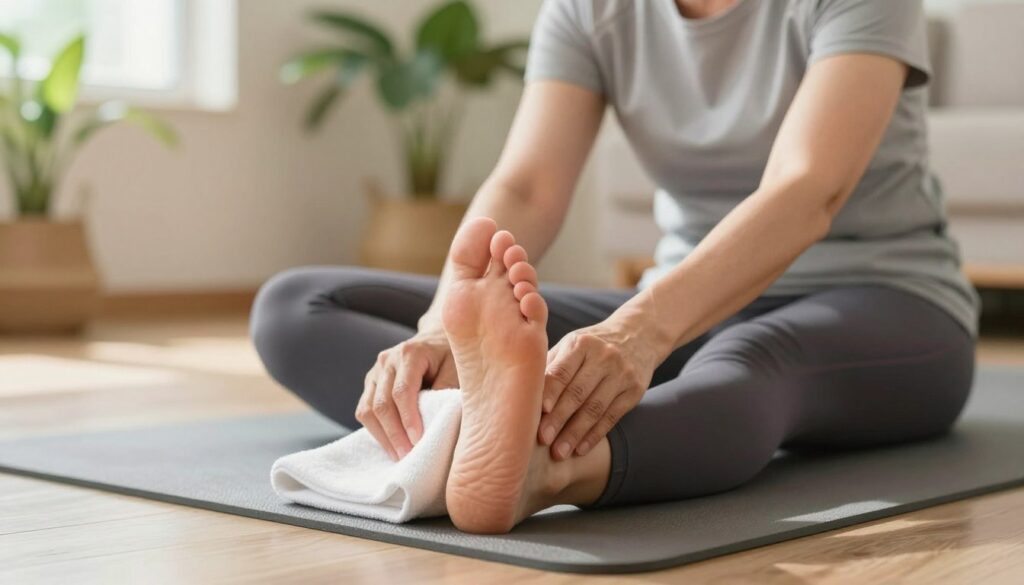
Plantar fasciitis is a common condition that causes heel pain. It can affect people of all ages and activity levels. The plantar fascia, a band of tissue supporting the arch of the foot, becomes inflamed.
Stretching exercises are key in managing plantar fasciitis. They help relieve tension in the foot and calf.
Research shows that strengthening and stretching exercises can greatly reduce pain. They also improve mobility in those with plantar fasciitis. Adding simple exercises to your daily routine can help with heel pain relief and foot care.
Key Takeaways
- Stretching exercises can help alleviate plantar fasciitis symptoms.
- Simple exercises can be incorporated into daily routines for heel pain relief.
- Proper foot care is essential for managing plantar fasciitis.
- Strengthening the foot and calf can improve mobility.
- Consulting a healthcare professional is recommended for personalized advice.
Understanding Plantar Fasciitis: What Happens to Your Foot
Plantar fasciitis is a complex issue that affects the foot. It involves the anatomy of the foot and the factors that lead to this condition. The foot is made up of bones, ligaments, and fascia. These work together to support movement and handle weight.
The Anatomy of the Plantar Fascia
The plantar fascia is a thick band of tissue. It connects the heel bone to the toes. It’s key in supporting the arch of the foot and acts as a shock absorber.
How Plantar Fasciitis Develops
Plantar fasciitis happens when the plantar fascia gets inflamed or irritated. This usually comes from overuse, strain, or repetitive injury. The inflammation leads to pain and stiffness in the heel and the bottom of the foot.
Differentiating from Other Foot Conditions
It’s important to tell plantar fasciitis apart from other foot issues that might cause similar pain. A healthcare professional needs to examine the foot to find out the real cause of pain.
| Condition | Symptoms | Causes |
|---|---|---|
| Plantar Fasciitis | Pain in the heel and bottom of the foot, especially in the morning | Overuse, strain, or repetitive injury to the plantar fascia |
| Flat Feet | Pain and fatigue in the feet and legs, fallen arches | Genetic predisposition, injury, or wear and tear |
| Heel Spur | Pain in the heel, often accompanied by inflammation | Calcium deposits on the heel bone, often associated with plantar fasciitis |
Common Symptoms and Risk Factors
It’s important to know the symptoms and risk factors of plantar fasciitis. This condition affects the heel and the bottom of the foot. It causes pain and discomfort.
Recognizing Plantar Fasciitis Pain
The pain from plantar fasciitis feels like a sharp stab in the heel. It’s worst when you first get up and may lessen as the day goes on. The pain can spread to the bottom of the foot too.
Who Is Most Susceptible to Developing This Condition
Being overweight or obese increases your risk of plantar fasciitis. This is because it puts more stress on the plantar fascia. Runners and athletes who do lots of jumping are also at risk. Age plays a role too, especially for people between 40 and 60.
Lifestyle Factors That May Contribute
Wearing shoes without good arch support or jobs that make you stand a lot can lead to plantar fasciitis.
“The way we live our daily lives can significantly impact the health of our feet,” says a podiatrist.
| Risk Factor | Description |
|---|---|
| Obesity | Increased stress on the plantar fascia |
| High-Impact Activities | Repeated strain on the heel and foot |
| Inadequate Footwear | Lack of arch support or poor cushioning |
Knowing these risk factors and symptoms helps you prevent and treat plantar fasciitis.
The Role of Stretching in Managing Plantar Fasciitis
Stretching is often recommended as a first step to treat plantar fasciitis. It aims to lessen pain and enhance foot movement. Adding certain stretches to your daily routine might help ease symptoms of this condition.
Benefits of Stretching for Symptom Relief
Stretching can ease plantar fasciitis symptoms by easing tension in the plantar fascia. It also aids in healing. Regular stretching can boost foot flexibility and cut down on stiffness.
Understanding Recovery Expectations
It’s key to have realistic hopes when starting to stretch for plantar fasciitis. Recovery times can differ a lot. You need to keep up with stretching to see progress.
The Science Behind Fascial Tissue Flexibility
The plantar fascia is a tissue that supports the foot’s arch. Stretching can make this tissue more flexible. This might lower the chance of more injuries and ease pain.
Knowing how stretching helps with plantar fasciitis lets people take action. They can work on easing their symptoms and bettering their foot health.
When to Consult a Healthcare Professional
Knowing when to see a healthcare professional is key for managing plantar fasciitis. Stretching and self-care can help, but some cases need expert care.
Signs That Warrant Medical Attention
If you have ongoing or severe pain, it’s time to get medical help. Also, if pain gets worse or makes walking hard, seek help.
What to Expect During a Professional Assessment
A healthcare provider will check your foot and look at your health history. They might do imaging tests to find the cause. Then, they’ll create a treatment plan just for you.
Working with Physical Therapists and Podiatrists
Physical therapists can make exercise plans to help your foot and ease pain. Podiatrists focus on foot and ankle issues. They can offer treatments like orthotics and surgery if needed.
These experts work together to manage plantar fasciitis well. It’s important to follow their advice and stick to the treatment plan for the best results.
Preparing for Your Stretching Routine for Plantar Fasciitis
To get the most out of your stretching routine, preparation is key. A good environment and the right equipment can make a big difference. This helps your stretching exercises work better.
Creating a Comfortable Environment
A comfortable environment is crucial for a successful stretching routine. Find a quiet, well-ventilated space to stretch without distractions. Make sure the floor is clean and free of clutter.
Essential Equipment and Props
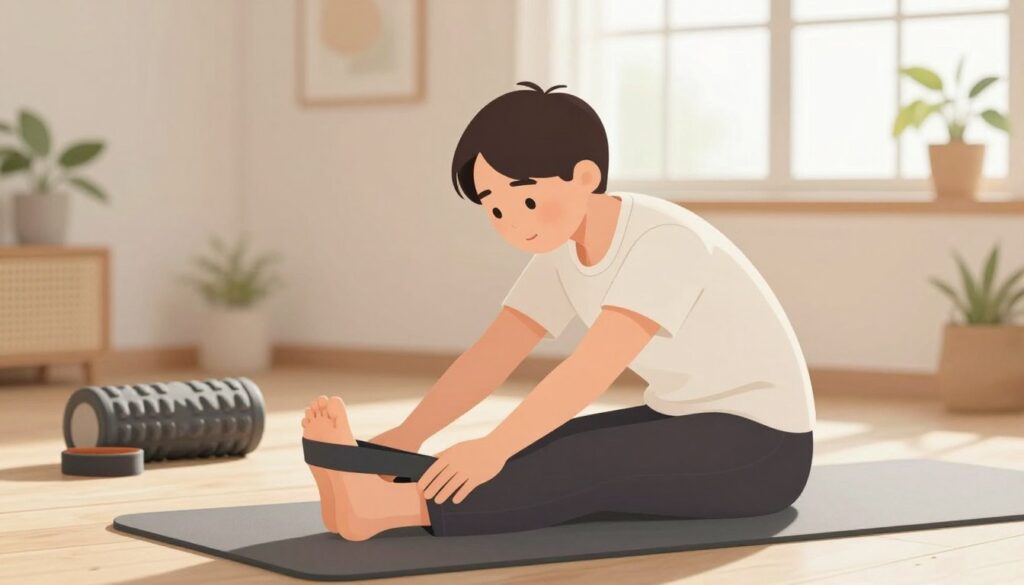
While many stretches don’t need equipment, some props can help. A stretching strap or towel can deepen stretches. A foam roller can also massage the plantar fascia.
Best Times of Day to Stretch
The timing of your stretching routine matters. You can stretch at different times, but morning and evening are best.
Morning Considerations
Morning stretches loosen the plantar fascia after a night of rest. Start slowly to avoid sudden strain.
Evening Relaxation Techniques
Evening stretches help relax and prepare for rest. Gentle stretches are especially good before bed.
| Time of Day | Benefits | Tips |
|---|---|---|
| Morning | Loosens plantar fascia, prepares for the day | Start gently, avoid sudden strain |
| Evening | Aids relaxation, prepares for rest | Gentle stretches, avoid bouncing |
Morning Stretches to Ease First-Step Pain
Morning stretches can help with plantar fasciitis pain. They make it easier to start your day by easing first-step pain.
Bedside Stretches Before Standing
Do simple stretches before getting out of bed. These stretches help reduce strain on your plantar fascia. They wake up your foot muscles for the day.
Gentle Wake-Up Routines for Your Feet
Start with gentle stretches to ease first-step pain. Some good exercises include:
Towel Stretches
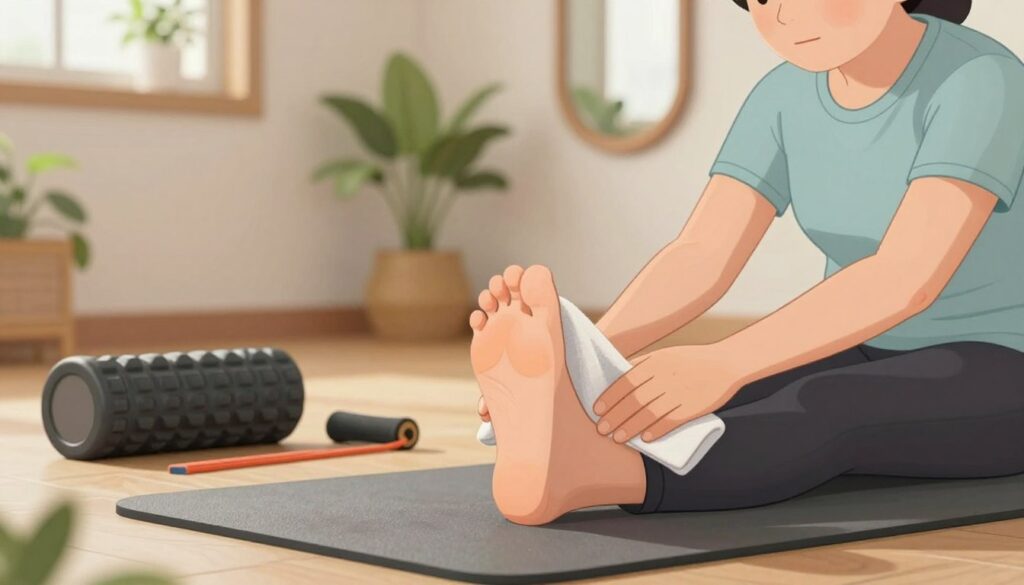
Stretch your foot with a towel. Sit on your bed with legs straight, loop a towel around your foot’s ball, and pull your toes back.
Ankle Flexion Exercises
Move your foot up and down to loosen muscles. This helps reduce stiffness and gets your foot ready for the day.
Toe Spreading and Curling
Spread and curl your toes to strengthen foot muscles. This simple exercise is great for your morning routine.
Healthcare experts say these stretches can greatly help with plantar fasciitis pain.
“Stretching is key for managing plantar fasciitis. Gentle stretches daily can reduce pain and improve foot function.”
| Stretch | Description | Benefits |
|---|---|---|
| Towel Stretch | Loop a towel around the ball of your foot and pull your toes back. | Stretches plantar fascia, reduces morning pain. |
| Ankle Flexion | Move your foot up and down to loosen ankle and foot muscles. | Reduces stiffness, prepares foot for activity. |
| Toe Spreading | Spread your toes apart and then curl them under. | Strengthens foot muscles, reduces pain. |
Standing Stretches That May Provide Relief
Managing plantar fasciitis often requires a mix of treatments, including standing stretches. These stretches help ease the pressure on the plantar fascia and calf muscles. This can reduce pain and discomfort.
Wall and Step Stretches
Wall stretches are simple yet effective for stretching the calf muscles and plantar fascia. Stand facing a wall, with one hand on it for balance. Place one foot behind the other, keeping the heel on the ground, and bend the front knee.
Lean forward, stretching the calf and plantar fascia of the back leg. Hold for 15-30 seconds and switch legs. Understanding the underlying causes of plantar can help in tailoring these stretches to individual needs.
Calf Stretches That Target the Plantar Fascia
Calf stretches are key for relieving tension in the plantar fascia. There are several standing calf stretch variations.
Single-Leg Calf Raises
Single-leg calf raises target the calf muscles and strengthen the ankle. Stand on the edge of a step or curb with your heel hanging off the edge. Slowly raise up onto your tiptoes and then lower back down. Repeat for 10-15 repetitions.
Double-Leg Calf Stretches
Double-leg calf stretches can be done on a step or flat surface. Stand with your feet shoulder-width apart and slowly raise up onto your tiptoes, then lower back down. This exercise stretches and strengthens the calf muscles.
Heel Drop Variations
Heel drops are another effective calf stretch. Stand on the edge of a step with your heels hanging off. Slowly lower your heels down below the level of the step, then raise back up to the starting position. This can be done with both heels or alternating heels.
| Stretch | Description | Repetitions |
|---|---|---|
| Wall Stretch | Stand facing a wall, one foot behind the other, and lean forward. | 3 sets per leg |
| Single-Leg Calf Raise | Stand on the edge of a step, raise up onto tiptoes, and lower back down. | 10-15 repetitions |
| Double-Leg Calf Stretch | Stand with feet shoulder-width apart, raise up onto tiptoes, and lower back down. | 10-15 repetitions |
| Heel Drop | Stand on the edge of a step, lower heels down, and raise back up. | 10-15 repetitions |
Seated Stretches for Deeper Fascia Release
Seated stretching exercises are great for treating plantar fasciitis. They can be done almost anywhere. They help release tension in the plantar fascia.
Cross-Leg Foot Stretches are simple yet effective. Sit on the floor with your legs straight out. Cross one foot over the other, resting your ankle on the opposite knee.
Grasp your toes and gently pull them back toward your shin. Hold for 15-30 seconds and release. Repeat on the other side.
Using Massage Tools for Self-Treatment
Massage tools can help with plantar fasciitis symptoms. They can target the plantar fascia in various ways.
Tennis Ball Roll Technique
Using a tennis ball to roll out the plantar fascia is popular. Sit on a chair and place the tennis ball on the floor. Roll your foot over the ball, applying moderate pressure, to release tension in the fascia.
Frozen Water Bottle Method
A frozen water bottle can also be used. Roll your foot over the bottle for a cooling massage. This can be soothing after activity.
Foot Massage Techniques
Manual massage techniques are also effective. Use your thumbs to apply pressure to the bottom of your foot. Work from the heel towards the toes to release tight fascia and promote healing.
| Technique | Description | Benefits |
|---|---|---|
| Tennis Ball Roll | Roll foot over tennis ball | Releases tension, eases pain |
| Frozen Water Bottle | Roll foot over frozen bottle | Cooling massage, reduces inflammation |
| Manual Massage | Apply pressure with thumbs | Promotes healing, releases tight fascia |
Tracking Progress and Modifying Your Approach
To get the most from stretching, it’s key to check your progress often. Seeing how well your stretching works helps you know if you need to change your routine.
Signs Your Stretching Routine May Be Helping
Good stretching routines can make you feel less pain and more flexible. First-step pain from plantar fasciitis might go down, making mornings easier. These signs show your stretching is working well.
When to Consider Adjusting Your Techniques
If you don’t see progress or still feel pain, it’s time to re-evaluate and adjust your stretches. Talking to a healthcare expert, like a physical therapist or podiatrist, can help. They might suggest new ways to stretch or treatments that could help. For more info, check out plantar fasciitis treatment.
Balancing Rest and Activity
It’s important to find the right mix of rest and activity for healing. Too much activity can make plantar fasciitis worse. But enough rest lets the plantar fascia heal.
Listening to Your Body’s Signals
It’s crucial to listen to your body. If stretching hurts or feels off, it’s a sign to change your approach or ease up.
Gradually Increasing Intensity
As you get more flexible, you can make your stretches a bit harder. This gradual increase helps you reach your best without overdoing it.
Conclusion: Creating a Sustainable Plan for Foot Health
Creating a plan for foot health is key to managing plantar fasciitis and avoiding future problems. By adding stretching exercises to your daily routine, you can ease symptoms and boost your foot’s health.
A good plan also means eating right and wearing the right shoes. This approach helps prevent plantar fasciitis from coming back and keeps your feet healthy for a long time.
Remember, the tips given here are for learning, not a replacement for doctor’s advice. Talking to health experts like physical therapists or podiatrists can offer tailored advice and treatment.
Sticking to a stretching routine and living a healthy lifestyle lets you manage your foot health. This way, you can stay active and pain-free.