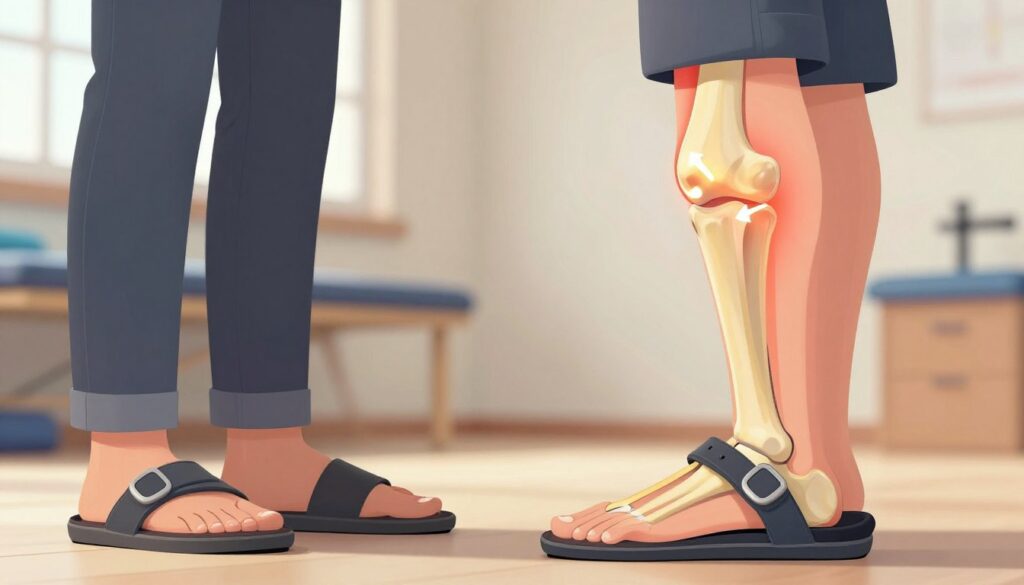
Many people suffer from knee pain that makes everyday tasks hard. This pain can really cut down on how well we live. Studies show that problems in the feet might be a big reason for knee pain.
The link between foot mechanics and knee pain is quite complex. It involves the detailed workings of biomechanics. When our feet don’t line up right, it can put too much stress on our knees. This stress can lead to pain and discomfort.
Learning how orthotics can help with knee pain is key. By looking into how foot mechanics affect knee health, we can see how orthotics might ease knee pain.
Key Takeaways
- The connection between foot mechanics and knee pain is significant.
- Orthotics may help alleviate knee pain by addressing foot alignment issues.
- Biomechanics play a crucial role in understanding the relationship between foot mechanics and knee pain.
- Chronic knee pain can be related to deep-rooted alignment problems in the feet.
- Understanding orthotics and their benefits can help individuals seek relief from knee pain.
Understanding Knee Pain and Its Common Causes
Knee pain is a common issue that can really affect your daily life. It can come from injuries, too much use, or underlying health problems.
Types of Knee Pain
Knee pain can be divided into different types. Acute knee pain usually comes from injuries like sprains or fractures. Chronic knee pain, however, lasts longer and is often linked to osteoarthritis.
Common Conditions Associated with Knee Pain
Many conditions can cause knee pain. These include osteoarthritis, meniscal tears, ligament injuries, and patellofemoral pain syndrome. Knowing these conditions helps find the right treatment.
Biomechanical Factors Contributing to Knee Pain
Biomechanical factors also play a big role in knee pain. Problems like misaligned feet or fallen arches can put extra stress on the knee. Getting a professional check-up is key to figuring out these issues and finding the right treatment.
The Relationship Between Foot Mechanics and Knee Function
It’s key to understand how foot mechanics tie into knee function for knee pain relief. Our foot’s function directly impacts the alignment and stress up the kinetic chain, affecting the knees.
The Kinetic Chain Concept
The kinetic chain concept shows how our legs and feet work together as one unit during movement. This idea is key to seeing how foot problems can cause knee issues.
How Foot Pronation Affects Knee Alignment
Foot pronation, or the foot rolling inward, can mess with knee alignment. This can make the knee rotate inward, leading to misalignment and pain. Keeping the foot aligned is vital for healthy knees.
Impact of Gait Abnormalities on Knee Stress
Gait issues, like overpronation or supination, can cause uneven stress on the knee. This uneven stress can wear down the knee, possibly leading to osteoarthritis. A detailed gait analysis can spot these problems.
| Gait Abnormality | Effect on Knee |
|---|---|
| Overpronation | Increased internal rotation and stress on the knee |
| Supination | Reduced shock absorption, increased stress on the knee |
Experts say, “Abnormal gait patterns can cause many knee problems. It’s crucial to fix these with the right orthotics and gait training.”
This shows why a full approach is needed to manage knee pain.
What Are Orthotics?
Custom orthotics are made to solve specific foot and ankle problems. They offer support and relief. These devices help correct or support certain body parts.
Definition and Purpose of Orthotic Devices
Orthotic devices help improve the alignment and function of the lower body. They can be custom-made to fix issues like foot pronation and supination. They address various biomechanical problems.
Custom vs. Over-the-Counter Options
There are two main types of orthotics: custom and over-the-counter (OTC). Custom orthotics are tailored to fit an individual’s needs, as determined by a healthcare professional. For more details, check out this resource.
Materials and Design Considerations
The materials in orthotics vary based on their purpose and support level. The main types are:
Rigid Orthotics
These are firm and provide maximum support and correction.
Semi-Rigid Orthotics
They offer a mix of support and flexibility, good for various activities.
Soft Orthotics
These are made for comfort and shock absorption, using cushioning materials.
| Type of Orthotic | Material | Use |
|---|---|---|
| Rigid | Firm plastic or carbon fiber | Maximum support and correction |
| Semi-Rigid | Combination of materials | Balance between support and flexibility |
| Soft | Cushioning materials like foam | Shock absorption and comfort |
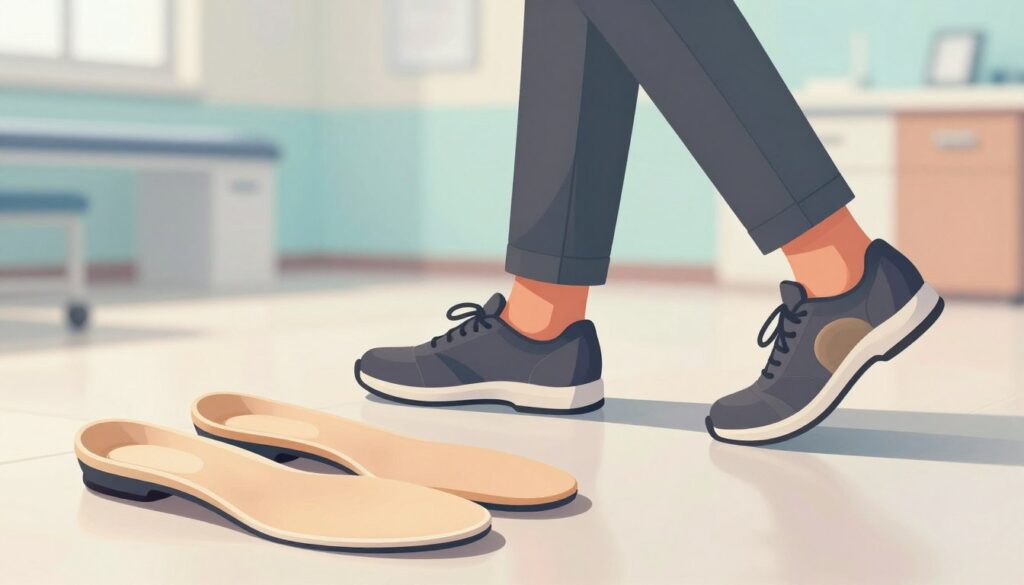
Healthcare professionals are key in suggesting orthotics. They evaluate the individual’s needs and choose the best orthotic type.
Can Orthotics Help Knee Pain? The Scientific Evidence
Orthotics are being looked at more as a way to help with knee pain. Research is growing, showing they might help by fixing how our feet work. This can affect our knees.
Research Studies on Orthotics and Knee Pain
Studies have been done to see if orthotics help with knee pain. Some say they do, while others don’t see much difference. It depends on the type of orthotics and who is wearing them.
A big review of these studies found that results vary a lot. This is because of different orthotics and who they were tested on. Custom-made orthotics sometimes work better than ones you can buy off the shelf.
Limitations of Current Research
Even though research is helpful, it has its limits. Many studies have only a few people in them. The time they followed people also varies a lot. Plus, the different types of orthotics make it hard to say for sure what works best.
What Medical Professionals Say
Doctors think orthotics can help with knee pain, especially when used with other treatments. Podiatrists and orthotists often suggest custom orthotics for people with certain foot problems that cause knee pain.
| Condition | Orthotic Effectiveness | Professional Recommendation |
|---|---|---|
| Osteoarthritis | Mixed results | Custom orthotics recommended |
| Patellofemoral Pain Syndrome | Generally beneficial | Orthotics often prescribed |
| Iliotibial Band Syndrome | Beneficial in some cases | Orthotics considered as part of treatment plan |
In summary, while the evidence isn’t all in, orthotics might help some people with knee pain. More research is needed to know for sure and who they work best for.
Specific Knee Conditions That May Benefit from Orthotics
Many knee conditions can be helped by orthotics. They can ease pain and improve how the knee works. Orthotics fix biomechanical problems that cause knee pain.
Patellofemoral Pain Syndrome
Patellofemoral pain syndrome causes pain around or behind the kneecap. Orthotics can improve foot alignment. This reduces stress on the knee joint.
Osteoarthritis of the Knee
Osteoarthritis is a disease that makes the knee hurt and stiff. Orthotics can spread out pressure. This helps ease pain in affected areas.
Iliotibial Band Syndrome
Iliotibial band syndrome hurts the outside of the knee, especially in runners and cyclists. Orthotics fix gait problems. This helps prevent this condition.
Medial Knee Pain and MCL Stress
Medial knee pain comes from MCL stress. Orthotics support the foot and ankle. This reduces MCL stress.
Runner’s Knee and Athletic Injuries
Runner’s knee includes many injuries athletes get. Orthotics improve foot mechanics. This lowers the chance of overuse injuries.
The table below shows how orthotics help different knee problems:
| Knee Condition | How Orthotics Help |
|---|---|
| Patellofemoral Pain Syndrome | Improves foot alignment, reduces knee stress |
| Osteoarthritis | Redistributes pressure, alleviates stress |
| Iliotibial Band Syndrome | Corrects gait abnormalities |
| Medial Knee Pain | Stabilizes foot and ankle, reduces MCL stress |
| Runner’s Knee | Improves foot mechanics, reduces injury risk |
Knowing how orthotics help knee health helps people with these conditions. They can make better choices about treatment.
How Orthotics Work to Support Knee Function
Orthotics are key in supporting knee function by fixing biomechanical problems. They help ease knee pain and boost mobility.
Correcting Alignment Issues
Orthotics help by correcting alignment issues. Proper foot alignment greatly affects the knee’s position and function. This reduces knee joint strain.
Redistributing Pressure and Forces
Orthotics also redistribute pressure and forces across the foot and knee. This helps ease knee pain and stress. It promotes better biomechanics.
| Benefit | Description | Impact on Knee Function |
|---|---|---|
| Correcting Alignment | Improves foot and knee alignment | Reduces strain on the knee joint |
| Redistributing Pressure | Alleviates stress on the knee | Promotes healthier biomechanics |
| Improving Stability | Enhances stability during movement | Reduces the risk of injury |
Improving Stability During Movement
Orthotics add support, improving stability during movement. This is key for those with knee pain or instability. It lowers injury risk.
Reducing Compensatory Patterns
Orthotics also reduce compensatory patterns caused by knee pain or biomechanical issues. They address the root cause, leading to natural movement.
Understanding orthotics’ role in knee support helps in choosing treatments. Always consult a healthcare professional for the best knee care plan.
The Professional Assessment Process
Healthcare experts often check how your feet and walking affect your knees. This step is key to finding out why you have knee pain. It helps them choose the best treatment for you.
What to Expect During a Biomechanical Assessment
A biomechanical assessment looks at how you move. It checks your foot mechanics, ankle, and lower limbs. This helps find out what might be causing your knee pain.
Gait Analysis Techniques
Gait analysis is a big part of the assessment. It watches how you walk or run. Tools like video software help break down your movement patterns.
How Practitioners Determine if Orthotics Are Appropriate
After the assessment, experts look at the data. They see if orthotics could help with your knee pain. They check for issues like foot pronation and supination.
Finding Qualified Practitioners in New Zealand
It’s important to find qualified practitioners for your assessment. In New Zealand, podiatrists, physiotherapists, and sports medicine specialists are good choices. They have the right skills.
| Professional | Qualifications | Specialization |
|---|---|---|
| Podiatrist | Doctor of Podiatric Medicine | Foot and ankle biomechanics |
| Physiotherapist | Bachelor of Physiotherapy | Movement analysis and rehabilitation |
| Sports Medicine Specialist | Fellowship in Sports Medicine | Sports injuries and performance |
Seeing these professionals can lead to a detailed assessment. They can give you advice on managing knee pain. This might include using orthotics.
Complementary Approaches to Managing Knee Pain
There are many ways to help with knee pain besides orthotics. A good plan often mixes different treatments based on what each person needs.
Strengthening Exercises for Knee Support
It’s important to strengthen the muscles around the knee. This helps with support and stability. Squats, lunges, and leg presses are good for this. A study in the Journal of Orthopaedic & Sports Physical Therapy showed these exercises can lessen knee pain.
Physical Therapy Interventions
Physical therapy is key in managing knee pain. It improves mobility, reduces pain, and boosts function. Therapists use various techniques like manual therapy and ultrasound. They also create exercise plans for each person’s knee issues. For more info, check out https://evolveny.com/blogposts/knee-pain-relief.
Lifestyle Modifications
Changing your lifestyle can also help with knee pain. Keeping a healthy weight and wearing the right shoes are important. Avoiding activities that hurt your knees and doing low-impact exercises like cycling or swimming can also help.
When to Consider Other Treatment Options
Sometimes, knee pain doesn’t get better with simple treatments. You might need to think about other options like injections or surgery. Always talk to a healthcare professional to find the best treatment for you.
| Treatment Approach | Description | Benefits |
|---|---|---|
| Strengthening Exercises | Targeted exercises to strengthen muscles around the knee | Improved knee stability and reduced pain |
| Physical Therapy | Personalized therapy programs including manual therapy and exercises | Enhanced mobility and function, reduced pain |
| Lifestyle Modifications | Changes such as weight management and appropriate footwear | Reduced stress on the knee, overall health improvement |
Potential Limitations and Considerations of Orthotic Therapy
It’s important to know the limits of orthotic therapy. They can help with knee pain, but several things affect how well they work.
Adaptation Period and Realistic Expectations
When starting orthotic therapy, it’s key to have realistic hopes. It might take time for your body to get used to the new orthotics. This time can differ for each person.
When Orthotics May Not Be Suitable
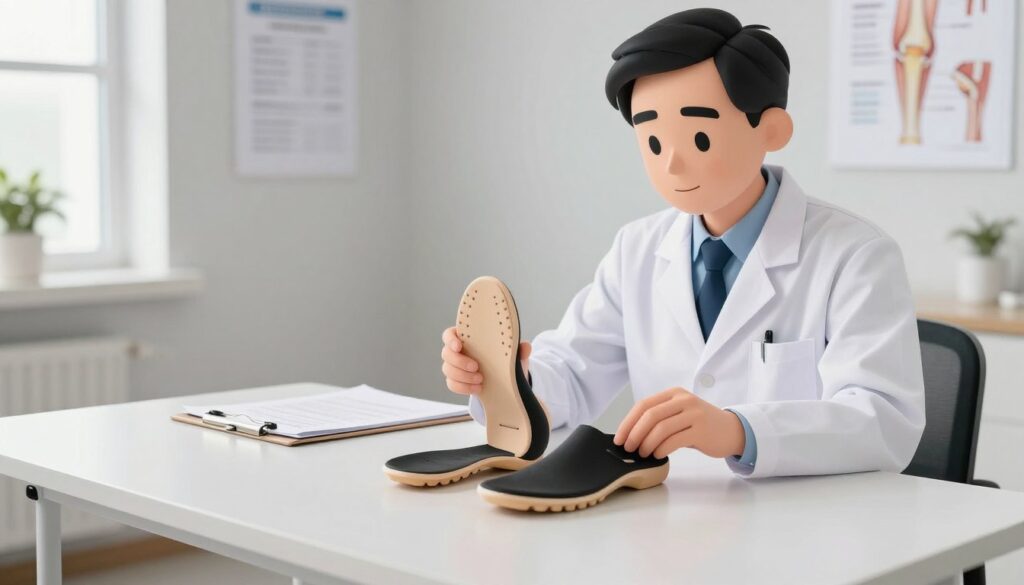
Not everyone can use orthotics, especially those with certain health issues or severe foot problems. A doctor’s check is needed to see if they’re right for you.
Cost Considerations in New Zealand
The price of orthotics in New Zealand changes based on if they’re custom-made or not. Custom ones are pricier but fit your foot perfectly.
ACC Coverage and Private Insurance Options
In New Zealand, the Accident Compensation Corporation (ACC) might help pay for orthotics after an injury. You might also have private insurance to help with costs.
Conclusion: Making Informed Decisions About Orthotics for Knee Pain
Orthotics can help manage knee pain for some people. Understanding the biomechanical faults behind knee pain is key. This knowledge helps in making informed decisions about using orthotics.
When deciding on orthotics for knee pain, weigh their benefits and limitations. A professional assessment is vital. This includes a biomechanical exam and GaitScan analysis to see if custom orthotics are right for you.
It’s important to talk to a qualified practitioner about orthotics for knee pain. The info here is for learning, not a substitute for medical advice.