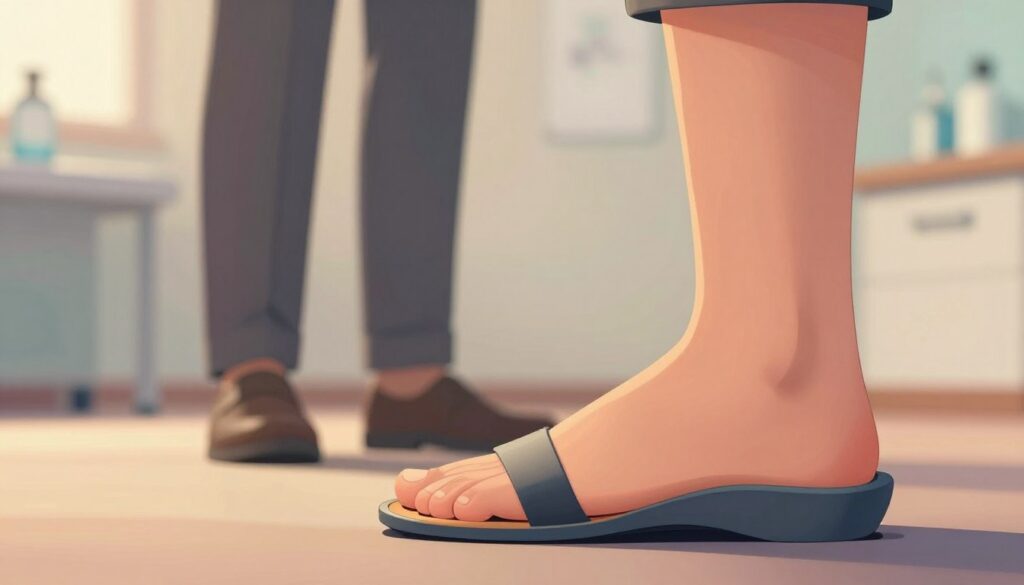
Overpronation happens when the foot rolls too far inward. This can cause arch collapse and plantar fasciitis. It can also make walking uncomfortable and affect the lower limbs’ alignment.
Orthotics are special devices that fit inside shoes. They offer support for the arch and the inside of the foot. They also help absorb shock. Getting the right orthotics for overpronation is important. They can be made to fit your foot perfectly or be ready-made.
Overpronation orthotics can help ease the pain of overpronation. This includes problems like plantar fasciitis. For more details on how arch support orthotics can help, check out Curo Chiropractic.
Key Takeaways
- Overpronation can lead to issues like arch collapse and plantar fasciitis.
- Orthotics provide instep support and medial arch support.
- Professional assessment is crucial for determining the right orthotics.
- Customized orthotics can address specific foot issues related to overpronation.
- Orthotics can alleviate symptoms associated with overpronation.
Understanding Overpronation and Its Effects
It’s important to understand how our feet move. This helps us spot problems like overpronation. Overpronation happens when the foot rolls too much inward while walking or running. This can cause several issues.
What Is Overpronation?
Overpronation means the foot rolls inward too much. This can lead to plantar fasciitis and knee pain. It’s because the foot puts too much stress on the lower leg.
Common Signs and Symptoms
People with overpronation often have flat feet or worn-out shoes on the inside. Spotting these signs of overpronation is key to getting the right support.
Potential Impact on Biomechanics
The inward rolling of overpronation can mess with the body’s foot biomechanics. It can cause pain in the knees, hips, or lower back. Getting a professional check is vital to find out if you have overpronation.
The Biomechanics Behind Excessive Foot Rolling
Understanding how excessive foot rolling works is key to fixing overpronation issues. The foot’s mechanics involve bones, muscles, and ligaments working together. They help us move.
Normal Pronation vs. Overpronation
Pronation is a natural part of walking where the foot rolls inward. But, overpronation happens when this motion is too much. It can cause problems in the foot and ankle.
Normal pronation helps absorb shock and adjust to different surfaces. Overpronation, on the other hand, can strain the foot and ankle.
Anatomical Factors Contributing to Overpronation
Several things can lead to overpronation, like flat feet, low arches, or an irregular ankle structure. These can change how the foot rolls when walking or running. This leads to too much rolling.
The Kinetic Chain: How Foot Position Affects Other Joints
The kinetic chain is how joints in the body are connected. The position and movement of one joint can affect others. Overpronation can change the alignment and movement of the knees, hips, and lower back.
This can cause pain or discomfort in these areas. It’s because of the changed biomechanics.
- The alignment of the foot and ankle
- The impact on knee and hip alignment
- The potential strain on the lower back
How to Fix Overpronation with Orthotics
Orthotics are key in managing overpronation by adding support to the foot. Knowing how they work and what they can do helps set realistic goals for improvement.
The Mechanism of Orthotic Support
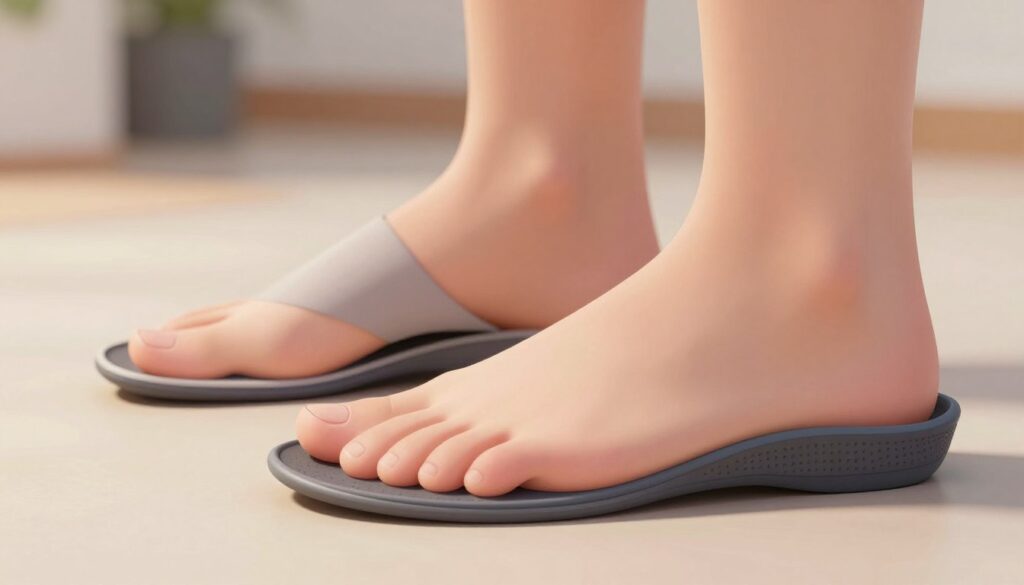
Orthotics offer extra support to the foot, fixing alignment and reducing rolling. They come in custom and over-the-counter types, each with different levels of support. By spreading out pressure and easing foot stress, they can help lessen overpronation’s impact.
Realistic Expectations for Improvement
It’s important to have realistic hopes when using orthotics. They can lessen pain and discomfort from overpronation. But, they might not get rid of it completely. For more on overpronation, check out this resource. How well orthotics work depends on how severe the overpronation is and the foot’s shape.
Timeline for Adaptation and Potential Benefits
Adapting to orthotics takes time, but most see improvements in a few weeks. Benefits include less pain, better biomechanics, and improved foot function. Orthotics help those with overpronation walk more comfortably and stably.
Types of Orthotics for Overpronation Support
Orthotics for overpronation come in different types. They cater to various needs and preferences. The right choice depends on how severe the overpronation is, the foot’s shape, and personal comfort.
Over-the-Counter Options
Over-the-counter (OTC) orthotics are easy to find and work well for mild overpronation. They are less expensive than custom-made ones and can be bought in pharmacies and online. OTC orthotics come in different sizes and materials, making it easy to find one that fits.
However, they might not offer the same level of customization as prescription orthotics.
Custom-Made Orthotics
Custom-made orthotics are made just for you. They fit your foot perfectly, offering a precise solution for severe overpronation. A podiatrist or specialist creates them after a detailed assessment.
While they cost more than OTC options, custom-made orthotics provide better long-term results and comfort for those with significant overpronation.
Comparing Different Materials and Designs
Orthotics are made from materials like plastic, carbon fiber, and foam. The material affects the device’s durability, comfort, and support level. For example, carbon fiber is strong for severe overpronation, while softer materials are more comfortable for daily use.
Designs also vary, with some orthotics better suited for specific activities or shoes. When choosing orthotics, consider the support needed, the type of shoes, and personal comfort. A healthcare professional can help pick the best orthotic for you.
Professional Assessment for Orthotic Intervention
Getting a professional assessment is key to finding the right orthotics for overpronation. Podiatrists are experts who can check your condition and suggest the best orthotics.
The Role of Podiatrists and Other Specialists
Podiatrists and other specialists are crucial in helping with overpronation and orthotics. They have the training to diagnose and treat foot issues. They know a lot about foot biomechanics and how it affects movement.
What to Expect During an Assessment
At an assessment, you’ll get a detailed look at your foot mechanics. This includes a gait analysis, foot structure check, and lower limb alignment assessment. The specialist will use this info to pick the best orthotics for you.
Diagnostic Tools and Measurements
Many tools and measurements are used to understand overpronation. These include gait analysis software, pressure mapping systems, and more. This data helps create a custom orthotic plan for you.
| Diagnostic Tool | Description | Benefit |
|---|---|---|
| Gait Analysis Software | Analyzes the individual’s walking pattern | Helps identify abnormal gait patterns contributing to overpronation |
| Pressure Mapping Systems | Measures pressure distribution under the foot | Provides insight into areas of high pressure that may be related to overpronation |
| 3D Foot Scanning | Creates a detailed model of the foot | Enables the creation of custom orthotics tailored to the individual’s foot shape |
Selecting the Right Orthotic for Your Needs
Finding the right orthotic means knowing what you need. You must think about how much you overpronate, what activities you do, and what feels comfortable to you.
Factors to Consider When Choosing Orthotics
There are several things to think about when picking orthotics. These include:
- The severity of overpronation
- Activity level and type
- Personal comfort preferences
- The material and design of the orthotic
Knowing these factors helps you make a smart choice when picking orthotics.
Matching Orthotics to Different Activities
Each activity needs a different orthotic. For example:
- Athletes might need extra support and cushioning
- People with desk jobs might want comfort and arch support
- Those in high-impact activities might need shock-absorbing orthotics
Choosing the right orthotic for your activity can make a big difference.

Cost Considerations and Insurance Coverage in New Zealand
The price of orthotics can change a lot. In New Zealand, custom-made ones are pricier than ones you can buy over the counter. Always check with your insurance to see what they cover.
Here are some important points about cost and insurance:
- Check your insurance before buying orthotics
- Know how much you’ll have to pay out of pocket
- Look at prices from different places
Adapting to Your New Orthotics
Getting used to new orthotics takes time and patience. When people start wearing them, they might feel a mix of comfort and discomfort. It’s normal.
The Break-in Period: What to Expect
How long it takes to get used to new orthotics varies. Some people adjust fast, while others need more time. Start by wearing them for short periods and then increase the time gradually.
Potential Challenges and Adjustments
Some people might feel discomfort or notice changes in how they walk. It’s important to check how the orthotics fit and feel. Gradual adaptation helps reduce discomfort.
Signs That Your Orthotics May Need Modification
If you keep feeling pain or discomfort, it might mean the orthotics need to be changed. Also, if you notice changes in how your foot aligns or if walking issues persist, it’s time to see a healthcare professional. They can help make the necessary adjustments for better support.
Complementary Approaches to Managing Overpronation
Orthotics are key, but other methods can boost their power. A full plan includes supportive shoes, exercises, and right movement. Together, they greatly help your foot health.
Supportive Footwear Selection
Finding the right shoes is vital for overpronation control. Supportive shoes with strong arch support and padding work well with orthotics. Look for shoes with:
- A sturdy heel counter for foot stability
- Good arch support to ease foot strain
- Padding to soak up shock and protect joints
Strengthening Exercises for Foot and Ankle Stability
Strengthening foot and ankle muscles is key. Toe curls and heel raises are great exercises. Regularly doing these can make orthotics more effective.
Movement Techniques and Gait Training
Right gait training and movement are crucial. Gait training helps you land more neutrally, lowering injury risk. A pro can tailor advice to improve your gait.
Conclusion: A Balanced Approach to Overpronation Support
Managing overpronation requires a mix of orthotics and other support methods. Orthotics are key in correcting overpronation. They provide the needed support and correction.
Knowing the different orthotics options is important. This includes both over-the-counter and custom-made ones. It’s crucial to work with podiatrists to find the right orthotic and support methods for you.
Supportive footwear, strengthening exercises, and gait training are also important. They help improve foot health and prevent related problems. A balanced approach to overpronation can greatly improve your well-being. It helps you stay active and healthy in New Zealand.