Key Takeaways
- Poor foot mechanics contribute to lower back pain.
- The kinetic chain is significant in lower back pain development.
- Foot function impacts the musculoskeletal system.
- Addressing foot mechanics is crucial in managing pain.
- A comprehensive approach is necessary for treatment.
The Biomechanical Connection Between Feet and Lower Back Pain
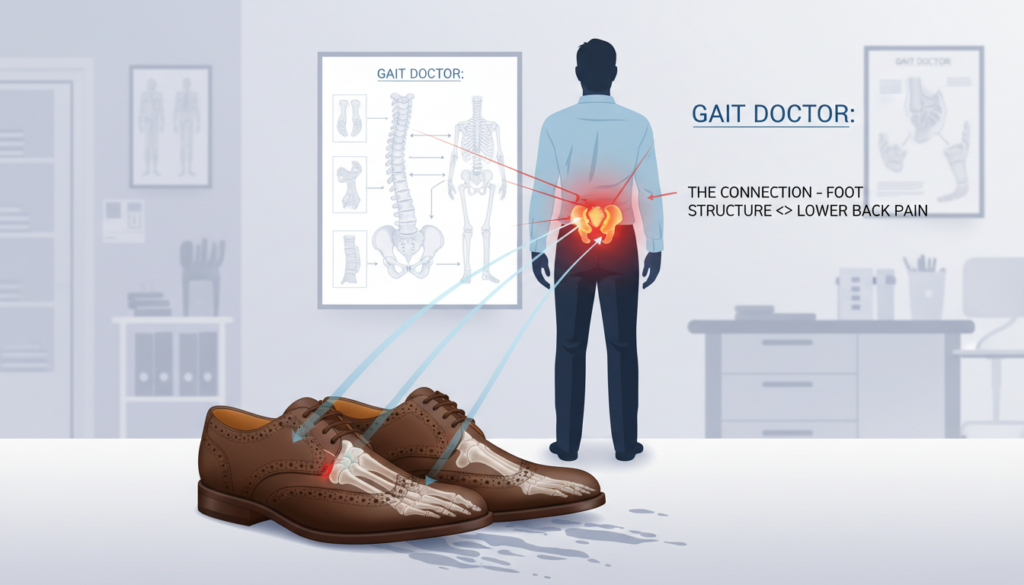
The way our feet and lower back work together is key. Problems in one area can spread to others. This means foot issues can lead to lower back pain.
The Kinetic Chain: How Your Body Works as a System
Our body is like a big machine. It has many parts that work together. This includes our feet, ankles, knees, hips, and lower back.
When one part doesn’t work right, it can mess up the whole system. This is because everything is connected.
Force Transmission Through Joints and Tissues
When we move, forces go through our body. If these forces are not right, it can cause problems. For example, bad foot mechanics can change how we walk.
This change can put too much stress on our lower back. It’s like a domino effect.
| Body Segment | Potential Issue | Effect on Lower Back |
|---|---|---|
| Feet | Overpronation or Supination | Altered gait, increased stress |
| Ankles | Reduced mobility | Compensatory movements, strain |
| Knees | Malalignment | Abnormal force transmission |
Knowing how our body works is important. It helps us find the cause of lower back pain. And it helps us find ways to fix it.
Understanding the Anatomy: From Feet to Spine
To understand how foot problems can cause lower back pain, we need to know about the foot’s structure. The foot has many bones, joints, and soft tissues. These work together to support our weight and help us move.
Key Foot Structures and Their Functions
The foot’s design is key to its function. It has 26 bones, 33 joints, and lots of ligaments, tendons, and muscles. The skeletal system of the foot helps with support, stability, and movement.
Arches, Joints, and Soft Tissues
The foot has three arches: the medial, lateral, and transverse arches. These arches help spread out pressure and absorb shock. The joints in the foot let us move in many ways. The soft tissues, like ligaments and tendons, help keep everything stable.
Problems with the foot’s arches or joints can cause bad walking habits. This can put strain on the lower back. Experts at Gait Doctor say it’s important to keep the foot properly aligned to avoid these problems.
The connection between the foot and the spine shows why we should look at the whole skeletal system when dealing with lower back pain. Knowing about the foot’s anatomy and how it affects the spine helps us prevent and manage lower back pain.
Common Foot Issues That May Contribute to Lower Back Pain
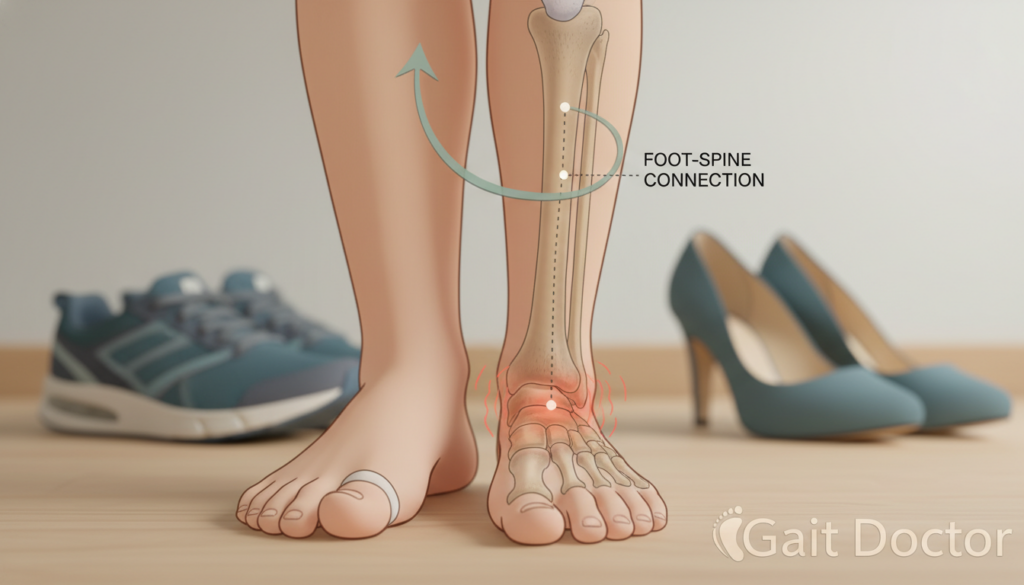
Foot problems like overpronation and supination often cause lower back pain. This is because they affect how our body moves. When our feet don’t move right, it can upset the balance in our body, hurting our lower back.
Overpronation and Supination
Overpronation means your foot rolls inward too much. Supination is when it rolls outward too much. Both can put extra stress on your leg and lower back, leading to pain.
Identifying Abnormal Foot Motion
To see if you overpronate or supinate, look at your shoe wear. Or, talk to a foot expert. Abnormal foot motion can be fixed with the right shoes or supports.
A top podiatrist says,
“The way we walk and our foot function affects our lower back health. Fixing foot problems is often key to easing lower back pain.”
Signs of bad foot motion include:
- Uneven shoe wear
- Pain in the feet, ankles, or legs
- Lower back pain that gets worse with activity
Knowing and fixing these problems can help ease lower back pain. It also improves how our body moves.
The Relationship Between Lower Back Pain and Feet Problems
The link between foot health and lower back pain is often missed. Yet, it’s key to our body’s function. When our foot doesn’t work right, it can start a chain of problems. These problems can reach up to our lower back.
How Foot Dysfunction Transfers Stress to the Lumbar Spine
Foot problems can make our body move in ways it shouldn’t. This can put uneven stress on our lower back. This stress can cause pain and discomfort.
Compensatory Movements and Their Consequences
When our foot doesn’t work right, our body tries to adjust. It changes how we move. This can make some muscles and joints in our lower back work too hard. This can lead to pain and even injury.
For example, if someone has overpronation, their foot rolls too much. This makes their leg turn inward. This inward turn can strain our lower back as we try to move normally.
| Foot Condition | Effect on Lower Back |
|---|---|
| Overpronation | Increased strain due to internal leg rotation |
| Supination | Altered gait leading to uneven stress distribution |
Experts say, “Abnormal foot mechanics can lead to lower back pain. This is because of the changed biomechanics and how our body tries to move differently.”
“The foot is a complex structure that plays a critical role in our ability to move and maintain posture. Dysfunction in the foot can have far-reaching consequences, including lower back pain.”
The Gait Cycle and Its Impact on Your Spine
The gait cycle is how we walk. It involves the legs, hips, and lower back moving together. It’s important for our spine health.
Phases of the Gait Cycle
The gait cycle has different phases. There’s the stance phase, when our foot touches the ground. And the swing phase, when our foot is lifted and moves forward. Knowing these phases helps us spot problems that might cause lower back pain.
Critical Moments of Force Transfer
There are key moments in the gait cycle when force moves from our feet to our spine. If our gait is off, it can put uneven stress on our lower back. Studies show that changes in how we walk can hurt our spine (PMC9338341).
Recognizing the Signs of Foot-Related Back Pain
Back pain from our feet can feel like pain, stiffness, or trouble moving. Knowing when and how the pain happens can tell us if it’s from our feet.
Timing and Pattern Recognition
Watching when and how the pain shows up can give us clues. For example, pain that gets worse after walking or standing might be from our feet. Keeping a pain journal helps track patterns and what might cause the pain.
Biomechanical Assessment: How Gait Doctor Evaluates Your Movement
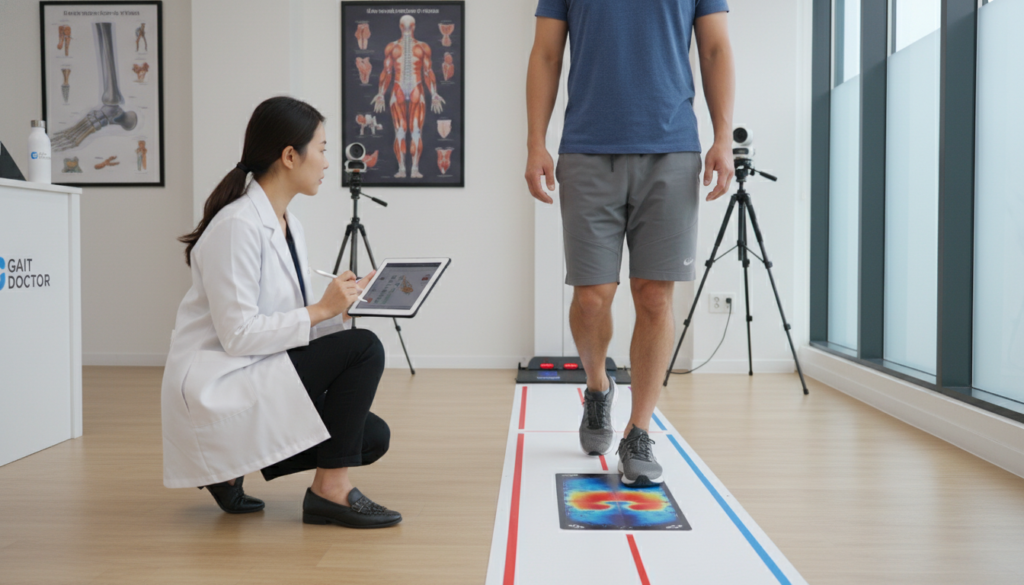
The biomechanical assessment at Gait Doctor looks at your gait cycle closely. This detailed check helps find out if your movement is causing lower back pain.
The Comprehensive Gait Analysis Process
A detailed gait analysis is done to check your movement. It looks at your walking, the kinetic chain, and any biomechanical problems.
- Observation of walking patterns to identify abnormalities
- Analysis of the kinetic chain to understand how forces are distributed throughout the body
- Identification of biomechanical issues that may be contributing to lower back pain
What to Expect During Your Assessment
At Gait Doctor, you’ll get a detailed and professional check-up. The process includes:
- Talking about your medical history and symptoms
- Looking at your gait and posture
- Using advanced tech to study your movement
A complete assessment is key to a good treatment plan. Gait Doctor finds the cause of your pain. Then, they give you personal advice to fix your biomechanical health.
| Assessment Component | Description |
|---|---|
| Medical History | A detailed discussion of your medical history and symptoms |
| Gait Analysis | A visual examination of your gait and posture |
| Movement Analysis | The use of advanced technology to analyze your movement patterns |
Gait Doctor combines these steps for a full view of your biomechanical health. They make a plan just for you.
Custom Orthotics as a Potential Support Option
Custom orthotics can help with lower back pain caused by foot problems. They support and stabilize the foot. This can help solve issues that lead to lower back pain.
For those with foot-related lower back pain, custom orthotics are very helpful. They fix problems like overpronation or supination. This makes pressure more even on the foot.
Understanding the Purpose and Limitations of Custom Orthotics
Custom orthotics have big benefits, but they’re not perfect. They’re part of a bigger plan to handle foot-related lower back pain.
What Orthotics Can and Cannot Address
Orthotics can fix issues like overpronation and supination. But, they might not work for problems not linked to foot mechanics.
Key benefits of custom orthotics include:
- Providing support and stability for the foot
- Redistributing pressure more evenly across the foot
- Helping to alleviate lower back pain related to foot dysfunction
Experts say,
“Custom orthotics can play a crucial role in the management of lower back pain by addressing underlying foot issues.”
This shows how important it is to get a full check-up. This helps decide if custom orthotics are right for you.
In short, custom orthotics are a great help for lower back pain from foot problems. Knowing what they can and can’t do helps make smart choices.
Complementary Approaches to Managing Foot-Related Back Pain
There are more ways to handle foot pain that affects the back. These methods can help along with usual treatments. They make you feel better and less sore.
Appropriate Footwear Selection
Choosing the right shoes is very important. Shoes that support and cushion your feet well can help a lot. They make your feet and back feel less stressed.
Key Features to Look For in Supportive Shoes
- Adequate Arch Support: Shoes should have enough arch support to stop overpronation or supination.
- Cushioning: Good cushioning in the midsole and forefoot helps soak up shock. It also lessens the impact on your joints.
- Stability: A stable shoe stops too much movement. This can make foot and back pain worse.
| Feature | Description | Benefit |
|---|---|---|
| Adequate Arch Support | Sufficient support for the arch of the foot | Prevents overpronation or supination |
| Cushioning | Ample cushioning in the midsole and forefoot | Reduces shock and impact on joints |
Choosing the right shoes is just one part. Exercises for foot and core stability are also key. They help make your muscles stronger. This supports your feet and lower back, making you feel better overall.
Conclusion: Taking Steps Toward Better Biomechanical Health
Keeping your biomechanical health in check is key for feeling good. This is very true for the link between your feet and lower back pain.
Feet and lower back are closely connected. Problems like overpronation and supination can cause pain in your back.
Knowing about your foot’s structure and how you walk can spot issues early. This can lead to using custom orthotics and the right shoes.
Fixing biomechanical problems and taking care of your feet can lower back pain. It also helps keep your whole body healthy.