
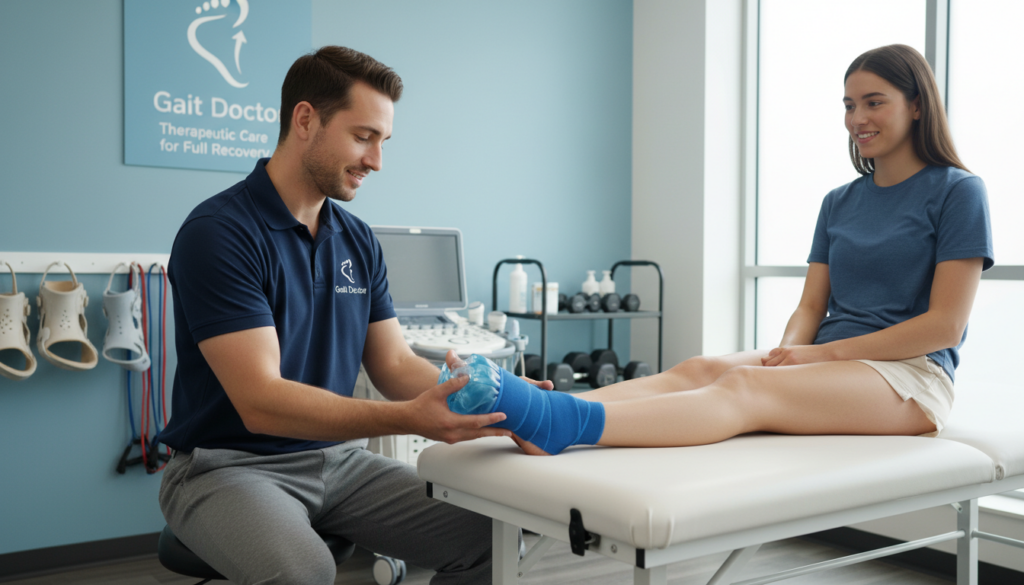
Peroneal tendonitis is when the tendons in your lower leg get inflamed. It happens when you use these tendons too much. This is common in athletes or people who do lots of ankle movements.
This condition makes your ankle hurt, swell, and feel weak. It’s hard to stand, walk, or run when you have it.
Knowing what causes it and how it feels is key to getting better. Treatment works best when you understand it. It can come from too much use, bad shoes, or ankle injuries.
Things like running on rough ground, jumping sports, and hiking can cause it. Runners, athletes in high-impact sports, and people with foot problems are at risk.
Key Takeaways
- Peroneal tendonitis is inflammation of the tendons connecting the lower leg to the foot.
- Causes include overuse, improper footwear, and ankle injuries.
- Symptoms include pain on the outside of the ankle, swelling, and weakness.
- Treatment options range from rest and physical therapy to corticosteroid injections and surgery.
- Recovery timelines vary by severity, with mild cases improving in 2-4 weeks.
Understanding Peroneal Tendonitis
The peroneal tendons help keep the ankle stable. They can get inflamed, causing pain. These tendons are on the outside of the foot and ankle.
Causes and Symptoms
Peroneal tendonitis happens when these tendons get inflamed. This is often because of overuse or repetitive strain. You might feel pain, swelling, and find it hard to move your foot.
Some common reasons for this include:
- Overuse
- Poor foot mechanics or biomechanics
- Inadequate footwear or orthotics
Doctors say, “Peroneal tendonitis is often linked to activities that involve repetitive ankle motion.”
“The peroneal tendons are subjected to significant stress during running, jumping, and other high-impact activities, making them prone to inflammation and injury.”
| Cause | Effect |
|---|---|
| Overuse | Inflammation of peroneal tendons |
| Poor Foot Mechanics | Increased strain on peroneal tendons |
Common Causes of Peroneal Tendonitis
Peroneal tendonitis often comes from repetitive strain and overuse of the tendons. Running or jumping can cause inflammation and irritation.
Overuse and Overload
The peroneal tendons can get hurt from overuse and overload. Too much stress without rest can cause pain and inflammation.
- Repetitive ankle motion
- Increased training intensity
- Inadequate footwear
Knowing why peroneal tendonitis happens is key to preventing it. By spotting the risks and taking steps to avoid them, you can lower your chance of getting it.
Some main reasons for peroneal tendonitis include:
- Repetitive strain: Activities that involve repetitive ankle motion.
- Overload: Sudden increases in training intensity or frequency.
- Poor foot biomechanics: Abnormalities in foot structure or function.
Recognizing the Symptoms
Peroneal tendonitis has clear signs that can affect your daily life. Spotting these signs early is key to getting the right treatment.
Pain Patterns and Locations
Pain on the outside of your ankle is a main symptom. It can spread along the peroneal tendons. You might also see swelling and feel tenderness.
Walking or running can make the pain worse. But resting can help ease it.
Some people feel their ankle is unstable or weak. This makes it hard to move. If you notice these signs, get help right away.
| Symptom | Description |
|---|---|
| Pain on the outside of the ankle | Pain that occurs on the lateral aspect of the ankle, often radiating along the peroneal tendons. |
| Swelling and tenderness | Inflammation and sensitivity in the affected area, which can be tender to the touch. |
| Instability or weakness | A feeling of the ankle giving way or being unable to support normal movements. |
Learn more about plantar fasciitis and how to deal with it on our page.
Risk Factors That Increase Vulnerability
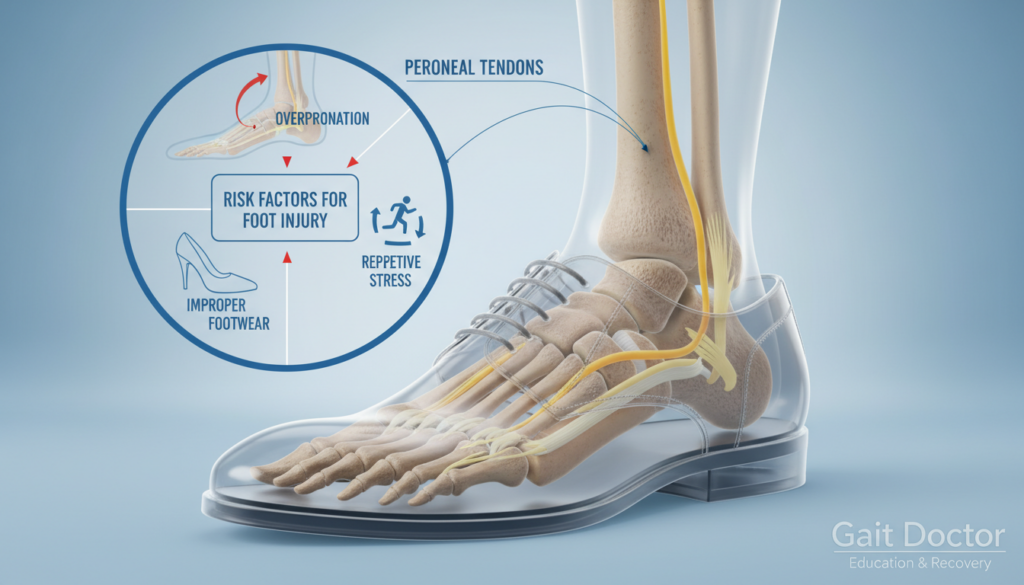
People with certain foot shapes are more likely to get peroneal tendonitis. This is because their feet don’t move right. Knowing these risks helps prevent and manage the condition better.
Foot Structure and Mechanics
Having high arches or hindfoot varus can make you more likely to get peroneal tendonitis. These foot shapes change how the foot and ankle work. This puts more stress on the peroneal tendons.
The table below shows common foot shapes and their risks:
| Foot Structure | Associated Risk |
|---|---|
| High Arches | Increased stress on peroneal tendons |
| Hindfoot Varus | Altered foot mechanics, increased tendon strain |
| Poor Biomechanics | Abnormal foot and ankle movement, increased risk of tendonitis |
Experts say,
“Biomechanical factors play a significant role in the development of peroneal tendonitis. Understanding these factors is essential for effective prevention and treatment.”
Diagnosing Peroneal Tendonitis
To find out if you have peroneal tendonitis, doctors use a clinical evaluation and imaging techniques. This way, they can make sure they know what’s wrong. Then, they can plan the best way to help you get better.
Clinical Assessment and Imaging
Doctors start by asking you about your health and doing a physical check. They look at your ankle and foot for signs of pain, swelling, or tenderness. They might also do special tests to check the peroneal tendons.
Imaging studies, like X-rays or MRI, are very important. X-rays help rule out things like broken bones. An MRI shows the tendons and tissues in detail. It helps find tendonitis or tears.
By using both a physical check and imaging, doctors can really know if you have peroneal tendonitis. This is key to picking the right treatment and helping you heal.
The Stages of Peroneal Tendonitis Recovery
Recovering from peroneal tendonitis takes several steps. Each step has its own goals and ways to treat it. Knowing these steps is key to getting better and staying that way.
Acute Phase
The first step is the acute phase. It’s all about making the pain and swelling go away. You’ll need to rest, use ice, and wear compression and elevate your ankle.
It’s important to stay away from things that make it worse. You might also need to use ankle braces or special shoes to help.
Subacute Phase
When the pain starts to go down, you move into the subacute phase. This is when you start to get stronger and more flexible. Physical therapy is big here, helping you get your ankle stable and strong.
The goal is to slowly build up how much you can do without hurting yourself again.
Rehabilitation Phase
The last step is the rehabilitation phase. This is all about getting back to full strength and making sure it doesn’t happen again. You’ll do more advanced exercises and learn how to move better.
This phase is very important. It helps make sure your tendons can handle everyday activities and sports.
To show how these steps work together, here’s a table:
| Stage | Goals | Treatment Approaches |
|---|---|---|
| Acute | Reduce pain and inflammation | RICE, supportive devices |
| Subacute | Restore function and flexibility | Progressive strengthening and mobility exercises |
| Rehabilitation | Restore full function, prevent recurrence | Advanced strengthening, proprioception training, functional activities |
By following these steps, you can get better from peroneal tendonitis and go back to your usual activities.
Conservative Treatment Approaches
Peroneal tendonitis can be treated well with conservative methods. These methods help reduce pain and swelling. They are key in the early stages of treatment.
Effective Use of Rest, Ice, and Supportive Devices
Rest, ice, compression, and elevation (RICE) are important. Rest stops further injury. Ice helps lessen pain and swelling.
Compression and elevation also help reduce swelling. Supportive devices like orthotics or braces give extra support. They help the ankle and foot stay stable.
Using these methods can help a lot in recovery. Rest, ice, and supportive devices work together well. They help manage peroneal tendonitis and prevent more injuries.
It’s important to talk to a healthcare professional. They can help find the best treatment plan for you.
Rehabilitation Exercises for Peroneal Tendonitis Recovery
To get your ankle and foot strong again, you need special exercises. These exercises help your ankle and foot work better and feel less pain.
Strengthening and Mobility Exercises
Strengthening exercises help the peroneal tendons work better. They make the muscles around your ankle stronger. Calf raises and ankle circles are good for this.
Mobility exercises help your ankle and foot move better. They also make it less stiff. Ankle dorsiflexion and plantarflexion are good choices.

For a good rehab plan, you need different exercises. Here’s a sample routine:
| Exercise | Repetitions | Sets |
|---|---|---|
| Calf Raises | 15 | 3 |
| Ankle Circles | 10 | 3 |
| Ankle Dorsiflexion | 10 | 3 |
For more info on exercises for peroneal tendonitis, check out this resource. It has good exercises for it.
The Role of Biomechanics in Foot and Ankle Health
Biomechanics is key for keeping our feet and ankles healthy. It affects how we walk and the pressure on our feet. If biomechanics is off, it can cause problems like peroneal tendonitis. Knowing about biomechanics helps doctors find and fix these issues.
Gait Patterns and Foot Loading
How we walk is called a gait pattern. It can really impact our feet and ankles. If our gait is off, it can put too much stress on our feet. This stress can lead to injuries, like peroneal tendonitis.
Foot loading is the pressure our feet feel when we move. Too much or the wrong kind of pressure can hurt our tendons and ligaments. This can also cause peroneal tendonitis.
A biomechanical check can spot problems with how we walk and foot pressure. This check looks at how we walk and where the pressure is on our feet. Doctors use this info to make plans to fix biomechanical issues that lead to peroneal tendonitis.
Experts say, “Checking biomechanics is very important for foot and ankle health. It helps find the real causes of problems like peroneal tendonitis.”
This check lets doctors make plans that fit each person’s needs.
In short, biomechanics is very important for our feet and ankles. By understanding and fixing biomechanical problems, we can help people with peroneal tendonitis get better.
When to Seek Professional Help
If your peroneal tendonitis symptoms don’t get better or get worse, you should get help. A Gait Doctor’s analysis can show how your foot and ankle work. This helps find problems that might be causing your pain.
Gait Doctor’s Analysis and Custom Orthotics
A gait analysis looks at how you walk and run. It finds any problems in how your body moves. This info helps make custom orthotics just for you.
Custom orthotics are very important for fixing biomechanical issues. They give your foot and ankle the support they need. This helps ease the pain in your peroneal tendons and speeds up healing.
If you have ongoing pain, swelling, or feel unstable in your ankle, get help right away. A doctor can check your condition and suggest the best treatment. This might include a Gait Doctor’s analysis and custom orthotics.
How Gait Doctor’s Analysis May Support Recovery
A Gait Doctor’s biomechanical assessment can help with peroneal tendonitis recovery. They look at how your foot and ankle move during walking or running. This helps find and fix any gait problems.
The Biomechanical Assessment Process
Understanding how your foot and ankle work is key. A Gait Doctor looks at your gait patterns. They find out if your gait is causing extra stress on your peroneal tendons.
- Evaluation of foot alignment and structure
- Assessment of ankle mobility and strength
- Analysis of gait patterns during different activities
After the assessment, a Gait Doctor creates a targeted treatment plan. This plan might include custom orthotics, exercises, or new shoes. It’s all about fixing the biomechanical issues.
Fixing these issues can lower your chance of getting tendonitis again. A Gait Doctor’s analysis helps treat peroneal tendonitis in a complete way.
Conclusion: Moving Forward After Peroneal Tendonitis
Getting better from peroneal tendonitis takes a lot of work. It needs good treatment, exercises, and checking how your body moves. Knowing what to do helps you get back to doing what you love.
After you get better, you need to fix the problems that caused it. This might mean changing how you move, doing exercises to get stronger, and using special shoes or supports.
Seeing a gait doctor and getting custom orthotics is also very helpful. They help find and fix any body movement problems that might be making your tendonitis worse.