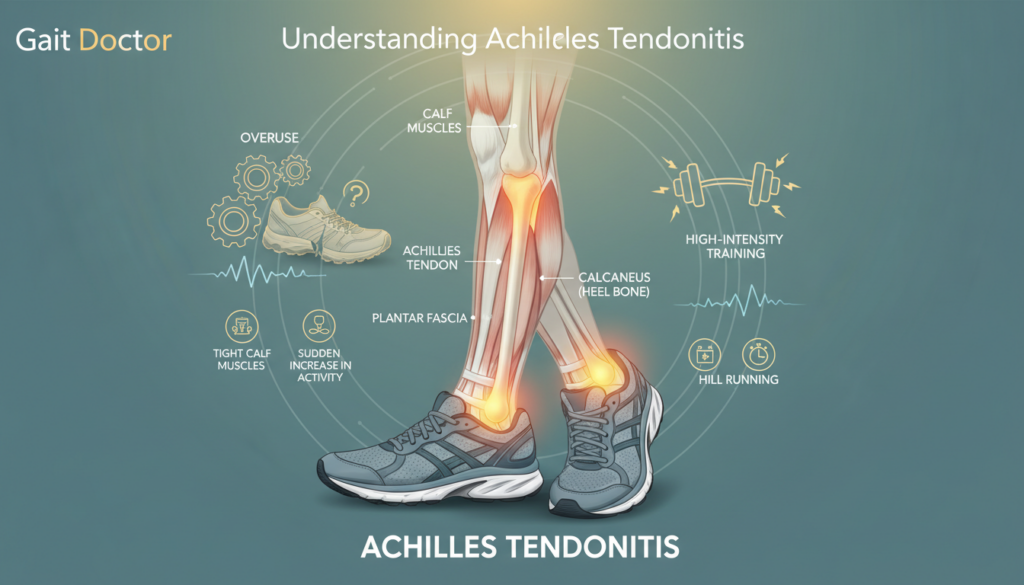
Achilles tendonitis is a common problem. It affects the Achilles tendon. This tendon connects the calf muscles to the heel bone. It causes pain, stiffness, and swelling, making simple tasks hard.
Many things can cause Achilles tendonitis. These include too much strain, overuse, and how the body moves. Knowing the symptoms and causes helps manage and find relief.
Checking how you walk and your body’s mechanics can help find the right support. Fixing these issues can ease symptoms and stop more harm.
Key Takeaways
- Understanding the causes and symptoms of Achilles tendonitis is crucial for effective management.
- Gait analysis and biomechanical assessment can help identify the best support options for recovery.
- Addressing biomechanical issues can alleviate symptoms and prevent further injury.
- Repetitive strain and overuse are common contributing factors to Achilles tendonitis.
- Proper treatment and prevention strategies can help individuals recover and prevent future occurrences.
What is Achilles Tendonitis?
Achilles tendonitis is a condition that hurts the ankle and lower leg. It happens when the Achilles tendon gets inflamed. This is often because of too much strain or overuse.
It’s common in athletes who run a lot or do activities that move the ankle a lot.
Defining the Condition
Achilles tendonitis means the Achilles tendon is inflamed. It can be split into two main types. Knowing these types helps doctors figure out what’s wrong and how to treat it.
Types of Achilles Tendonitis
There are two main types of Achilles tendonitis. Non-insertional Achilles tendonitis affects the middle part of the tendon. Insertional Achilles tendonitis affects the part that attaches to the heel bone.
Doctors use gait analysis to find out if bad movement patterns cause it.
Anatomy of the Achilles Tendon
Knowing how the Achilles tendon works is key. It’s a strong cord that links the calf muscles to the heel. This tendon helps us walk, run, and jump by passing muscle power to the heel.
Structure and Function
The Achilles tendon is made to handle a lot of stress. It’s full of strong fibers that help it do its job well. This lets us move around easily and do sports.
The tendon works with the calf muscles. When these muscles contract, they pull the tendon. This makes the foot point down, helping us move forward.
Importance in Movement and Gait
The Achilles tendon is very important for moving around. It helps us push off the ground and move. If it gets hurt, it can cause pain and swelling, known as Achilles tendonitis.
| Movement | Achilles Tendon Function |
|---|---|
| Walking | Transmits forces from calf muscles to heel bone, facilitating propulsion |
| Running | Enables rapid plantarflexion, essential for quick propulsion |
| Jumping | Stores and releases energy, contributing to explosive movement |
In short, the Achilles tendon is vital for movement. Understanding its role helps us avoid injuries and keep it healthy.
Common Causes of Achilles Tendonitis
Knowing why Achilles tendonitis happens is key. It’s about overuse and how our body moves. Tendonitis often comes from too much strain on the tendon.
Overuse and Training Errors
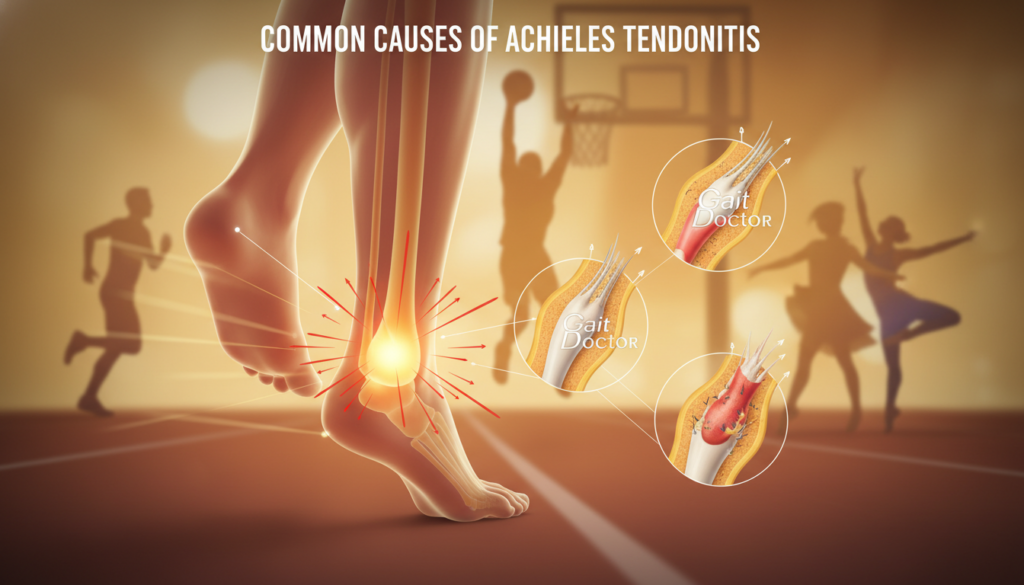
Too much strain on the Achilles tendon is a big reason for tendonitis. This is true for athletes who run, jump, or change direction fast. If you suddenly do more intense workouts, you might get tendonitis.
Biomechanical Factors
How our body moves also matters. Bad walking patterns can stress the tendon, causing pain. Leg length differences or other body issues can also lead to tendonitis. Checking how we walk can help fix these problems.
In short, tendonitis comes from too much use and how we move. Knowing this helps us prevent and treat it. Fixing how we move and train can lower the risk of tendonitis.
Recognizing the Symptoms
It’s important to spot the early signs of Achilles tendonitis. This condition starts with mild pain and can get worse. Knowing the signs early helps a lot.
Early Warning Signs
Look out for morning stiffness or pain. This is common in people with Achilles tendonitis. You might also feel pain in the tendon after being active.
Progressive Symptoms
As tendonitis gets worse, symptoms get stronger. You might see swelling, redness, or warmth. The pain can also last longer, even when you’re not moving.
In bad cases, the tendon might thicken. You might feel a bump or hear a creaking sound when you move your ankle.
Knowing these signs is key. It helps you get help early. Early treatment can make a big difference.
Risk Factors That Increase Vulnerability
Some things can make you more likely to get Achilles tendonitis. People who do lots of sports or high-impact activities are at higher risk. This is because their tendons get stressed a lot.
Activity-Related Factors
Playing sports that involve running, jumping, or quick turns can raise your risk. Training errors like too much intensity or too many workouts can also cause it. For example, runners who suddenly increase their miles are more likely to hurt their tendons.
To lower these risks, start training slowly and follow a plan. You might also want to get a gait analysis. This can help find and fix any issues that might stress your Achilles tendon.
Physical Characteristics
Some physical traits can also increase your risk. Having tight calf muscles or abnormal gait patterns can make you more likely to get Achilles tendonitis. Tight calf muscles can’t handle stress as well. And bad gait patterns can put uneven stress on the tendon.
Knowing these risk factors is key for preventing and treating Achilles tendonitis. By spotting and fixing these issues, you can lower your risk. This helps keep your tendons healthy.
Effective Achilles Tendonitis Relief Strategies
Getting relief from Achilles tendonitis is possible. You just need the right mix of rest, changing how you move, and other methods. This condition can really hurt your daily life. But, knowing how to manage it can make a big difference.
Rest and Activity Modification
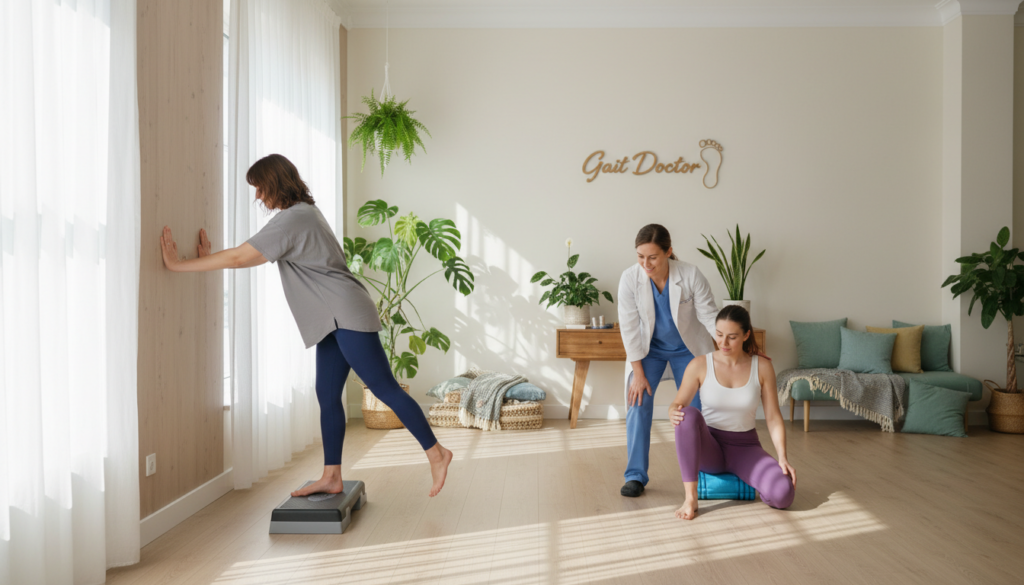
Rest is key in treating Achilles tendonitis. Stay away from things that make it worse. Activity modification means changing your daily habits to ease the tendon’s stress. For example, try swimming or cycling instead of running.
Ice and Compression Techniques
Ice helps lower inflammation and pain. Put ice on the sore spot for 15-20 minutes, a few times a day. Compression also helps by reducing swelling. Use bandages or sleeves to support and ease pain.
Using rest, changing how you move, ice, and compression together can really help. Don’t forget to get a gait analysis. It can show if your walking or running is causing the problem.
| Relief Strategy | Description | Benefits |
|---|---|---|
| Rest | Avoiding activities that aggravate the condition | Reduces pain and inflammation |
| Activity Modification | Adjusting daily routines to minimize stress on the Achilles tendon | Minimizes further injury |
| Ice | Applying ice to reduce inflammation and pain | Reduces pain and inflammation |
| Compression | Using compression to reduce swelling | Provides support and alleviates pain |
The Role of Biomechanics in Achilles Tendon Health
Biomechanics are key to keeping the Achilles tendon healthy. Bad walking or moving can hurt the tendon, causing pain. Knowing these biomechanics helps make good treatment plans.
How Gait Affects the Achilles Tendon
Gait analysis finds bad walking that strains the Achilles tendon. Overpronation or supination can make stress uneven. Good walking mechanics help avoid tendonitis.
Common Movement Patterns That Increase Strain
Running or jumping can hurt the Achilles tendon. People in sports with lots of ankle motion get tendonitis more. Changing how you move and wearing supportive shoes can help.
Some bad ways to move that hurt the Achilles tendon are:
- Overstriding
- Running on uneven surfaces
- Jumping or landing wrong
Fixing these movement issues can lower the chance of tendonitis. It helps keep the tendon healthy.
How Gait Analysis Can Help Identify Contributing Factors
Gait analysis helps find out why Achilles tendonitis happens. It looks at how a person moves. This helps find out if their movement is putting too much stress on the tendon.
What a Biomechanical Assessment Involves
A biomechanical assessment checks how a person moves. It looks at walking, running, and other activities. It finds out if there are any problems that could hurt the Achilles tendon.
Gait Doctor’s Approach to Movement Analysis
Gait Doctor uses special tools to study how a person moves. They look for any problems that might cause Achilles tendonitis. This helps find the best way to fix the issue.
| Assessment Component | Description |
|---|---|
| Gait Analysis | Evaluation of an individual’s walking or running pattern |
| Movement Pattern Analysis | Assessment of how a person performs physical activities |
| Biomechanical Evaluation | Examination of the lower limbs to identify biomechanical issues |
Supportive Options for Treatment
Effective treatment of Achilles tendonitis often involves supportive options. These help lessen strain on the tendon and aid in recovery. Key options include the right footwear and orthotics.
Footwear and Orthotics
Supportive footwear can lessen tendon strain. It provides good arch support and cushioning. It’s important to pick shoes that fit your foot’s needs, like arch type.
Custom Orthotics as a Support Option
Custom orthotics offer extra support and stability. They’re made to fit your foot’s specific needs. This helps ease stress on the Achilles tendon, aiding in recovery.
For more info on Achilles tendonitis causes and relief, visit this resource.
In summary, supportive options like the right shoes and custom orthotics are key in treating Achilles tendonitis. Understanding their role and how they can be customized helps manage the condition and aids in recovery.
Conclusion: A Comprehensive Approach to Achilles Tendon Health
Managing Achilles tendon health well is key. Knowing what causes and symptoms are important. This helps create a good treatment plan.
Gait analysis and biomechanical assessment are very important. They help find out why Achilles tendonitis happens. This way, doctors can make better treatment plans.
Rest, changing how you move, ice, and compression are all helpful. So are supportive shoes and orthotics. These steps help heal the tendon and prevent future problems.
## FAQ
### Q: What is Achilles Tendonitis?
Achilles tendonitis is when the Achilles tendon gets inflamed. This causes pain, stiffness, and swelling.
### Q: What are the common causes of Achilles Tendonitis?
Athletes or those who do high-impact activities often get Achilles tendonitis. It’s from too much strain or overuse. Bad movement patterns can also cause it.
### Q: What are the symptoms of Achilles Tendonitis?
Symptoms range from mild to severe pain. You might feel stiff or have morning pain. Swelling, redness, or warmth on the tendon are signs too.
### Q: How is Achilles Tendonitis diagnosed?
Doctors use a physical exam, medical history, and imaging like ultrasound or MRI to diagnose it.
### Q: What are the risk factors for developing Achilles Tendonitis?
Some activities and physical traits raise your risk. For example, athletes in high-impact sports or those with tight calf muscles are more likely to get it.
### Q: How can Achilles Tendonitis be treated?
Rest, modifying activities, using ice and compression, and stretching can help. Gait analysis helps find bad movement patterns that need fixing.
### Q: What is the role of biomechanics in Achilles Tendon health?
Biomechanics are key to tendon health. Bad movement can strain the tendon, leading to pain. Gait analysis helps find and fix these issues.
### Q: How can gait analysis help identify contributing factors to Achilles Tendonitis?
Gait analysis spots bad movement patterns that strain the tendon. It helps in making treatment plans and aiding recovery.
### Q: What supportive options are available for treatment?
Wearing the right shoes and using custom orthotics can help. They reduce tendon strain and offer support.
### Q: How can a comprehensive approach to Achilles Tendon health be achieved?
Understanding causes, symptoms, and factors is key. Gait analysis and biomechanical assessment help find and fix bad movement patterns. This informs treatment plans.