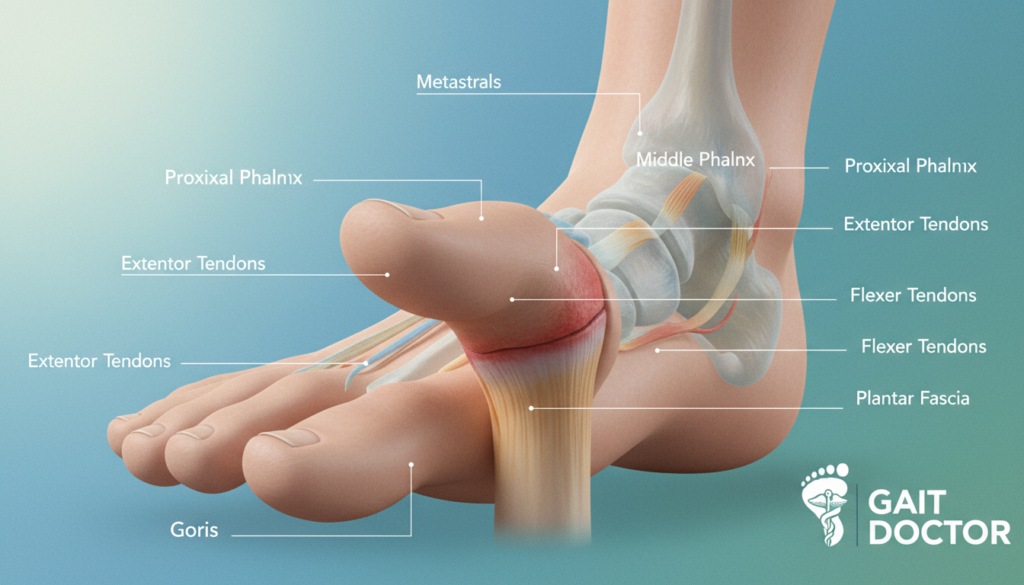
Hammer toe is a toe problem that hurts and affects foot health. It happens when muscles, tendons, or bones don’t work right. This makes the toe bend or curl.
This issue can come from many things. It might be because of shoes that don’t fit well, bones that are shaped wrong, or muscles that don’t balance right. Knowing why it happens helps find the best way to fix it.
There are many non-surgical options to help with hammer toe. These options aim to make symptoms better and help the foot work better.
Key Takeaways
- Understanding hammer toe and its causes is essential for effective management.
- Non-surgical options can provide relief from symptoms.
- Proper footwear and foot care can help prevent the condition from worsening.
- Muscle imbalance is a significant factor in the development of hammer toe.
- Seeking professional advice is crucial for proper diagnosis and treatment.
Understanding Hammer Toe
Hammer toe is a toe deformity. It makes the toes bend in a weird way.
Definition and Appearance
A hammer toe bends or curls. This happens because of muscle, tendon, or ligament imbalance. Some hammer toes can be straightened, while others can’t.
Types of Hammer Toe
Hammer toes come in two types: flexible and rigid. Flexible ones can be straightened by hand. Rigid ones can’t be straightened.
Knowing the type helps pick the right treatment.
The Anatomy of Hammer Toe
Hammer toe affects the toe joints and tendons. It causes the toe to bend in an odd way. This makes walking and wearing shoes hard.
Affected Joints and Tendons
The toes’ joints and tendons are key in hammer toe. The problem is at the proximal interphalangeal joint (PIP). It bends down because of muscle, tendon, or ligament imbalance.
For more info, check out Orthopaedic Information from the AAOS.
- The PIP joint bends the toe.
- Tendons control this movement.
- An imbalance causes hammer toe’s bend.
Progression of the Condition
Hammer toe can get worse if not treated. At first, the toe can still move. But, it can become fixed in a bent way over time.
- Early stages: The toe can still be straightened.
- Advanced stages: The toe becomes rigid and can’t be straightened.
- Potential complications: Pain, corns, and walking trouble.
Knowing how hammer toe works and gets worse is key. Treating it right can help symptoms and improve life.
Primary Causes of Hammer Toe
Many things can cause hammer toe. Knowing what they are helps prevent and treat it.
Muscle and Tendon Imbalance
Muscle and tendon imbalance is a big cause. When muscles and tendons don’t match, toes can bend wrong. This can happen from shoes that are too tight.
Genetic Predisposition
Genetic predisposition is another big factor. If your family has foot problems, you might get hammer toe too. This is because your foot’s shape and how it works can be different.
Previous Injuries or Conditions
Old injuries or health issues can also cause hammer toe. For example, a hurt toe or foot can bend wrong over time. Arthritis can also make joints hurt and lead to hammer toe.
Risk Factors and Contributing Elements
It’s important to know what can cause hammer toe. This helps in preventing and managing it. Many things can lead to this condition.
Footwear Choices
Wearing the wrong shoes is a big risk for hammer toe. High heels and tight shoes push toes into bad shapes. Shoes that are too tight can cause hammer toe over time.
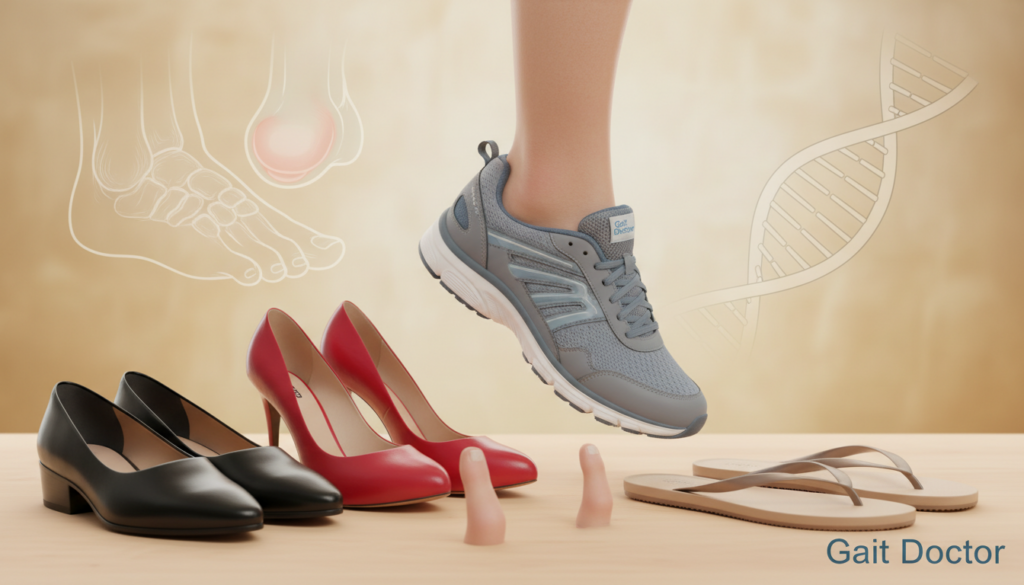
Wear shoes that fit right and let toes move. Proper footwear stops hammer toe and helps if you already have it.
Age-Related Factors
Getting older also raises the risk of hammer toe. As we age, our foot muscles and tendons get weaker. This makes older people more likely to get hammer toe.
Other Medical Conditions
Some health issues can also lead to hammer toe. Arthritis, diabetes, and nerve problems can harm foot muscles and tendons. Also, foot injuries or surgeries can increase the risk.
Knowing these risks helps prevent or manage hammer toe. Make smart shoe choices, take care of your feet, and handle health issues.
Recognizing Hammer Toe Symptoms
Knowing the signs of hammer toe is key to fixing it. Hammer toe shows certain signs and symptoms. These can really hurt your life quality.
Physical Signs
Hammer toe makes a toe bend or curl down. You might see corns or calluses on the toe’s top or between toes. Sometimes, the toe can’t be straightened.
- Corns or calluses on the toe
- Bent or curled toe
- Redness and swelling around the toe
Pain Patterns
Pain from hammer toe can change. It gets worse with tight shoes or activities that press on the toe. The pain might feel sharp or dull, based on how bad it is.
Common pain patterns include:
- Pain when wearing certain shoes
- Discomfort when walking or standing
- Aching or sharp pain in the toe
Mobility Limitations
Hammer toe can make moving hard. It hurts to walk or stand for long. This limits how much you can move and do.
Spotting these signs early can help fix the problem before it gets worse.
How Hammer Toe Affects Daily Activities
Hammer toe makes everyday tasks hard. It causes discomfort and pain. This lowers the quality of life for those with it.
Walking and Standing Challenges
Walking and standing are tough for those with hammer toe. The toe’s bend causes discomfort and pain. It’s hard to do tasks that keep you on your feet.
The toe’s bend puts friction and pressure on it, hurting when in shoes. This makes daily tasks even harder.
Impact on Exercise and Sports
Hammer toe also affects exercise and sports. Running, jumping, or quick changes hurt more. This leads to more pain and discomfort.
People with hammer toe should change their exercise routines. Choose low-stress activities like swimming or cycling.
Diagnosing Hammer Toe Properly
Getting a proper diagnosis is key to treating hammer toe right. Doctors use many steps to figure out how bad it is and how it affects your foot.
Physical Examination
The first step is a physical examination. Doctors check how flexible your toe is, its alignment, and how much it can move. This helps them know what kind of hammer toe you have and how serious it is.
Imaging Studies
Imaging studies, like X-rays, are used next. They help see if there are bone problems or arthritis that might be causing your hammer toe. This info is important for choosing the right treatment.
Gait Analysis Importance
A gait analysis might also be done. It shows how hammer toe changes your walk. This helps doctors find other foot problems that might be adding to your condition. It helps them make a better treatment plan for you.
Experts say, “A full diagnosis is essential for a good treatment plan for hammer toe.” This way, doctors can tackle all parts of the problem. This gives you the best chance for a good outcome.
The Role of Biomechanics in Hammer Toe Development
Walking in a way that’s not normal can lead to hammer toe. Knowing how biomechanics work is key to stopping and treating it.
Foot Mechanics During Walking
How our feet move when we walk is very important. Abnormal foot mechanics can put too much pressure on our toes. This can cause hammer toe to form.
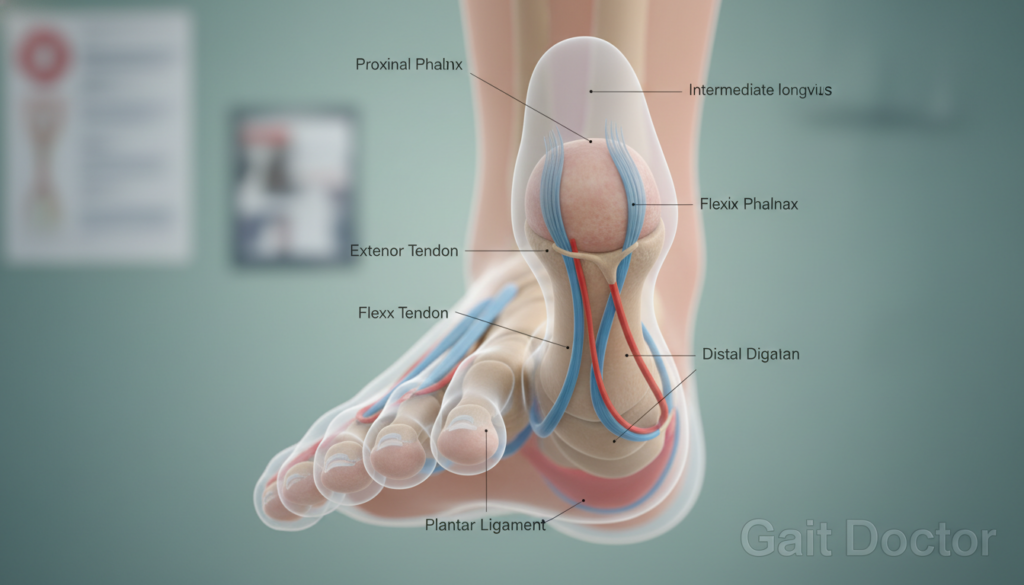
How Abnormal Gait Contributes
An abnormal gait can make hammer toe worse. It can make the foot uneven, stressing some toes more than others. This stress can make hammer toe worse.
Connection to Other Lower Limb Issues
Problems in the lower limb often link together. Issues like plantar fasciitis and ankle instability can also happen. Knowing these connections helps in treating everything together.
| Biomechanical Issue | Effect on Foot | Related Conditions |
|---|---|---|
| Abnormal Gait | Uneven pressure distribution | Hammer Toe, Plantar Fasciitis |
| Poor Foot Mechanics | Increased stress on toes | Hammer Toe, Toe Deformities |
Hammer Toe Treatment Options and Approaches
Hammer toe treatment has many options. You can choose from conservative management to medical intervention. The right choice depends on how bad the toe is, your health, and what you prefer.
Conservative Management Approaches
Many people start with conservative management. This means wearing different shoes, doing toe exercises, and using pads or straps. Conservative management can help a lot and slow down the toe’s problem.
When to Consider Medical Intervention
If conservative management doesn’t work, or if the toe is very bad, you might need medical intervention. This could mean surgery to fix the toe. Always talk to a doctor before deciding on surgery.
Setting Realistic Expectations
It’s important to know what to expect from hammer toe treatment. Treatment can really help, but it works differently for everyone. Knowing what each treatment can do helps you make the best choice.
Non-Surgical Management Strategies
Managing hammer toe without surgery needs a few steps. You can change your shoes and do toe exercises. These steps can make your foot feel better.
Appropriate Footwear Selection
It’s important to pick the right shoes for hammer toe. Look for shoes with a wide toe box. They help by not putting too much pressure on your toes. Also, low heels are better because they don’t strain your foot as much. For more tips, check out NYU Langone’s guide on non-surgical treatments.
Toe Exercises and Stretches
Doing toe exercises every day keeps your toes flexible and strong. Try toe curls and spreads. They are easy to do.
- Toe curls: Curl your toes under and then release.
- Toe spreads: Spread your toes apart as far as you can.
Padding and Strapping Techniques
Padding and strapping can help by easing pressure on your toe. There are many ways to do this, including:
Over-the-Counter Options
You can find padding and strapping at pharmacies. They can help right away.
Custom Solutions
If your case is more serious, a doctor can make special padding. This is made just for you.
Biomechanical Assessment and Custom Orthotics
Custom orthotics can help with hammer toe. They come from a detailed biomechanical assessment. This helps find out why you have hammer toe.
How Gait Doctor’s Assessment Process Works
Gait Doctor checks your gait analysis to find foot problems. They watch how you walk and check your foot’s alignment. They also look at how much your foot and ankle can move.
The Role of Orthotics in Supporting Foot Function
Custom orthotics are key in helping your foot. They spread out pressure and support your toes. This can lessen the pain from hammer toe. For more info, visit Gait Doctor’s website.
| Benefits of Custom Orthotics | Description |
|---|---|
| Reduces Pressure | Redistributes pressure away from sensitive areas |
| Supports Foot Function | Helps maintain proper foot alignment and mechanics |
Limitations and Individual Variability
Custom orthotics work well for many, but not all. How well they work depends on your hammer toe, foot shape, and health. A good biomechanical assessment is key to finding the right treatment.
Conclusion
Early action and the right care are key to easing hammer toe pain. Knowing what causes it and how to spot the signs is important. Using non-surgical methods can greatly improve life quality.
Choosing the right shoes and doing toe exercises can help. Padding or strapping can also be useful. Getting your feet checked and using custom orthotics is also important.
Acting early on hammer toe can lessen pain and boost movement. It can also stop problems from getting worse. With the right treatment, living without pain and keeping feet healthy is possible.