Foot arthritis can make your feet hurt a lot. It’s important to know the signs to help manage it.
Spotting arthritis symptoms early is key. This can stop more harm and ease foot pain.
Knowing about foot arthritis is important. This article will explain the basics, types, and how it affects your foot. It will also talk about early signs and diagnosis.
Key Takeaways
- Early recognition of arthritis symptoms is crucial for effective management.
- Foot arthritis can significantly impact daily activities.
- Understanding the condition helps in alleviating foot pain.
- Timely diagnosis can prevent further damage.
- Effective management involves a comprehensive approach.
Understanding Foot Arthritis
Foot arthritis is complex because it has many types. Each type has its own causes and symptoms. It makes joints in the foot swell, causing pain, stiffness, and less movement.
What Is Foot Arthritis?
Foot arthritis is not just one thing. It’s a term for several types of arthritis in the foot. Osteoarthritis and rheumatoid arthritis are common ones. Osteoarthritis breaks down cartilage, causing bones to rub together and hurt a lot. Rheumatoid arthritis makes the immune system attack the joints, causing inflammation and pain.
Common Types of Foot Arthritis
There are many types of arthritis that can hit the foot, including:
- Osteoarthritis
- Rheumatoid Arthritis
- Post-traumatic Arthritis
- Gout
Each type has its own reasons and signs. For example, osteoarthritis comes from wear and tear. Rheumatoid arthritis is caused by the immune system attacking the joints. Knowing these differences helps in managing the condition better.
| Type of Arthritis | Causes | Symptoms |
|---|---|---|
| Osteoarthritis | Wear and tear, aging | Pain, stiffness, limited mobility |
| Rheumatoid Arthritis | Autoimmune response | Inflammation, pain, swelling |
A medical expert says,
“Knowing the specific type of foot arthritis is key to finding the right treatment.”
By figuring out the type of foot arthritis and its symptoms, people can get the right medical help. This helps manage their condition well.
The Anatomy of the Foot and How Arthritis Affects It
It’s important to know how arthritis changes the foot. The foot has many joints, bones, and ligaments. They work together to support and move us.
Key Joints in the Foot
The foot has key joints that arthritis can hit hard. These are the ankle, subtalar, and metatarsophalangeal joints. Arthritis makes these joints hurt, leading to less movement and pain.
How Arthritis Impacts Foot Structure
Arthritis changes the foot’s shape by causing inflammation and bone spurs. It can also make the foot look different, like hammertoes or bunions. This makes walking harder.
| Joint | Common Arthritis Effects |
|---|---|
| Ankle Joint | Pain, stiffness, and reduced mobility |
| Metatarsophalangeal Joints | Inflammation, pain, and deformities |
A study shows arthritis changes the foot’s shape. This affects people’s quality of life.
“Arthritis is a major cause of disability, and its impact on the foot can be very hard.”
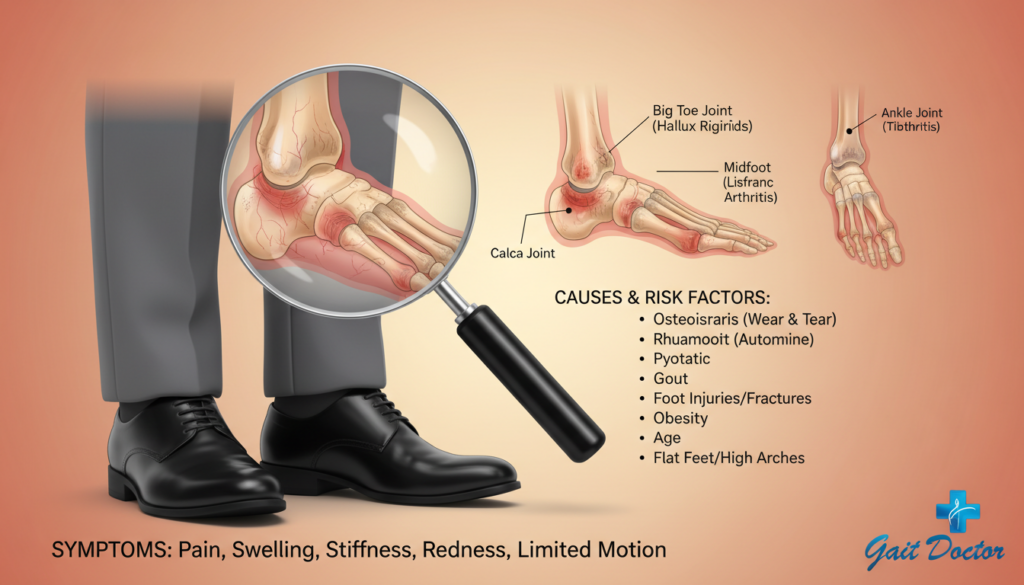
Causes and Risk Factors of Foot Arthritis
Foot arthritis comes from many things, like genes and lifestyle. Knowing why it happens helps prevent and manage it better.
Primary Causes
Wear and tear on joints cause foot arthritis, like osteoarthritis. Previous injuries or trauma to the foot raise the risk too. Also, autoimmune disorders like rheumatoid arthritis can hurt the foot’s joints, causing pain and stiffness.
Genetic Predisposition
Genes are key in foot arthritis. If your family has arthritis, you might get it too. Genetic predisposition can make some types of arthritis more likely.
Lifestyle Contributors
Lifestyle matters too. Being overweight and not moving enough can hurt your foot’s joints. Some activities can also cause injuries that lead to arthritis.
Knowing these risks helps you prevent and treat foot arthritis early. This can make a big difference in your life.
Recognising the Symptoms of Foot Arthritis
Spotting foot arthritis symptoms early is crucial. It helps manage the condition and stops more damage. Foot arthritis can make simple tasks hard. Catching symptoms early means you can get the right help.
Early Warning Signs
Pain and stiffness are early signs, often after rest. Swelling and red skin around joints can also happen. These signs might start small but can get worse.
Advanced Symptoms
As arthritis gets worse, symptoms get stronger. It’s harder to move your foot. Pain can spread to ankles and legs because of how you walk.
When to Seek Medical Attention
See a doctor if pain is bad, lasts long, or with swelling, redness, or warmth. Early treatment can make a big difference.
| Symptom | Description |
|---|---|
| Pain and Stiffness | Especially after rest or inactivity |
| Swelling and Redness | Around the affected joints |
| Reduced Mobility | Difficulty in performing certain foot movements |
How Foot Arthritis Is Diagnosed
Doctors use several ways to find out if you have foot arthritis. They start with a physical check-up. This helps them see if your joints are swollen or painful.
They might also use imaging tests. These tests, like X-rays or MRIs, show the bones and soft tissues. This helps doctors see if there’s any damage or inflammation.
By looking at your symptoms and test results, doctors can figure out if you have foot arthritis. They’ll talk to you about your health history and what you’re feeling. This helps them make a diagnosis.
It’s important to see a doctor if you think you might have foot arthritis. They can help you find the right treatment and manage your symptoms.
The Role of Biomechanics in Foot Arthritis
Biomechanics is key in understanding and managing foot arthritis. It shows how gait affects joint health. Abnormal gait can make foot arthritis worse by putting uneven stress on joints.
How Gait Affects Joint Health
Gait is how we walk. Bad gait can wear down foot joints. Abnormal gait patterns come from many things like structural issues and muscle imbalances. This can cause arthritis in the joints.
Fixing bad gait is important for foot arthritis. This can mean physical therapy to strengthen muscles. It also means using orthotics to support the foot and improve walking.
The Connection Between Feet and Other Joints
The feet are connected to other joints like the ankles, knees, hips, and lower back. Biomechanical issues in the feet can spread problems to these areas. For example, bad foot alignment can hurt the knee and hip, causing pain.
| Joint | Effect of Foot Biomechanics |
|---|---|
| Ankle | Abnormal foot biomechanics can lead to ankle instability and pain. |
| Knee | Issues with foot alignment can affect knee alignment, leading to pain. |
| Hip | Biomechanical problems in the feet can contribute to hip pain and discomfort. |
Fixing foot biomechanics can help other joints too. It can make moving easier and more comfortable.
Foot Arthritis Management: Comprehensive Approaches
Managing foot arthritis needs a mix of non-surgical and medical steps. A good plan can really help people with this condition live better.
Non-Surgical Support Options
First, we try non-surgical ways to help. This includes lifestyle changes like losing weight and exercising. We also avoid activities that make it worse.
Orthotics and special devices help too. They take pressure off the joints.
Physical therapy is key. It keeps joints moving and muscles strong. Customized exercise programs help a lot.

| Non-Surgical Option | Description | Benefit |
|---|---|---|
| Lifestyle Modifications | Weight loss, exercise, avoiding exacerbating activities | Reduces stress on joints |
| Orthotics and Assistive Devices | Custom shoe inserts, canes, walkers | Reduces joint stress, improves mobility |
| Physical Therapy | Customized exercise programs | Maintains joint mobility, strengthens muscles |
Medical Interventions and Their Limitations
When non-surgical methods don’t work, we might need medicine. This includes corticosteroid injections to lessen pain and swelling. Or, we might need surgical procedures like fusing or replacing joints.
Medical steps can help a lot, but they have limits. Surgery can have risks and might not get rid of all pain.
“The goal of treatment is to maximize function and minimize pain, improving the patient’s quality of life.”
It’s important to know all the options and what they mean for managing foot arthritis.
Daily Living with Foot Arthritis
Living with foot arthritis means you need to manage pain and change your lifestyle. You can do this by using different ways to ease pain and changing how you do things to not hurt your joints more.
Pain Management Techniques
Managing pain is key when you have foot arthritis. Here are some ways to do it:
- Using orthotics and changing your shoes can help.
- Doing low-impact exercises like swimming keeps you moving without hurting your feet.
- Applying heat or cold therapy can help with pain and swelling.
For more tips on foot problems, check out Gait Doctor.
Activity Modification Strategies
Changing how you do things every day can help with foot arthritis. Here are some tips:
- Stay away from activities that put too much stress on your foot.
- Use assistive devices like canes or walkers to help.
- Make your work area more comfortable to avoid foot strain.
| Activity | Modification | Benefit |
|---|---|---|
| Running | Switch to swimming or cycling | Reduces impact on foot joints |
| Standing for long periods | Take regular breaks to sit or use a supportive device | Decreases continuous strain on the feet |
By using these tips every day, people with foot arthritis can handle their symptoms better. They can also stay active and live well.
Custom Orthotics as a Support Option
Custom orthotics are great for managing foot arthritis. They offer support and ease pain. Knowing how they help can guide treatment choices.
How Orthotics May Help Support Foot Function
Custom orthotics are key in supporting foot function. They spread out pressure, ease pain, and boost movement.
- Redistribute pressure: Custom orthotics can lessen pain by easing pressure on sore spots.
- Improve alignment: They offer extra support to better foot alignment.
- Enhance mobility: They help keep people moving by cutting down pain and discomfort.
The Journal of Orthopaedic & Sports Physical Therapy says custom orthotics greatly improve function and cut pain in foot arthritis.
The Professional Assessment Process
Getting custom orthotics starts with a detailed check by a healthcare expert.
- A full foot and ankle check to find pain spots.
- Gait analysis to look at walking patterns and find issues.
- Making a custom orthotic device for the person’s needs.
A professional check is key to making sure custom orthotics work well. They help support foot function and ease pain.
Conclusion: Living Well with Foot Arthritis
Living well with foot arthritis means using a full plan. This plan includes managing the condition and making lifestyle changes. With the right steps, people can stay active even with this condition.
Knowing what causes, shows, and finds foot arthritis is key. Using custom orthotics, managing pain, and changing how you move can help. These steps can make symptoms better and life better too.
Good foot care and checking how your feet work are also important. They help avoid problems and keep your feet healthy. Being active in managing foot arthritis helps you stay independent.
With the right help and advice, you can live well with foot arthritis. Making smart choices and getting help when needed lets you keep doing things you love. You can also stay mobile and active.