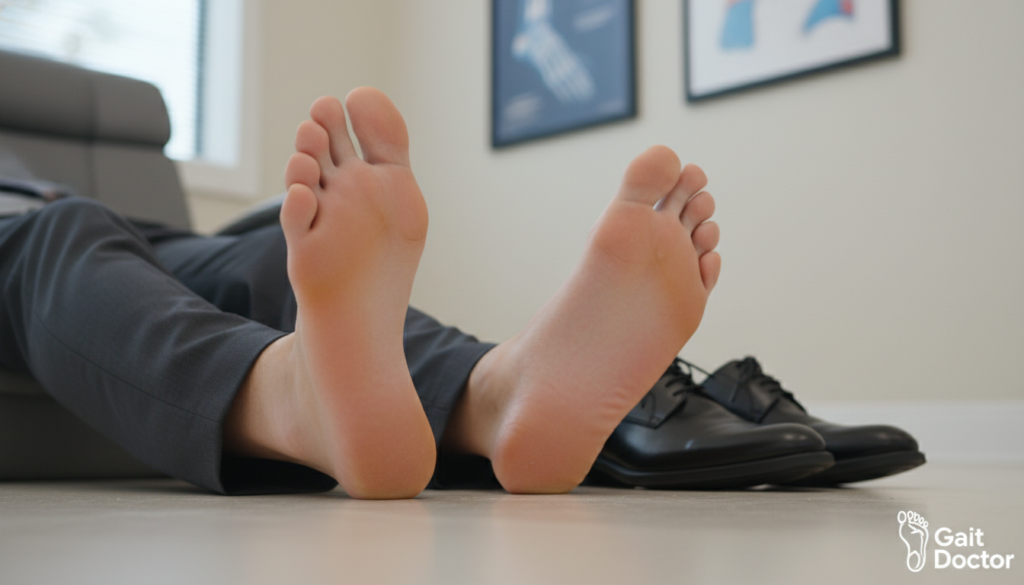
Having flat feet or fallen arches can really hurt your life. It happens when the arch of your foot doesn’t form right. This can lead to many problems.
It’s important to know why, how to tell, and how to fix flat feet. A detailed gait analysis can show what’s causing the issue.
Key Takeaways
- Flat feet can cause a lot of pain and make daily tasks hard.
- Getting a proper diagnosis is key to managing it well.
- Gait analysis is very important in figuring out the problem.
- Fixing flat feet needs a mix of treatments.
- Getting advice from a pro is vital for care that fits you.
What Causes Fallen Arches in Adults?
Flat feet, or fallen arches, happen when the arch of the foot collapses. This can cause pain and discomfort. It can also make it hard to do everyday things.
Defining Fallen Arches and Flat Feet
Fallen arches, also known as flat feet, happen when the arch of the foot doesn’t form right. This can be due to genetics, injury, or health issues like rheumatoid arthritis.
Prevalence and Demographics
Fallen arches are common in adults. Some groups are more likely to have them than others.
Age-Related Factors
Fallen arches get more common with age, after 40. As we get older, the tendons and ligaments that support the arch weaken. This makes it more likely to have flat feet.
Gender Differences
Studies show women are more likely to have fallen arches than men. Hormonal changes, pregnancy, and wearing high heels can increase this risk in women.
Knowing the causes and who is more likely to have fallen arches helps find better ways to manage it. By understanding the risks and symptoms, people can find the right treatment and feel better.
The Anatomy Behind Healthy Foot Arches
The human foot is amazing, with its detailed structure helping us stand and move. Knowing about healthy foot arches helps us understand foot function and problems that can happen.
Key Structural Components
The foot arch has multiple bones, ligaments, and tendons that work together. The medial, lateral, and transverse arches help spread pressure evenly across the foot.
Biomechanical Function of the Arch
The arch acts like a spring, absorbing shock when we step. This is key for protecting our joints and muscles.
How Arches Support Body Weight
Healthy foot arches help carry our weight by spreading pressure. The arch acts as a bridge, transferring forces from heel to toes. This helps us stay balanced and stable.
| Component | Function |
|---|---|
| Bones | Provide structural support |
| Ligaments | Connect bones, provide stability |
| Tendons | Enable movement, support arch |
Knowing about foot arches is key for fixing fallen arch problems. It helps us take care of our feet and avoid future issues.
Common Causes and Risk Factors
Fallen arches, or flat feet, come from many sources. These include genetics, the environment, and health issues. Knowing what causes them helps us find ways to manage them better.
Genetic and Congenital Factors
Genetics play a big role in fallen arches. If your family has flat feet, you might get them too. Being born with certain traits can also lead to fallen arches.
Posterior Tibial Tendon Dysfunction
In adults, fallen arches often come from a tendon problem. The tendon that supports the arch can get inflamed or torn. This makes the arch collapse.
Injury and Trauma
Foot or ankle injuries can lead to fallen arches. Things like fractures or sprains can harm the tendons and ligaments. This can cause the arch to collapse.
Health Conditions Contributing to Arch Collapse
Some health issues can cause fallen arches. These include being overweight, arthritis, and other inflammatory conditions. These can damage the tendons and ligaments in the foot.
Obesity and Weight Factors
Being overweight puts extra stress on your feet. This can increase the chance of fallen arches. Eating right and exercising can help keep your weight in check.
Arthritis and Inflammatory Conditions
Arthritis and other inflammatory conditions can harm the tendons and ligaments. This can lead to fallen arches.
| Risk Factor | Description | Impact on Foot Health |
|---|---|---|
| Genetic Predisposition | Family history of flat feet | Increased likelihood of fallen arches |
| Posterior Tibial Tendon Dysfunction | Inflammation or tear of the posterior tibial tendon | Arch collapse and fallen arches |
| Obesity | Excess weight on the feet | Increased stress on the foot, potentially leading to fallen arches |
Knowing the causes and risk factors of fallen arches is key. By tackling these, we can lower our risk. This helps keep our feet healthy.

Recognizing Symptoms of Fallen Arches
Knowing the signs of fallen arches is key to getting help. Fallen arches, or flat feet, can cause many problems. These problems can affect your feet and how you move around.
Physical Signs and Appearance
One sign of fallen arches is how your foot looks. Your foot might look different, with a less noticeable arch or no arch at all. This can make shoes wear out unevenly and not fit right.
Pain Patterns and Locations
Pain from fallen arches can show up in different places. You might feel it in your foot, ankle, or leg. The pain can be mild or very bad. It often gets worse when you stand, walk, or run.
According to the Mayo Clinic, pain can be on the bottom of your foot or around your heel.
Fatigue and Discomfort
People with fallen arches often feel tired and uncomfortable after being active. The lack of arch support puts strain on muscles and tendons. This can make your feet and legs feel tired and sore.
Impact on Mobility and Daily Activities
Fallen arches can make it hard to move around and do everyday things. The way your foot moves can make walking, standing, and sports harder. Spotting these signs early can help you find ways to manage them.
| Symptom | Description |
|---|---|
| Physical Signs | Flattening of the arch, uneven wear on shoes |
| Pain Patterns | Pain in the foot, ankle, leg; exacerbated by standing or walking |
| Fatigue | Feeling of tiredness in the feet and legs, specially after activity |
| Mobility Issues | Difficulty walking, standing, or participating in sports |
How Fallen Arches Affect Your Gait
Fallen arches change how we walk. This can affect our lower limbs and posture.
Changes in Walking Mechanics
With fallen arches, our feet don’t absorb shock well. This can cause overpronation. Our foot rolls inward too much, straining our foot and ankle.
Overpronation and Its Effects
Overpronation can cause pain in the foot, ankle, and knee. It also affects how weight is distributed, changing our lower limb alignment.
Compensation Patterns
People with fallen arches and overpronation might change how they walk. This can lead to compensation patterns. Other parts of the body try to make up for the discomfort.
Effects on Knees, Hips, and Back
Changes in walking and compensation patterns can affect more than just the feet. They can lead to knee, hip, and back problems. Altered biomechanics can strain the knee joint, causing pain.
| Area Affected | Potential Issues |
|---|---|
| Knees | Pain, strain on the knee joint |
| Hips | Altered biomechanics, pain |
| Back | Strain, discomfort due to postural changes |
Biomechanical Assessment and Gait Analysis
Gait analysis gives us insights into fallen arches. It’s key for understanding and managing the condition.
Professional Assessment Methods
Experts use many ways to check the foot and leg. They look at how the foot works and its biomechanics. This includes visual checks, gait analysis, and special tools.
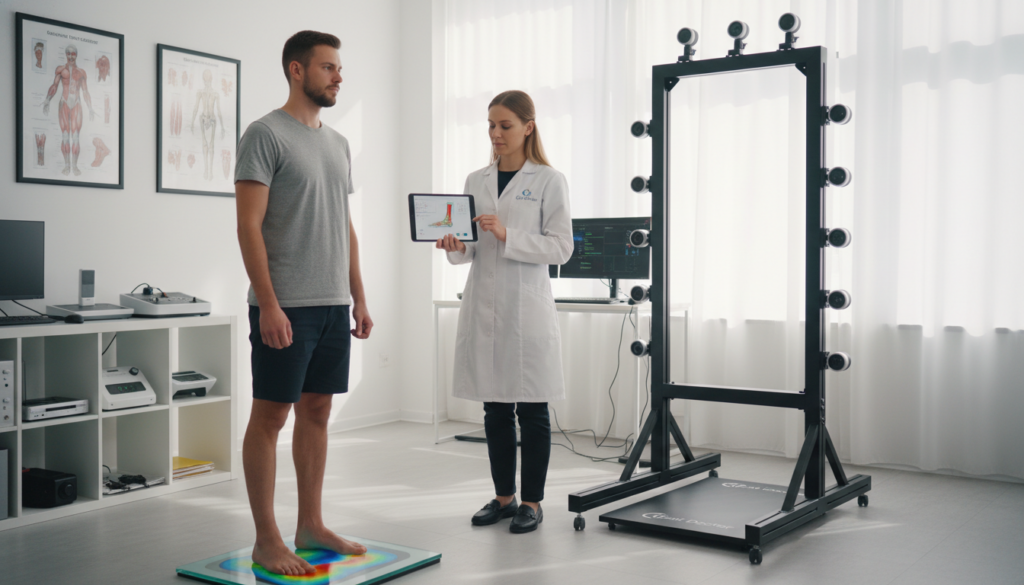
What Happens During a Gait Analysis
A gait analysis looks at how we walk. It checks both when we’re still and when we move.
Static Assessment
In a static check, we look at how the foot and leg line up when standing. It finds any problems that might cause fallen arches.
Dynamic Assessment
The dynamic check watches how we walk or run. It shows how the foot and leg work together, spotting any issues.
How Gait Doctor Approaches Biomechanical Evaluation
Gait Doctor is great at checking how we walk. They do a deep dive, looking at both still and moving positions. This helps find problems with fallen arches.
Conservative Management Strategies
Managing fallen arches involves exercise, activity modification, and rest. This approach helps ease symptoms and improve foot function. It also boosts overall mobility.
How to Manage Fallen Arches Conservatively
First, understand what causes fallen arches. Then, use targeted interventions to address them. A professional assessment can guide the best strategies for you.
Exercise and Strengthening Programs
Exercise is key in managing fallen arches. It strengthens muscles that support the arch. Arch strengthening exercises are very helpful.
- Toe curls: Strengthens the toe muscles.
- Heel raises: Enhances calf strength and Achilles tendon flexibility.
- Arch lifts: Directly strengthens the arch muscles.
Arch Strengthening Exercises
Exercises like toe curls and arch lifts boost arch strength. For instance, toe curls involve curling toes under and then releasing.
“The key to effective arch strengthening is consistency and proper technique.”
Calf and Achilles Stretches
Stretching the calf and Achilles tendon is also vital. Tightness in these areas can worsen fallen arches. Regular stretching improves flexibility and reduces foot strain.
Activity Modification and Rest
Activity modification is crucial. Avoid activities that make symptoms worse. Resting the foot helps it recover from strain.
Combining these strategies can greatly improve symptoms and quality of life for those with fallen arches.
The Role of Custom Orthotics in Supporting Foot Function
Custom orthotics are key for people with fallen arches. They give extra support and stability. This helps ease the symptoms of this condition.
How Orthotics May Help Support Fallen Arches
Custom orthotics are made for fallen arches. They spread out the foot’s pressure. This lessens the arch’s strain.
A study in the Journal of Orthopaedic & Sports Physical Therapy shows they improve foot function. For fallen arches, orthotics help in many ways:
- Reducing pain and discomfort
- Improving foot mechanics and function
- Enhancing overall mobility
- Preventing further complications
Types of Orthotic Devices
There are many orthotic devices, from OTC insoles to custom ones. Custom orthotics fit your foot better, offering more support.
| Type | Description | Benefits |
|---|---|---|
| Soft Orthotics | Made from soft materials like foam or gel | Cushioning, shock absorption |
| Semi-Rigid Orthotics | Combination of soft and rigid materials | Support, stability, and flexibility |
| Rigid Orthotics | Made from rigid materials like plastic or carbon fiber | Maximum support, control over foot motion |
The Custom Fitting Process
Getting custom orthotics starts with a podiatrist’s detailed check. They look at your foot and how you walk. Sometimes, they use 3D scanning for a precise mold.
Bayshore Podiatry says, “Custom orthotics support the arch and improve foot mechanics. This can ease pain and prevent more problems.”
Realistic Expectations and Limitations
Custom orthotics are very helpful but not a complete fix. They’re part of a bigger plan that includes exercises and lifestyle changes.
They might need to be adjusted as your foot changes or your condition evolves.
When to Seek Medical Intervention
Knowing when to get medical help for fallen arches is key. Many people find relief with simple steps. But, some cases need a doctor’s care.
Warning Signs and Symptoms
Watch for signs that mean you might need a doctor. These include:
- Persistent pain that doesn’t improve with simple steps
- Significant swelling or redness around the foot or ankle
- Difficulty walking or doing daily tasks because of foot pain
- Noticeable deformity or changes in the shape of the foot
Medical and Surgical Options
If simple steps don’t help, doctors might suggest other options. These can include:
| Surgical Procedure | Description | Potential Benefits |
|---|---|---|
| Tendon Repair | Repairing damaged tendons to restore foot function | Improved foot mechanics, reduced pain |
| Osteotomy | Correcting bone alignment to improve foot structure | Enhanced stability, reduced discomfort |
| Fusion Surgery | Fusing bones together to stabilize the foot | Reduced pain, improved stability |
Working with Healthcare Professionals
Working with doctors is important to find the right treatment. A detailed check-up, including
Complementary Approaches
Along with medical and surgical options, other methods help too. Physical therapy, orthotics, and lifestyle changes can ease symptoms. They help keep your feet healthy.
Living Well with Fallen Arches: Long-Term Management
Managing fallen arches takes time and effort. It means making lifestyle changes and checking in often. Doing exercises that strengthen your foot and ankle can help a lot.
Changing how you move is also key. Stay away from things that make it worse. Instead, do low-impact activities to feel better.
Keeping up with your treatment is important. See a doctor regularly to make sure things are getting better. They can help adjust your plan if needed.
Being proactive about fallen arches can really help. It makes life better and keeps you moving freely. With the right care, you can stay active and independent.