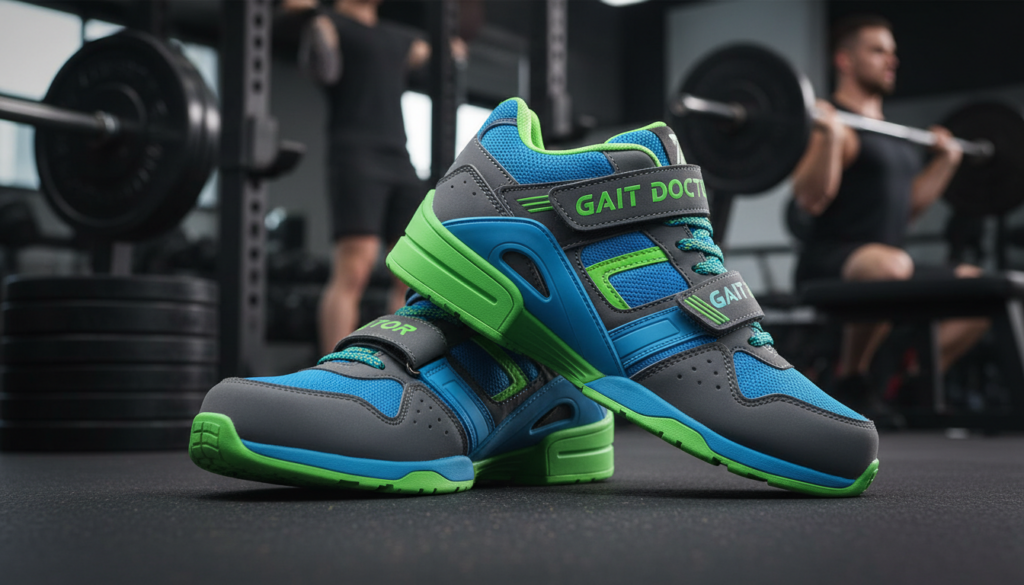
Weightlifting is hard work that needs stability and proper mechanics to do well and safely. A key thing often missed is the need for foot support when lifting. Good foot mechanics and ankle movement help a lot in doing better and staying safe.
The right weightlifting footwear makes a big difference in lifting safely and well. Shoes made for lifting give the needed ankle stability. This helps you stay balanced and in control during lifts.
Key Takeaways
- Proper foot mechanics are crucial for effective weightlifting.
- Ankle mobility enhances performance and reduces injury risk.
- Weightlifting footwear provides necessary ankle stability.
- Stable footing is essential for safe lifting practices.
- Investing in the right weightlifting shoes can improve overall performance.
The Foundation of Strength: Why Foot Stability Matters
Foot mechanics are key in weightlifting. They help lifters stay stable and strong. Dr. Joel Seedman says weak feet and ankles can mess up hip and knee movements. This shows how important foot stability is for lifting well.
The Biomechanical Chain in Weightlifting
The biomechanical chain is how our body parts work together for movement. In lifting, it starts with the feet. A stable foot helps move forces well through the body. This reduces injury risk and boosts performance. Proper foot mechanics keep the chain strong.
How Foot Position Affects Performance
Foot position greatly affects a lifter’s power and balance. Good foot alignment helps lifters lift stronger and more controlled. Bad foot position can make lifting less effective and riskier. Knowing how foot position affects lifting is key for better technique and results.
Improving foot stability and mechanics can make weightlifters perform better and safer. This shows why foot training is important in their routine.
Understanding Foot Mechanics During Weightlifting
Knowing how the foot works during weightlifting is key. It helps you perform better and avoid getting hurt. Foot mechanics involve how pressure is spread, the arch’s role in lifts, and ankle movement.
Pressure Distribution Patterns
Pressure on the foot changes with each weightlifting move. For example, squats spread the pressure evenly. But deadlifts put more weight on the heel. Knowing this helps you adjust to avoid injuries.
Arch Function During Different Lifts
The arch is crucial for support and balance in weightlifting. It helps distribute weight and keep you steady in squats. The arch’s role changes with the lift and your foot shape.
The Role of Ankle Mobility
Ankle mobility is important for lifting. It lets you move more and keep the right form. If your ankles don’t move well, you might lift wrong and get hurt. Doing exercises to loosen your ankles can help.
Common Foot Issues Among Weightlifters
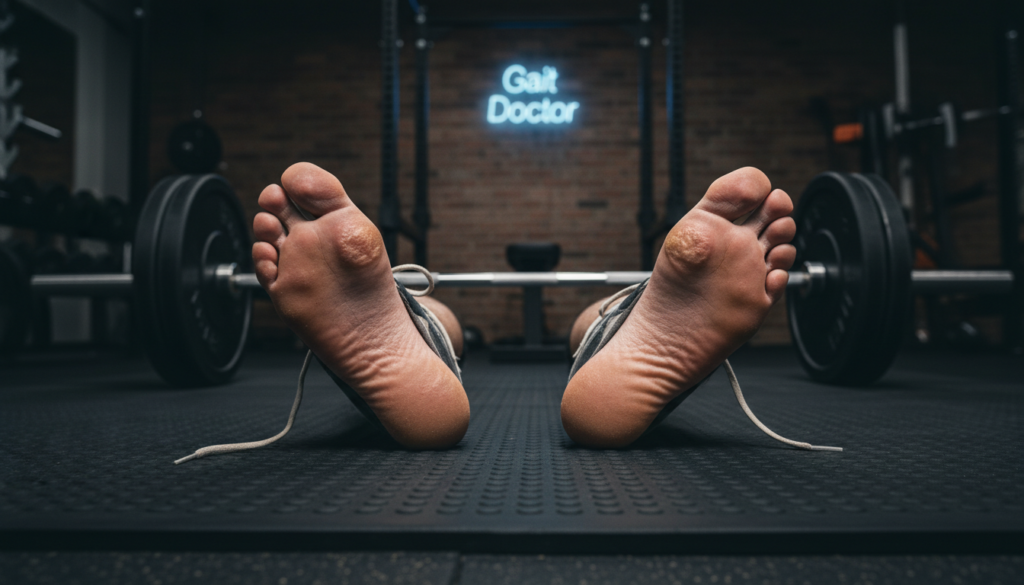
Weightlifting can hurt your feet. It can cause problems with how your feet work and their shape. Many weightlifters feel pain in their feet because of the hard work they do.
Flat Feet and Overpronation Challenges
Flat feet are common in weightlifters. This means the arch of the foot doesn’t curve right. It can make the whole bottom of the foot touch the ground.
Overpronation often goes with flat feet. It makes the foot roll too much. This can hurt the foot and ankle. Wearing the right shoes and using orthotics can help.
High Arches and Supination Concerns
Some weightlifters have high arches. This can cause the foot to roll out too much. It doesn’t absorb shock well and can hurt the heel and ball of the foot.
High arches can also cause plantar fasciitis and toe clawing. It’s important to wear shoes that cushion and support well.
Plantar Fasciitis and Other Painful Conditions
Plantar fasciitis is a big problem for weightlifters. It’s when the tissue under the arch gets inflamed. It hurts a lot, mostly in the heel, after rest or in the morning.
Other issues like Achilles tendonitis and sesamoiditis can also hurt weightlifters.
“The key to managing plantar fasciitis is a combination of rest, stretching, and proper footwear.”
| Foot Issue | Description | Potential Solutions |
|---|---|---|
| Flat Feet | Collapsed arch, entire sole contacts ground | Proper footwear, orthotics |
| High Arches | Excessive arch, supination | Adequate cushioning, support |
| Plantar Fasciitis | Inflammation of plantar fascia | Rest, stretching, proper footwear |
How Foot Mechanics Impact the Entire Body
Foot mechanics play a big role in how our body moves. They affect knee, hip, and back positioning. The way our foot touches the ground during lifting can help or hurt our body’s alignment.
The Connection to Knee and Hip Alignment
The way our foot moves is linked to our knee and hip alignment. For example, if our foot rolls too much, it can mess up our knee and hip. Keeping our foot mechanics right is key to keeping our lower body in line.
| Foot Condition | Effect on Knee Alignment | Effect on Hip Alignment |
|---|---|---|
| Overpronation | Increased stress on knee | Potential for hip misalignment |
| Supination | Reduced stress on knee | Possible hip instability |
| Neutral | Optimal knee alignment | Optimal hip alignment |
Potential Influence on Back Positioning
Our foot mechanics can also affect our back. If our foot is not right, our back might move in ways that can hurt it. It’s important to keep our foot mechanics in check to support our whole body.
Understanding how our foot mechanics affect our body is key. Weightlifters can improve their form and lower injury risk by checking their foot type, wearing the right shoes, and doing exercises for their foot and ankle.
Assessing Your Foot Type and Movement Patterns
Knowing your foot type is key to better weightlifting. It helps you make changes to lift right. You need to understand your foot’s shape and how it moves with the ground.
Self-Assessment Techniques
To check your foot type, look at the soles of your feet. See the arch shape and how your foot touches the ground. Try the wet foot test to see your footprint.
This test can show if you have a neutral foot, overpronation, or supination.
When to Seek Professional Assessment
If you’re not sure about your foot type or have pain, see a pro. A podiatrist or biomechanics expert can analyze your foot and gait. They’ll give you tips to improve and find any issues.
Choosing the Right Weightlifting Footwear
Choosing the right weightlifting shoes is key for good performance and safety. The right shoes can help your lifting, keep you stable, and make you more comfortable.
Different Types of Weightlifting Shoes
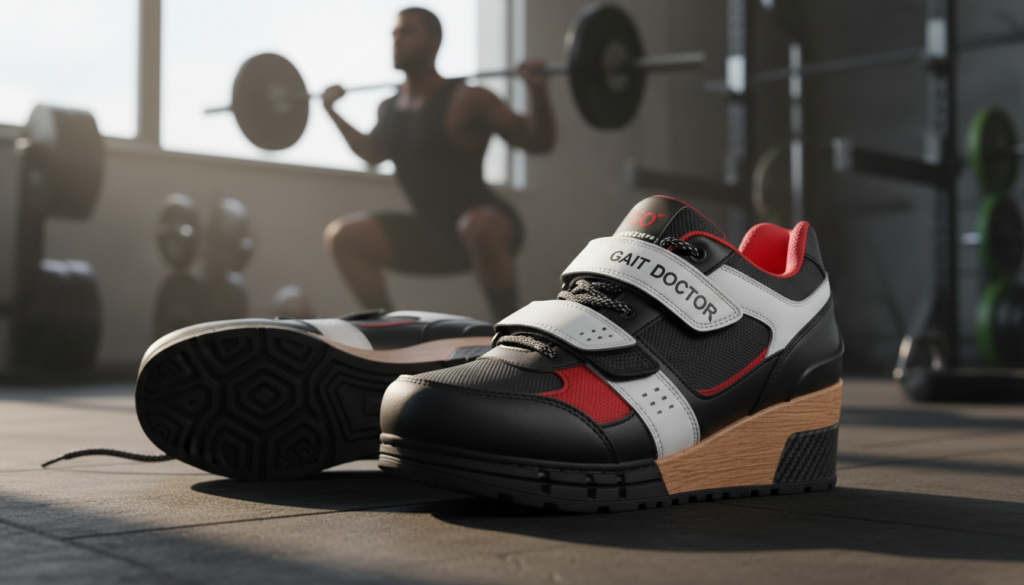
There are many types of weightlifting shoes, each for different needs. Olympic weightlifting shoes have a high heel for deeper squats. Powerlifting shoes have a stiff sole for stability in heavy lifts.
Features to Look for Based on Lift Type
Think about the lifts you do most when picking shoes. For squats and Olympic lifts, a high heel helps your form. For deadlifts and other lifts, a flat sole is better for stability.
- Raised Heel: Good for squats and Olympic lifts, helps with depth and form.
- Flat Sole: Best for deadlifts and lifts needing a solid base.
- Strap or Lacing System: Keeps your feet secure and can be adjusted for fit.
When Barefoot Lifting Might Be Appropriate
Barefoot lifting can be good in some cases. It lets your feet move naturally and strengthens them. But, it’s not safe for heavy lifting because it lacks support.
“Lifting barefoot can enhance proprioception and foot strength, but it may not provide the necessary support for heavy loads.”
In short, picking the right weightlifting shoes depends on your lifting needs, the lifts you do, and the support they offer.
Effective Foot Support for Weightlifting: Options and Considerations
Good foot support is key for weightlifters. It affects their performance, stability, and safety. The right support can prevent injuries and make lifting better. We’ll look at different ways to support your feet, like insoles, custom orthotics, and taping.
Over-the-Counter Insoles and Their Limitations
Insoles you can buy without a doctor are easy to find and not too pricey. But, they might not fit perfectly if you have special foot needs. For more on weightlifting shoes, check out https://barbend.com/best-weightlifting-shoes/.
Custom Orthotics: When They May Be Beneficial
Custom orthotics fit your foot exactly. They’re great for those with foot pain or certain foot problems. They offer the best support and are worth it for precise needs.
Taping Techniques for Temporary Support
Taping can give you quick support and stability. It’s good for competitions or heavy lifting. You can use it with other supports for even better results.
| Support Method | Benefits | Limitations |
|---|---|---|
| Over-the-Counter Insoles | Affordable, readily available | May not provide precise support |
| Custom Orthotics | Tailored support, high correction | Can be expensive, requires professional fitting |
| Taping Techniques | Temporary support, adjustable | May not be suitable for all foot types, requires skill to apply |
Foot Strengthening Exercises for Lifters
Strengthening the feet is key for weightlifters. It helps with stability and better performance. Exercises that work the foot muscles improve ankle stability and lifting skills.
Intrinsic Foot Muscle Training
Intrinsic foot muscle training focuses on the foot’s muscles. Toe curls and toe spreads are great exercises. To do toe curls, curl a towel with your toes. For toe spreads, spread your toes as far as you can.
Ankle Stability Drills
Ankle stability is crucial for weightlifters. It affects stability and power in lifts. Ankle circles and calf raises are simple yet effective. Sit with legs straight and circle your ankles. Do calf raises by standing on a step and raising up on tiptoes.
Integration with Weightlifting Warm-up
Adding foot exercises to your warm-up improves performance and lowers injury risk. Start with dynamic stretching. Then do toe curls and calf raises. End with mobility drills to increase range of motion.
| Exercise | Repetitions | Sets |
|---|---|---|
| Toe Curls | 10-15 | 3 |
| Toe Spreads | 10-15 | 3 |
| Ankle Circles | 5-10 | 3 |
| Calf Raises | 15-20 | 3 |
These exercises boost foot strength, stability, and weightlifting performance.
Foot Positioning Techniques for Major Lifts
Foot positioning is key for big lifts like squats, deadlifts, and Olympic lifts. It helps keep balance, build power, and avoid injuries.
Squat Variations and Foot Placement
Foot placement changes how squats feel. A wider stance works the glutes and hamstrings more. A narrower stance works the quads more. Try different stances to find what works best for you.
Key Considerations for Squat Foot Placement:
- Toes pointed outward to varying degrees
- Heels in contact with the ground
- Weight evenly distributed across the foot
Deadlift Stance Considerations
Deadlifts need a stance that balances power and stability. A shoulder-width stance or slightly wider is common. But, it depends on your body and the deadlift type.
Factors Influencing Deadlift Stance:
- Individual anatomical differences
- Type of deadlift (conventional, sumo, etc.)
- Personal comfort and stability
Olympic Lift Foot Positioning
Olympic lifts like the snatch and clean & jerk need exact foot placement. Your feet should be set for a strong drive and to catch the bar safely.
Learning the right foot positioning for major lifts can improve your performance. It also lowers injury risk and boosts your training success.
Gait Doctor’s Approach to Biomechanical Assessment for Weightlifters
Gait Doctor’s method is changing weightlifting. It gives athletes deep insights into how they move. This helps them improve their technique, avoid injuries, and perform better.
How Gait Analysis May Identify Movement Inefficiencies
Gait analysis is a smart tool for checking how weightlifters move. It spots problems in how they move that might slow them down or hurt them. It looks at stride length, foot strike pattern, and lower limb alignment. Finding these issues lets weightlifters fix their technique.
Individualized Support Strategies Following Assessment
After a detailed gait analysis, weightlifters get custom support plans. These plans might include special shoes, training programs, or technique tweaks. They help each athlete overcome their unique challenges. This way, they can perform at their best and stay safe.
Conclusion: Building a Strong Foundation for Your Lifts
Having good foot support is key for weightlifting. It helps you lift better and stay safe. Custom orthotics can make your foot stable, which is great for lifts.
Orthotics with a rocker bottom help your foot move right. They make lifting easier. If you have plantar fasciitis, orthotics can help heal it.
Orthotics with a heel lift also help your ankle move better. This makes standing more stable. It’s important to fix biomechanical issues to avoid pain and injuries.
Orthotics made just for you can help a lot. They support your foot and stop it from moving wrong. For more info, check out Gait Doctor’s Website.
In short, a good base for lifting comes from foot support and mechanics. Using custom orthotics and fixing biomechanical issues helps a lot. This way, you can lift better and stay safe.