
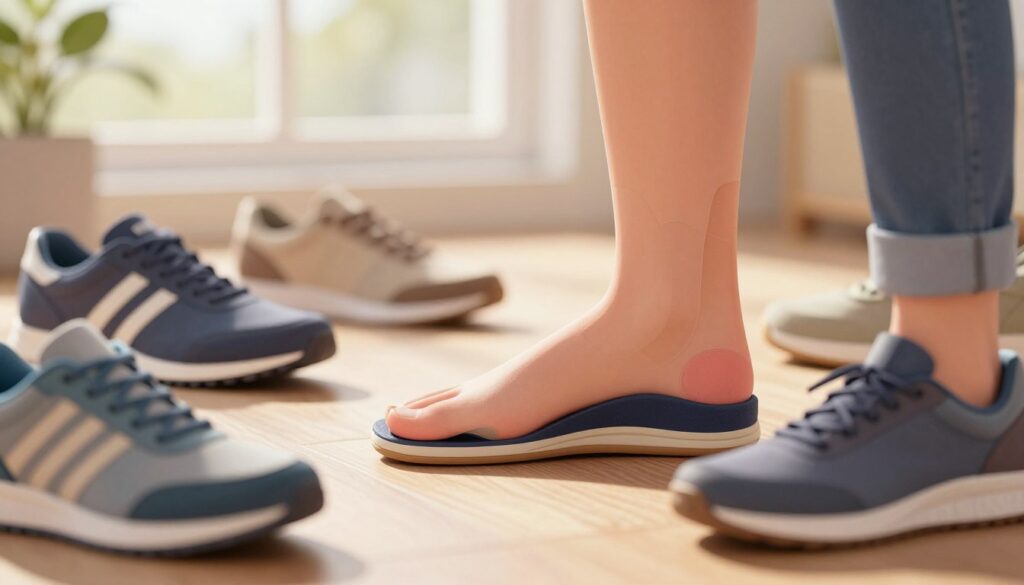
Plantar fasciitis is a common condition that affects the plantar fascia. It causes foot pain and discomfort. Podiatrist Gina Hild, DPM, says that ensuring ample arch support is key to managing this condition.
Proper footwear is vital in easing the symptoms of plantar fasciitis. The right shoes offer the support and relief needed. This makes it easier to manage the condition.
This article will delve into the importance of proper footwear in plantar fasciitis treatment. It will also offer insights into finding the right shoes for foot pain relief.
Key Takeaways
- Proper footwear is essential for managing plantar fasciitis.
- Ample arch support is crucial for alleviating symptoms.
- The right shoes can provide significant foot pain relief.
- Understanding the causes of plantar fasciitis can help in its treatment.
- Choosing the right footwear is a key aspect of plantar fasciitis treatment.
Understanding Plantar Fasciitis and Its Impact on Foot Health
Plantar fasciitis is a common cause of heel pain. It happens when the plantar fascia, a band of tissue, gets inflamed. This tissue connects the heel to the toes and supports the arch of the foot.
What Is Plantar Fasciitis?
It occurs when the plantar fascia is strained or overused. This leads to inflammation and pain. Factors like overuse, poor footwear, or compensating for other muscle or tendon issues can cause it. Seeing a healthcare professional for a diagnosis is key.
Common Symptoms and Their Progression
Symptoms include sharp pain in the heel or foot’s bottom, especially in the morning or after rest. As it gets worse, the pain can last longer and affect daily life. Key symptoms are:
- Pain in the heel or arch
- Stiffness in the foot
- Pain that worsens after exercise
How Footwear Affects Plantar Fasciitis
The right shoes can help with plantar fasciitis. Shoes with arch support and cushioning reduce strain on the plantar fascia. But, bad shoes can make it worse.
Choosing the right shoes is crucial for managing plantar fasciitis and keeping your feet healthy.
The Relationship Between Proper Footwear and Foot Pain Relief
Wearing the right shoes is key to easing foot pain from plantar fasciitis. The right footwear helps manage the condition and cuts down on discomfort.
How Shoes Can Support Healing
Shoes with special features can help ease plantar fasciitis symptoms. For example, shoes with strong arch support and cushioning lessen stress on the plantar fascia. This helps it heal faster.
Key Footwear Features That May Help Reduce Pain
There are several important features in shoes that help with pain relief. These include:
- Arch support to reduce strain on the plantar fascia
- Adequate cushioning to absorb shock
- A comfortable, roomy toe box to prevent irritation
| Feature | Benefit |
|---|---|
| Arch Support | Reduces strain on the plantar fascia |
| Cushioning | Absorbs shock, reducing impact on the foot |
| Roomy Toe Box | Prevents irritation and pressure on toes |
Choosing shoes with these supportive features can greatly help those with plantar fasciitis. They can feel a lot of pain relief and see better foot health.
Essential Features to Look for in Best Shoes for Plantar Fasciitis
Knowing what to look for in shoes can really help if you have plantar fasciitis. The right shoes offer the support and comfort you need to feel better.
Arch Support Considerations
Good arch support is key for plantar fasciitis. Shoes with strong arches help spread out the pressure. This can lessen the strain on your plantar fascia.
For more tips on managing plantar fasciitis, check out https://gaitdoctor.co.nz/understanding-and-resolving-plantar-fasciitis/.
Cushioning and Shock Absorption
Cushioning is also very important. It absorbs shock and eases the impact on your heel and foot. Choose shoes with thick, supportive midsoles for better cushioning.
| Feature | Benefit |
|---|---|
| Arch Support | Reduces strain on plantar fascia |
| Cushioning | Absorbs shock and reduces impact |
| Heel Support | Provides stability and prevents excessive pronation |
Heel Support and Stability
A supportive heel counter is crucial. It stops your foot from rolling too much and keeps you stable. This is especially important for those with plantar fasciitis.
“A stiff heel counter is essential for providing the necessary support and stability for plantar fasciitis sufferers.”
Flexibility in the Right Places
While support is important, flexibility is too. Shoes that are too stiff can make things worse. Find shoes that balance support with flexibility, especially in the front part of the shoe.
By focusing on these key features, you can find shoes that help with plantar fasciitis. These shoes will also support you in your daily activities.
Athletic and Running Shoes for Active Individuals
Plantar fasciitis can really hurt your active lifestyle. But, the right running shoes can help a lot. It’s key to find shoes that support and comfort you, especially if you’re active.
Brooks Adrenaline GTS
The Brooks Adrenaline GTS is a top pick for runners with overpronation. It has BioMoGo DNA cushioning that adjusts to your body. This makes it great for those with plantar fasciitis, offering strong arch support and stability.
New Balance Fresh Foam 1080
The New Balance Fresh Foam 1080 is loved for its luxurious cushioning. It has a Fresh Foam midsole for a smooth ride. It’s perfect for runners with plantar fasciitis who need extra comfort.
ASICS Gel-Kayano
The ASICS Gel-Kayano is for runners with high arches or supination. It has FlyteFoam for a bouncy feel and Spacer Mesh for breathability. It’s a top choice for those with plantar fasciitis, offering great support and cushioning.
Hoka One One Bondi
The Hoka One One Bondi is famous for its maximal cushioning. It’s great for runners who need extra comfort. Its rocker design helps with a smooth transition, easing stress on the plantar fascia.
When picking shoes for plantar fasciitis, think about support, cushioning, and stability. Here’s a table comparing the key features of the shoes we talked about:
| Shoe Model | Support Level | Cushioning | Stability Features |
|---|---|---|---|
| Brooks Adrenaline GTS | High | BioMoGo DNA | Segmented Crash Pad |
| New Balance Fresh Foam 1080 | Moderate | Fresh Foam | Supportive heel counter |
| ASICS Gel-Kayano | High | Gel cushioning | Spacer Mesh, FlyteFoam |
| Hoka One One Bondi | Moderate | Maximal cushioning | Rocker design |
Choosing the right athletic or running shoe can help you enjoy your active life more. 
Walking and Everyday Shoes for Comfort
Finding the right shoes is crucial for those with plantar fasciitis. Comfort is essential in managing this condition’s symptoms.
Many brands focus on making shoes that are both comfy and supportive. For example, the Vionic Walker Classic has a strong arch support. It’s a great pick for those with plantar fasciitis.
Vionic Walker Classic
The Vionic Walker Classic has a soft, cushioned insole. It also has a supportive footbed. These features help lessen stress on the plantar fascia.
Dansko Professional Clogs
Dansko Professional Clogs are famous for their arch support and comfy fit. They’re perfect for daily wear.
Clarks Unstructured Un.Loop
Clarks Unstructured Un.Loop shoes are flexible and comfy. They focus on support and comfort for people with foot problems.
Dr. Jane Smith, a podiatrist, says, “The right shoes can greatly help with plantar fasciitis. Look for ones with good arch support and cushioning.”
Choosing the right shoes can make a big difference for those with plantar fasciitis. It can lead to more comfort and less pain every day.
Casual and Dress Shoe Options That Support Foot Health
For those with plantar fasciitis, the right shoes can make a big difference. Casual and dress shoes are not just about looks. They also play a key role in keeping your feet healthy. Today, brands are making shoes that are both comfy and stylish.
Ecco Soft 7
The Ecco Soft 7 is a great mix of comfort and style. It has a soft insole that eases foot pressure. This makes it perfect for those with plantar fasciitis. For more choices, check out best dress shoes for plantar fasciitis.
Rockport Total Motion
Rockport’s Total Motion shoes are stylish and supportive. They fit well and have a footbed that helps with plantar fasciitis.
Vionic Waverly Loafer
Vionic’s Waverly Loafer focuses on comfort. It has a footbed approved by podiatrists. This supports the arch and lessens foot pain from plantar fasciitis.
These brands show you can find casual and dress shoes that are good for your feet. When looking for shoes, search for arch support, cushioning, and a comfy fit. These features can help with plantar fasciitis symptoms.
Sandals and Open Footwear for Warmer Weather
For those with plantar fasciitis, finding the right sandals and open footwear is key. Many modern designs now focus on both style and foot health. This means you can stay cool and comfortable.
Several brands have made sandals that are both comfy and supportive. They’re perfect for those with plantar fasciitis. Here are some top picks:
Birkenstock Arizona
The Birkenstock Arizona is a favorite for comfort and support. Its footbed is shaped to support the arch. This helps ease pain from plantar fasciitis.
Vionic Tide II
Vionic’s Tide II sandals have a footbed approved by podiatrists. They support the arch and help keep the foot aligned. This makes them great for plantar fasciitis.
Oofos OOriginal Recovery Sandal
Oofos OOriginal Recovery Sandals focus on recovery. They have a soft, cushioned footbed. This reduces stress on the feet and joints.
When picking sandals or open footwear for plantar fasciitis, look for these features:
- Arch Support: A supportive arch can help ease plantar fasciitis pain.
- Cushioning: Enough cushioning can lessen stress on the feet.
- Proper Fit: A good fit is key to avoid discomfort and irritation.
Choosing the right sandals and open footwear lets those with plantar fasciitis enjoy warmer weather. They can do so without sacrificing comfort or support.
Orthotic-Friendly Shoes and Custom Inserts
The right shoes are key for managing plantar fasciitis. People with this condition need extra support and comfort. Standard shoes often don’t provide enough.
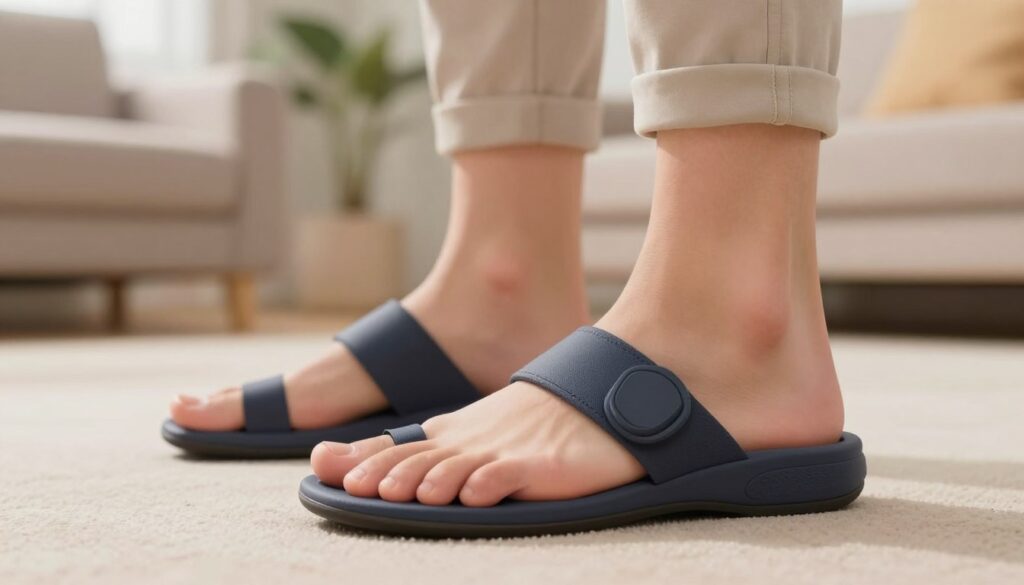
Shoes with Removable Insoles
Look for shoes with removable insoles. This lets you add custom orthotics or inserts for more support and cushioning. Propét Footwear offers such shoes, perfect for those with plantar fasciitis.
Working with Custom Orthotics
Custom orthotics fit your foot perfectly, offering personalized support. For plantar fasciitis, seeing a specialist can help find the right ones. They work best with orthotic-friendly shoes.
Over-the-Counter Inserts That May Help
Not everyone needs custom orthotics. Over-the-counter inserts can also help. They come in gel or foam and add cushioning and support. Choose ones that fit your foot’s needs.
| Feature | Custom Orthotics | Over-the-Counter Inserts |
|---|---|---|
| Personalization | Tailored to individual foot shape | Standard sizes and types |
| Support Level | Highly supportive, specific to foot needs | Variable support, depending on type |
| Cost | Generally more expensive | More affordable |
In conclusion, the right shoes and inserts can greatly improve comfort for those with plantar fasciitis. It’s important to pick ones that meet your foot’s specific needs.
Considerations for Different Foot Types and Conditions
It’s important to know about different foot types and conditions for managing plantar fasciitis. The shape and condition of your feet can affect how severe your symptoms are. It also impacts the success of treatments.
High Arches vs. Flat Feet
People with high arches and flat feet face unique challenges with plantar fasciitis. High arches can put extra pressure on the heel and ball of the foot, making symptoms worse. Flat feet can lead to overpronation, which may also cause plantar fasciitis. Getting a proper assessment from a healthcare professional is key.
- High arches may need shoes with extra cushioning to ease pressure.
- Flat feet might benefit from shoes with more arch support to correct overpronation.
Wide Feet and Bunions
Those with wide feet or bunions should look for shoes that fit comfortably without adding to the discomfort. Tight shoes can make bunions worse and increase plantar fasciitis pain. Opt for shoes with a wide toe box and soft materials.
- Opt for shoes with adjustable straps or lacing for a better fit.
- Look for brands that offer wide sizes or styles for foot conditions like bunions.
Addressing Overpronation and Supination
Overpronation and supination are gait issues that can impact plantar fasciitis. Overpronation means the foot rolls inward too much, while supination means it rolls outward. The right footwear and orthotics can help manage these issues. A professional can guide you on the best approach.
- Shoes with motion control can help with overpronation.
- For supination, shoes with plenty of cushioning can reduce foot impact.
Understanding your foot type and consulting with healthcare experts can lead to better plantar fasciitis management.
When to Replace Your Footwear for Optimal Support
It’s important to replace your shoes regularly to keep your feet supported. Shoes can lose their support over time. This can put extra strain on the plantar fascia.
Signs of Shoe Wear and Deterioration
There are clear signs your shoes need to be replaced. Look for holes, tears, and worn-down soles. Also, check if the cushioning has decreased.
If your shoes don’t feel as comfortable as before, it’s time for a change. For more info on when to replace your shoes, check out this resource.
Recommended Replacement Timelines
The life of your shoes depends on how much you use them. Usually, they last about six months. But, if you’re very active or have foot issues, they might not last as long.
Replacing your shoes on time can support your foot health. It may help reduce plantar fasciitis symptoms.
Complementary Approaches to Managing Plantar Fasciitis
Wearing the right shoes is just the start. There are other ways to help with plantar fasciitis. These methods can work together with good shoes to help you feel better.
Stretching and Strengthening Exercises
Stretching and strengthening are key for plantar fasciitis. Calf stretches and toe stretches can ease foot and calf tension. This helps lessen pain. Foot muscle exercises, like toe curls, add extra support.
Night Splints and Other Supportive Devices
Night splints keep your foot flexed while you sleep. This stretches the plantar fascia and calf muscles. It’s great for morning pain. Orthotic insoles also offer arch support and cushioning.
When to Consult a Podiatrist or Physiotherapist
If your symptoms don’t get better, see a healthcare expert. A podiatrist or physiotherapist can give you tailored advice. They might suggest exercises, physical therapy, or even injections.
| Complementary Approach | Description | Benefits |
|---|---|---|
| Stretching Exercises | Regular stretching to reduce tension | Reduces pain, improves flexibility |
| Night Splints | Holding the foot flexed during sleep | Reduces morning pain, stretches plantar fascia |
| Orthotic Insoles | Providing additional arch support | Cushions the foot, reduces strain on plantar fascia |
Adding these methods to your treatment plan can help with plantar fasciitis. But, getting advice from a professional is important. They can help you find the best way to manage your symptoms.
Conclusion: Finding Your Ideal Footwear Solution
Finding the right shoes is key for managing plantar fasciitis and easing its symptoms. We’ve looked at the causes, symptoms, and how shoes can help in this article.
When choosing shoes, think about arch support, cushioning, and heel stability. This helps find your ideal footwear for comfort and support. There are many types of shoes, from athletic to walking shoes, to meet different needs.
The best way to manage plantar fasciitis is to pick the right plantar fasciitis solution for your feet. It’s important to talk to healthcare experts. They can help find the best shoes for your specific needs.