
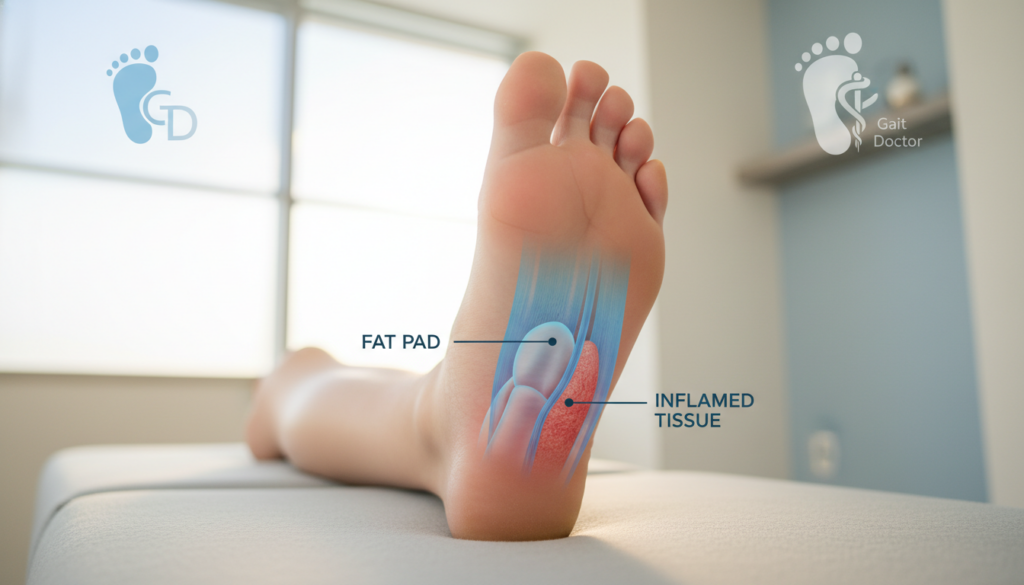
Heel pain is common and often caused by a thinning fat pad under the heel. This is known as Heel Fat Pad Syndrome. It can happen from too much stress, bad shoes, and certain activities. Knowing why and how it feels is important for fixing it.
A gait assessment can find problems that cause heel pain. To manage it, rest, ice, and wear good shoes are helpful.
Key Takeaways
- Heel Fat Pad Syndrome involves the thinning of the fat pad under the heel.
- Causes include repetitive stress and poor footwear choices.
- Symptoms can be managed with rest, icing, and supportive footwear.
- A gait assessment can help identify contributing factors.
- Effective management is key to easing heel pain.
What is Heel Fat Pad Syndrome?
The heel fat pad helps absorb shock when we move. But, if it gets damaged, it can cause a painful condition called Heel Fat Pad Syndrome. This condition hurts the fatty tissue under the heel a lot.
Definition and Basic Understanding
Heel Fat Pad Syndrome, or fat pad atrophy, happens when the fatty tissue under the heel gets thinner. This thinning makes the heel pad lose its natural cushioning. This leads to pain when we walk or run.
Key Characteristics
The main sign of Heel Fat Pad Syndrome is the fat pad under the heel getting thinner. This thinning can happen due to age, repeated strain, or how our body moves. The pain is usually in the heel and gets worse when we put weight on it.
How It Differs from Other Heel Conditions
Heel Fat Pad Syndrome is often mixed up with other heel problems like plantar fasciitis. But, the main difference is where and how the pain is felt. Plantar fasciitis hurts the plantar fascia, but Heel Fat Pad Syndrome affects the fatty tissue under the heel.
It’s important to know the difference between these conditions to get the right treatment. By understanding Heel Fat Pad Syndrome, doctors can make plans to help with the pain and discomfort.
Anatomy of the Heel Fat Pad
The heel fat pad is key to the foot’s health. It cushions and supports the heel during activities. It’s made to soak up shock and spread out pressure, keeping the heel bone and tissues safe.
Structure and Function
The heel fat pad has a special honeycombed structure. It’s filled with fat cells and fibrous tissue. This lets it act as a shock absorber, softening the impact of each step.
Composition of the Fat Pad
The fat pad is mostly adipose tissue. It’s wrapped in fibroseptal compartments. These help keep the fat pad strong and stable.
Mechanical Properties
The fat pad’s mechanical properties are crucial. It must soak up energy and then slowly let it go. This reduces stress on the heel with every step.
| Component | Function |
|---|---|
| Adipose Tissue | Shock Absorption |
| Fibroseptal Compartments | Structural Integrity |
The heel fat pad’s anatomy shows the body’s amazing design. It gives vital support and protection to the heel. Knowing how it works helps us understand heel pain and why we need to take care of our feet.
Understanding Heel Fat Pad Syndrome: Causes and Mechanisms
It’s important to know what causes Heel Fat Pad Syndrome. This condition has many factors. It affects the heel fat pad in different ways.
Atrophy and Thinning
Atrophy and thinning play big roles in Heel Fat Pad Syndrome. Atrophy means the fat pad gets smaller. This makes it less cushiony.
Getting older is a big reason for this. As we age, our heel fat pad changes. It gets thinner and less elastic.
Reduced Elasticity and Resilience
The heel fat pad’s elasticity and resilience get worse. This is because of repeated strain and aging. It can’t absorb shock as well.
Atrophy, thinning, and less elasticity hurt the heel fat pad’s job. This leads to the symptoms of Heel Fat Pad Syndrome.
Recognizing the Symptoms
## Recognizing the Symptoms
Heel Fat Pad Syndrome causes pain under the heel. This pain feels like a dull ache or sharp stabbing. It happens when you walk or run.
### Characteristic Pain Patterns
The pain is usually in the heel’s center. It can be constant or come and go. This depends on how active you are and the heel’s condition.
#### Location and Sensation of Discomfort
People often feel pain right under the heel. It can be a bit sore or very sharp.
#### Timing and Triggers of Pain
The pain gets worse after resting, like in the morning. It gets better with activity. But too much activity makes it worse. Things like new shoes, more activity, or hitting the heel can make it worse.
To deal with Heel Fat Pad Syndrome, knowing the causes is key. You need to treat it right. This might mean changing how you move, wearing better shoes, and doing exercises for your foot and ankle.
By knowing the symptoms and pain patterns, you can get help. You can make a plan to feel better.
Risk Factors and Contributing Elements
Biomechanical factors are key in Heel Fat Pad Syndrome. Knowing these helps in preventing and treating it.
Biomechanical Factors
The foot and ankle work together in a complex way. Many bones, muscles, and ligaments move together. Problems in how they move can hurt the heel fat pad.
Foot Structure Considerations
The shape of the heel and ankle alignment affect pressure on the fat pad. Abnormal foot mechanics like overpronation or supination cause uneven pressure. This can lead to Heel Fat Pad Syndrome.
Abnormalities in Gait
Bad walking patterns or abnormal stride length can also cause the syndrome. These can come from muscle imbalances, neurological issues, or past injuries.
Knowing what biomechanical factors cause Heel Fat Pad Syndrome is key. By fixing these issues, people can lower their risk. They can also ease symptoms if they have it.
Diagnosis and Assessment Approaches
To find out if you have heel fat pad syndrome, doctors look at your body and talk to you. They need to check everything carefully to make sure they get it right.
Clinical Evaluation
Checking you out is key to figuring out heel fat pad syndrome. They do a full body check and look at your health history.
Physical Examination Techniques
They use special ways to check your heel fat pad. This includes feeling it, watching how you walk, and checking your foot’s shape.
Patient History Importance
What you tell the doctor is very important too. It helps them know when your symptoms started, what you’ve tried before, and what might be causing it.
Accurate diagnosis comes from both the body check and what you say. This way, doctors can make a good plan to help you.
Early diagnosis helps a lot. It means they can start treating you sooner. This can stop things from getting worse.

The Biomechanics of Heel Pain
Looking into how heel pain works helps us understand and treat Heel Fat Pad Syndrome. Knowing how walking affects the heel is key for fixing it.
Normal Gait Mechanics
Walking right means all parts of the foot work together well. Good walking helps spread out the pressure on the heel fat pad.
Heel Strike and Load Distribution
When we walk, our heel hits the ground first. Then, the weight spreads out evenly. This heel strike mechanism helps soften the landing and eases pressure on the heel fat pad.
The Gait Cycle and Fat Pad Function
The walking cycle has three main parts: heel strike, midstance, and toe-off. The fat pad is key in soaking up shock when we land and in supporting us in midstance.
| Phase of Gait Cycle | Function of Heel Fat Pad |
|---|---|
| Heel Strike | Shock Absorption |
| Midstance | Support and Load Distribution |
| Toe-off | Propulsion |
Experts say, “The heel fat pad is a vital shock absorber in walking. When it doesn’t work right, we get a lot of heel pain.”
“The heel fat pad is a highly specialized structure that plays a crucial role in maintaining normal gait mechanics.”
In short, knowing how walking affects heel pain is vital for treating Heel Fat Pad Syndrome. By studying how we walk and the fat pad’s role, doctors can create better treatments.
Conservative Management Strategies
First, we need to ease the pain of Heel Fat Pad Syndrome. We do this by using gentle ways to help. These steps help lessen pain and stop more harm.
Rest and Activity Modification
Resting and changing how we move are key. They help the heel heal by not putting too much pressure on it.
Appropriate Activity Limitations
We must avoid things that make it worse. This means not doing too much that hurts the heel. Less stress on the heel means it can get better.
Graduated Return to Activity
Going back to normal slowly is best. We start with small steps and slowly get back to doing more. Slowly getting back helps avoid getting hurt again.
Rest, changing how we move, and slowly getting back to normal help a lot. These steps are important for feeling better and living better.
Supportive Options Following Biomechanical Assessment
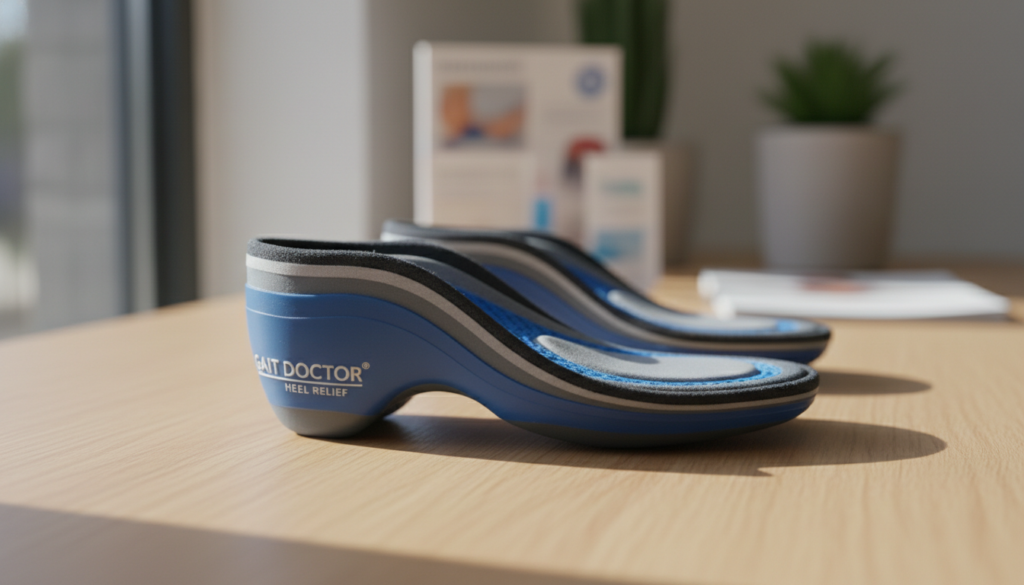
After a biomechanical check, people with heel fat pad syndrome might find relief. Supports can help lessen stress on the heel fat pad.
Over-the-Counter Supports
OTC supports are easy to find and can help right away.
Types of Prefabricated Supports
- Heel Cups: They cushion the heel, making it easier on the fat pad.
- Orthotic Inserts: These can be put in shoes for extra support and cushioning.
- Heel Pads: They add extra padding to ease pressure on sore spots.
Limitations of Generic Options
OTC supports are helpful, but they might not fit everyone’s needs. They might not offer enough support for serious cases, causing more pain.
For more info on heel issues, check out Understanding and Resolving Plantar Fasciitis.
Prevention and Long-Term Management
To stop Heel Fat Pad Syndrome, we need to use protective strategies. These strategies help by changing our lifestyle and focusing on specific areas.
Protective Strategies
Protecting our heel fat pad is key. We can do this by managing our weight and changing how we move around.
Weight Management Considerations
Keeping a healthy weight is very important. It helps lessen the pressure on our heel fat pad. To manage weight, we should eat well and exercise often. Here are some tips:
- Eat a healthy diet that’s good for you
- Do low-impact exercises to not hurt your heel
- Don’t gain too much weight to avoid extra pressure on your heel
Surface and Impact Modifications
Changing how we move can also help. This means:
- Wearing shoes that are comfy and support your feet
- Staying away from hard or bumpy places that hurt your heel
- Using shoes or orthotics with shock-absorbing materials
Conclusion
Managing Heel Fat Pad Syndrome well needs a full plan. This plan includes knowing the condition, spotting its signs, and using the right ways to handle it.
By using a mix of management steps, people can feel better. They can also live a better life.
The tips we talked about help a lot. They are key to managing the condition for a long time.
In conclusion, knowing a lot about Heel Fat Pad Syndrome is very important. It helps people deal with its problems.