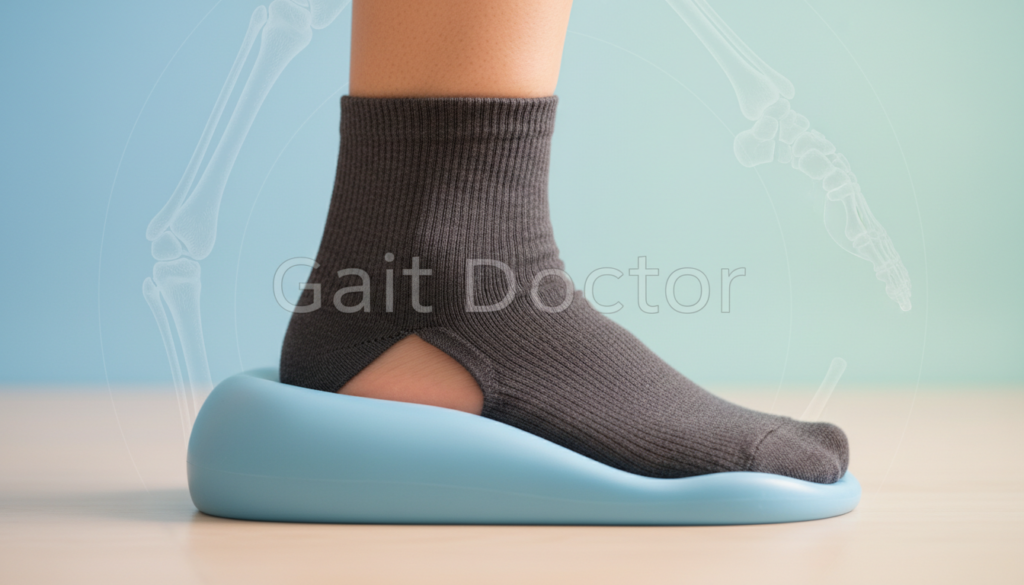
Having high arches can really hurt and make daily life hard. It’s when your foot arch is too high. This can cause big problems if not fixed.
It’s important to know why and how high arches happen. They can come from genes, muscle issues, or brain problems.
If you feel foot pain, get help right away. A doctor can find out why and help fix it.
Key Takeaways
- High arches can cause a lot of pain and make life hard.
- They can come from genes, muscles, or brain issues.
- Knowing why and how is key to fixing it.
- Seeing a doctor is important to find the cause.
- Getting the right treatment can ease the pain.
Understanding High Arches
The term “high arches” means the arch of the foot is higher than normal. This can cause problems. It can change how you walk and how your feet work.
What Are High Arches?
High arches, or supinated feet, have a higher arch than usual. This can cause supination and underpronation. It puts too much pressure on some parts of the foot.
How Normal Foot Mechanics Work
Normal foot mechanics balance the foot’s structure and function. The foot absorbs shock and helps with movement. The arch supports the body’s weight and helps you move.
The Impact of High Arches on Gait
High arches change how you walk. The higher arch can’t absorb shock well. This can cause pain and discomfort.
The changed walk can also put uneven pressure on your lower body. This can lead to more problems.
Causes of High Arches
Knowing why high arches happen is key to treating them. High arches, or cavus foot, come from many things. These include genes, brain conditions, and muscle imbalances.
Genetic Factors
Genes play a big part in high arches. If your family has high arches, you might get them too. Some genes can change how your foot works, leading to high arches.
Neurological Conditions
Brain and nerve problems like cerebral palsy can cause high arches. These issues can mess with the foot’s muscles and nerves. This leads to high arches.
Muscular Imbalances
When muscles in the foot and leg are off-balance, high arches can happen. Weak or tight muscles can change how the foot works. For example, too much muscle in the toes can cause high arches.
Other Contributing Factors
Other things can also lead to high arches. These include injuries, some brain disorders, and shoes that don’t fit right. High arches can also be linked to other foot problems like plantar fasciitis.

In short, high arches come from a mix of genes, brain issues, and muscle problems. Knowing this helps us find the right ways to treat and manage them.
Recognizing High Arches: Signs and Symptoms
Knowing the signs of high arches is key to early treatment. High arches, or cavus foot, can cause problems if not treated.
Visual Indicators of High Arches
High arches show in how the foot looks. Feet with high arches curve more and don’t touch the ground. This can make walking uncomfortable.
Common Symptoms Associated with High Arches
People with high arches may feel:
- Foot pain, mainly in the heel and ball
- It’s hard to find shoes that fit right
- Feeling unstable in the foot and ankle
- Claw toe, where toes curl up
The Wet Footprint Test
The wet footprint test is a simple way to check for high arches. Wet your foot and step on a flat surface. If your footprint shows only the heel and ball, with no connection, you might have high arches.
| Symptom | Description |
|---|---|
| Foot Pain | Pain in the heel and ball of the foot due to uneven weight distribution. |
| Difficulty with Footwear | Finding shoes that fit well can be challenging due to the high arch. |
| Foot and Ankle Instability | High arches can lead to instability, making it easier to twist an ankle. |
Spotting these signs is important for getting the right care and avoiding more problems.
High Arches Pain: Why It Happens
High arches can cause a lot of pain. This is because the foot doesn’t spread pressure evenly. This problem changes how the foot works, leading to pain in different spots. Knowing why and where high arches pain happens is key to feeling better.
Biomechanical Causes of Pain
Supination and underpronation are big reasons for pain in high arches. Supination is when the foot rolls out too much. This puts extra stress on the foot’s outside edge. Underpronation means the foot doesn’t roll in enough, leading to pain because it can’t absorb shock well.
Common Pain Locations
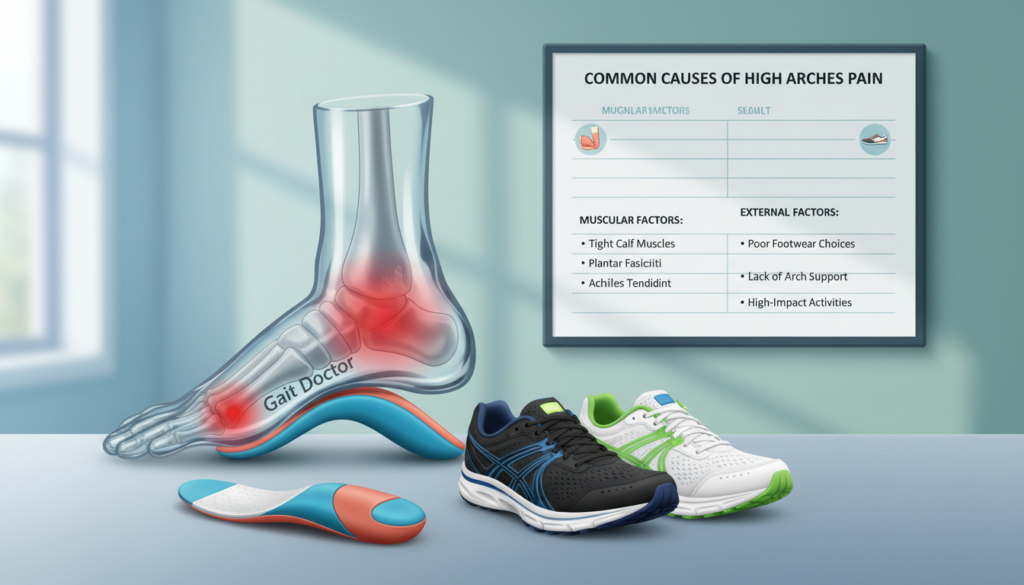
Pain from high arches often hits the ball or heel of the foot. It can also spread to the ankle, leg, or even the lower back. This is because how we walk changes with high arches.
Factors That May Worsen Discomfort
Things like poorly fitting shoes, overuse, and activities that stress the foot can make pain worse.
How Pain Patterns Differ from Other Foot Conditions
The pain from high arches is different from other foot problems like flat feet or plantar fasciitis. High arches pain usually hits the foot’s outside edge. Flat feet pain can spread all over the foot.
How High Arches Affect Daily Activities
## How High Arches Affect Daily Activities
High arches can change how we walk and stand. People with high arches might find it hard because of how their feet move.
### Impact on Walking and Standing
High arches can make our gait abnormal. This puts strain on our feet, ankles, and legs. It can cause pain or discomfort when we walk or stand for a long time.
The way pressure is spread out in our feet can also cause problems. For example, it might lead to plantar fasciitis.
| Activity | Impact of High Arches |
|---|---|
| Walking | Abnormal gait, strain on feet and ankles |
| Standing | Discomfort, pain in feet and legs |
### Effects on Athletic Performance
For athletes, high arches can really affect their game. The way their feet move can make running or jumping less efficient. It also raises the chance of getting hurt.
Finding the right shoes is hard for people with high arches. Shoes that don’t support or cushion enough can make things worse. It’s important to pick shoes made for high arches. They should support and help avoid pain.
- Look for shoes with good arch support.
- Choose shoes with cushioning to absorb shock.
- Consider custom orthotics for additional support.
Understanding how high arches affect us can help us take steps to feel better. It can improve our daily life.
Potential Complications of Untreated High Arches
High arches can cause many problems if not treated. These issues can hurt your feet and other parts of your body. They can make simple tasks hard to do.
Foot-Related Complications
High arches can cause foot problems like chronic pain and hammertoes. The way pressure is spread out can hurt and lead to plantar fasciitis.
- Chronic pain from the arch and around it
- Calluses and corns from too much pressure
- Hammertoes from toes not being in the right place
- Plantar fasciitis from the plantar fascia getting inflamed
Impact on Knees, Hips, and Back
High arches can affect other parts of your body too. They can make your knees, hips, and back hurt. This is because of how you walk.
| Area Affected | Potential Issues |
|---|---|
| Knees | Strain and pain from walking differently |
| Hips | Discomfort and pain from changed walking |
| Lower Back | Pain and strain from trying to move right |
Long-Term Mobility Concerns
Untreated high arches can cause long-term mobility problems. Chronic pain and biomechanical issues can make it hard to move. This can affect your life a lot.
“The long-term effects of untreated high arches can be debilitating, affecting not just the feet but the entire lower limb and back.”
It’s important to treat high arches to avoid these problems. This helps keep you moving well and feeling good.
Professional Assessment and Diagnosis
Getting a professional check-up is important for high arches. A doctor can tell how bad it is and what to do. This helps find the best way to manage it.
When Custom Orthotics May Be Considered
Custom orthotics might be good for people with high arches. They fit your foot just right and can make it feel better. Gait specialists say they are very helpful.
The Custom Fitting Process
Getting custom orthotics starts with a foot check. They look at your foot’s shape and how it moves. Then, they make a special shoe insert just for you. This makes sure it fits right and works well.
Realistic Expectations and Limitations
It’s good to know what to expect from custom orthotics. They can help a lot, but they can’t fix high arches completely. How well they work depends on your foot. For more info, check out Cleveland Clinic’s page on high arches.
Integration with Other Management Approaches
Custom orthotics work best with other treatments. Things like the right shoes, therapy, and exercises are important too. Together, they can make your feet feel much better.
Conclusion: Living Well with High Arches
Living with high arches means knowing a lot about it. It affects how we move every day. Knowing the reasons, signs, and possible problems helps us manage it better.
With the right steps, people with high arches can stay active. They can feel less pain and avoid other issues. This includes wearing the right shoes, using orthotics, and sometimes going to physical therapy.
It’s not just about feeling better; it’s about keeping our feet healthy. Taking care of our feet helps us do more things every day. It also helps us stay mobile for a long time.
Living well with high arches is possible. It needs awareness, good management, and help from experts. By taking care of our feet, we can live more comfortably and do more things without pain.