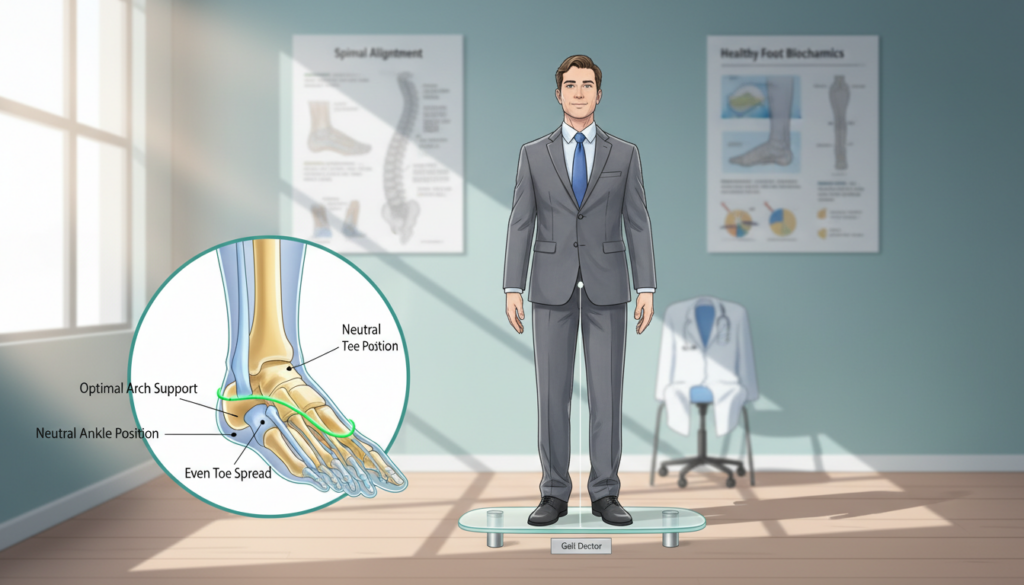
The human body starts with its feet. They carry our weight and help us move. Problems with the feet can really affect our posture.
It’s important to know how foot alignment and posture are connected. Good foot mechanics help keep our body balanced.
When our feet are in the right place, it helps our posture. This can lower the chance of muscle and bone problems. It also helps us stay balanced better.
Key Takeaways
- Proper foot alignment is essential for maintaining good posture.
- Foot alignment issues can lead to musculoskeletal problems.
- Optimal foot mechanics contribute to better whole-body balance.
- Understanding the relationship between foot alignment and posture is crucial for musculoskeletal health.
- Proper alignment can reduce the risk of balance-related issues.
The Foundation of Body Mechanics: Understanding Foot Structure
The foot is very important for our body. It has 26 bones, 33 joints, and many muscles and tendons. These work together to help us move and stay stable.
Anatomy of the Foot: Bones, Muscles, and Fascia
The foot has different parts. The tarsal bones are at the back and middle. They help the foot stand up. The metatarsal bones connect to the toes, helping us move and balance.
The muscles and tendons help us move our toes. The fascia, a band of tissue, supports the foot’s arch. Plantar fasciitis happens when this tissue gets inflamed, causing pain.
The Three Arches System and Their Functions
The foot has three arches: the medial, lateral, and transverse arches. These arches help spread out pressure and move easily. The medial arch supports the inner side of the foot. The lateral arch supports the outer side. The transverse arch helps spread out pressure evenly.
These arches are key for balance and moving. When they work right, they absorb shock and prevent injuries. But, problems like flat feet or high arches can cause issues with how we move and stand.
The Biomechanical Connection Between Feet and Posture
The way our feet and posture work together is very important. This is because of the kinetic chain. It shows how our body moves and stands.
The Kinetic Chain Concept
The kinetic chain is like a big chain of our body’s parts. When one part moves, it can change how others move. This is true for our feet and how we stand.
The key parts of the kinetic chain are:
- The feet, which are the first to touch the ground.
- The ankles, knees, hips, and lower back, which help us move and balance.
- The pelvis and spine, which keep us standing straight and balanced.
How Forces Travel Upward Through the Body
When our feet hit the ground, forces start moving up. These forces can be affected by how our feet are aligned. If our feet are not aligned right, it can mess up how we stand and move.
| Body Segment | Function | Effect of Misalignment |
|---|---|---|
| Feet | Foundation and initial contact | Postural imbalance, altered gait |
| Ankles and Knees | Shock absorption and movement facilitation | Increased stress on joints, potential for injury |
| Pelvis and Spine | Posture and balance maintenance | Back pain, postural deformities |
In conclusion, how our feet and posture work together is very important. It helps us stay healthy and move well. By understanding the kinetic chain, we can see why our feet are so important.
Common Foot Alignment Issues and Their Causes
The human foot is very complex. Problems with its alignment can affect the whole body. These issues can cause pain, limit movement, and increase injury risk. It’s important to know about these problems to find good treatments.
Pronation and Supination Explained
Pronation and supination are normal foot movements. Pronation is when the foot rolls inward during activities. Supination is when it rolls outward. But, too much of either can cause problems.
Too much pronation can lead to plantar fasciitis and flat feet. Too much supination can cause high arches and stress on the ankle and leg. Knowing about these movements helps doctors diagnose and treat better.
Flat Feet (Pes Planus) and High Arches (Pes Cavus)
Flat feet and high arches are common foot problems. Flat feet happen when the arch collapses, making the whole sole touch the ground. High arches have an unusually high arch. Both can cause pain and discomfort.
| Condition | Description | Common Issues |
|---|---|---|
| Flat Feet (Pes Planus) | Collapse of the arch, entire sole touches the ground | Plantar fasciitis, pain in the feet and ankles |
| High Arches (Pes Cavus) | Abnormally high arch | Increased stress on the ankle and leg, pain |
It’s key to understand these common foot problems and their causes. Proper diagnosis and treatment can help ease symptoms and prevent more issues.

The Relationship Between Foot Alignment and Posture in Whole-Body Balance
Our feet play a big role in how our body stands. When our feet are in the right spot, it helps our body stand straight. This makes us more balanced and less likely to get hurt.
How Foot Position Affects Pelvic Alignment
Our feet affect how our pelvis sits. If our feet are not right, our pelvis might tilt or turn wrong. For example, overpronation can make our pelvis tilt forward. Supination can make it tilt backward. Knowing this helps us fix postural problems.
Compensatory Mechanisms in the Body
When our feet are not aligned, our body tries to fix it. This can lead to strain on our knees, hips, or back. Understanding these fixes helps us treat the real problem.
Recognizing Signs of Foot-Related Postural Issues
Foot problems can affect how we stand and sit. This can lead to pain or discomfort in different parts of our body. It’s important to spot these signs early to avoid more problems.
Physical Symptoms Throughout the Body
People with foot issues might feel pain in their feet, ankles, or legs. They might also get plantar fasciitis or Achilles tendonitis. These problems can spread to the knees, hips, and lower back, causing pain or stiffness.
They might also have trouble moving or feel stiff in certain areas. Some might notice their walking or balance changing. This can make them more likely to fall.
Movement Patterns That Indicate Imbalance
Watching how someone moves can tell us a lot about their foot health and posture. If someone walks abnormally, like overpronating or supinating, it could mean there’s a problem.
A doctor can look at these patterns to find issues. They can then suggest the right treatments.
The Gait Cycle: How Walking Patterns Reveal Alignment Problems
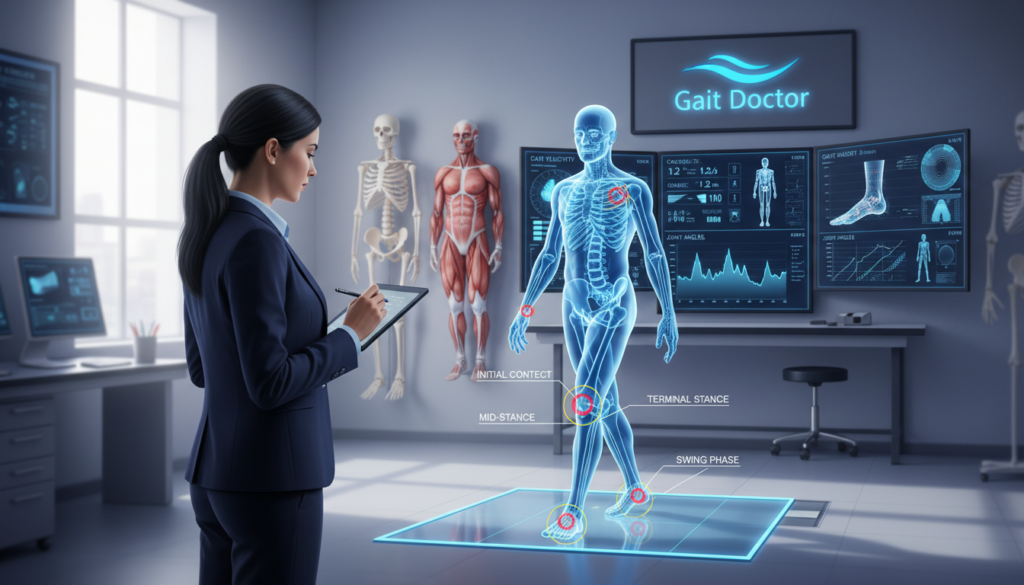
The gait cycle is a complex process. It involves the legs, hips, and lower back moving together. Analyzing it can show alignment problems and posture issues.
When we walk, our body goes through a repetitive pattern. Each step has several phases.
Phases of the Gait Cycle
The gait cycle has several phases. These include the stance phase, swing phase, and double-leg support phase. The stance phase is when the foot touches the ground. The swing phase is when the foot is lifted.
Understanding these phases helps spot gait problems.
Common Gait Abnormalities and Their Causes
Gait problems can come from many sources. These include muscle imbalances, neurological issues, and biomechanical problems. Common issues are overpronation, supination, and Trendelenburg gait.
Healthcare professionals can find the causes by analyzing the gait cycle. They can then create effective treatment plans.
Biomechanical Assessment: The Gait Doctor Approach
The Gait Doctor looks closely at how a person moves. They check for any odd ways of walking. This helps find out why someone might feel pain or move strangely.
Static and Dynamic Assessment Methods
They first look at how a person stands or sits. Then, they watch how they move, like walking or running. Advanced techniques help them see these movements clearly.
By using both methods, doctors get a full picture. They can then make plans to help fix any problems.
Support Options for Improved Foot Alignment and Posture
Good foot alignment is key for keeping a straight back and avoiding foot pain. Custom orthotics are a great way to help with this.
The Role of Custom Orthotics in Supporting Foot Function
Custom orthotics fit your feet just right, fixing issues like overpronation. They make your feet work better, feel less pain, and feel more comfy. Custom orthotics are made just for you, based on how your foot looks and moves.
Benefits of Custom Orthotics for Different Foot Types
Custom orthotics help many foot types. For example, they give arch support to people with flat feet. This helps the foot not hurt as much and stay in line better.
- Custom orthotics provide personalized support and correction.
- They can help alleviate pain and discomfort associated with various foot conditions.
- Orthotics can improve foot function and overall posture.
Knowing how custom orthotics help can make a big difference. They’re good for many foot problems. So, if you want better foot health, try custom orthotics.
Conclusion: Taking a Holistic Approach to Foot Health and Posture
Proper foot mechanics are key for good posture and muscle health. Knowing how feet affect posture helps us care for our feet better. This care is important for our overall health.
How our feet are aligned is very important for posture. Problems like pronation or supination can harm our body. Finding and fixing these issues with help like custom orthotics can make a big difference.
Putting foot health first helps avoid muscle problems. It also makes life better. This way of thinking about health shows how all parts of our body are connected.
## FAQ
### Q: How does foot alignment affect posture?
A: Foot alignment is key for good posture. If the feet are off, it messes up the body’s balance and movement.
### Q: What is the relationship between foot structure and posture?
A: The foot has 26 bones, 33 joints, and lots of muscles and ligaments. It helps keep the body balanced and upright. Knowing about foot structure helps us see its importance in posture and balance.
### Q: What are common foot alignment issues?
A: Some common problems are too much pronation or supination. Also, flat feet and high arches can affect how we stand.
### Q: How can foot alignment issues affect the body?
A: Misaligned feet can cause the body to adjust in ways that affect posture and balance. This can lead to pain and movement problems all over the body.
### Q: What is the Gait Doctor approach?
A: The Gait Doctor looks at how we walk using special tools. They check for any issues in our gait to find and fix foot problems.
### Q: How can custom orthotics help with foot alignment and posture?
A: Custom orthotics are made to fit your feet just right. They help keep your feet in the right place, which can make standing up straight easier and more comfortable.
### Q: What are the benefits of analyzing the gait cycle?
A: Looking at how we walk can show us where our posture problems come from. It helps find and fix foot issues that affect how we stand and move.
### Q: How does foot position affect pelvic alignment?
A: The way our feet are positioned affects our pelvis. If our feet are off, it can mess up our pelvis and posture.