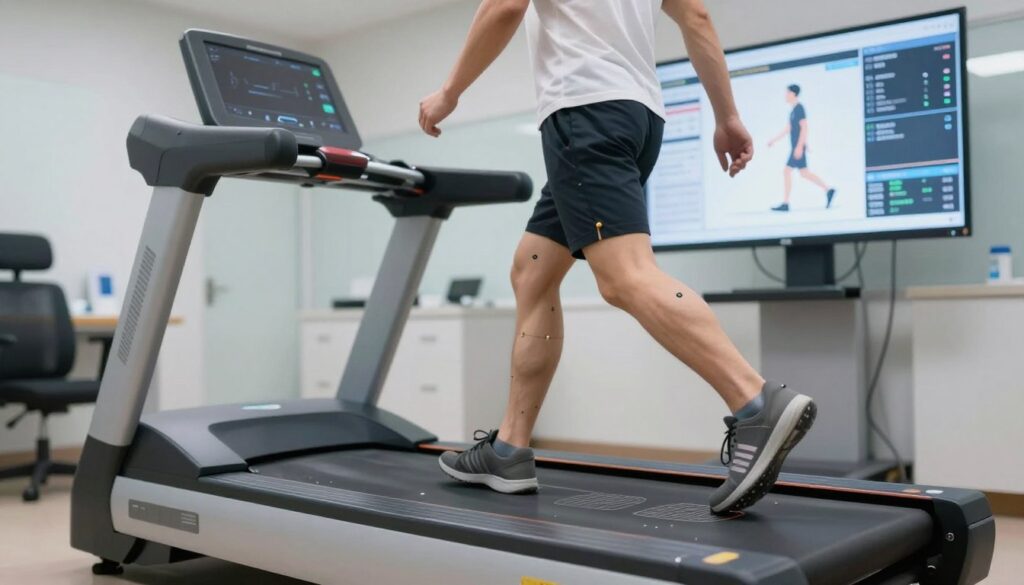
Understanding how we move is key for better performance and avoiding injuries. Gait analysis is a detailed study of how we walk and run. It looks at our movement patterns and body mechanics.
This tool gives us important insights into movement patterns and biomechanics. It helps experts spot problems and create specific solutions.
By studying someone’s gait, experts can learn more about their health and how well they perform.
Key Takeaways
- Gait analysis is a systematic study of human movement patterns.
- It involves observing and measuring how individuals walk and run.
- The analysis assesses movement patterns and body mechanics.
- It provides valuable insights into biomechanics and overall health.
- Gait analysis helps professionals develop targeted interventions.
What Is Gait Analysis?
Gait analysis is a detailed look at how someone walks or runs. It helps understand their movement patterns and health.
Definition and Basic Concepts
Gait analysis studies human walking closely. It’s done by experts like physical therapists or biomechanists. They look for any odd movement patterns.
The Components of Human Gait
Human gait has two main parts: the stance and swing phases. The stance phase is when the foot touches the ground. The swing phase is when the foot is lifted and moves forward.
Stance and Swing Phases
In the stance phase, the foot takes the impact of landing and holds the body’s weight. The swing phase is when the foot clears the ground, getting ready for the next step. Knowing these phases helps spot gait issues.
Gait Cycle Parameters
Gait cycle parameters like stride length and cadence are key. They tell us about a person’s walking patterns. These details help find problems and fix them.
The History and Evolution of Gait Analysis
The history of gait analysis is a story of growth and change. It has been shaped by new technology and our deeper understanding of how we move. This journey has turned gait analysis from a simple watch into a complex digital tool.
Early Observations of Human Movement
Studies on human gait started in the Renaissance. Artists and scientists like Leonardo da Vinci closely watched how people move. Their work was the first step in understanding the complex nature of human gait.
Modern Developments in Gait Assessment
Today, gait analysis has made big strides thanks to 3D motion capture and pressure mapping. These tools help us see and measure human gait in a way we never could before.
From Clinical Observation to Digital Analysis
The shift from watching people move to using digital tools is a big step forward. Now, we can understand gait patterns in a way that’s more detailed and accurate.
| Period | Key Developments in Gait Analysis |
|---|---|
| Renaissance | Early observations by artists and scientists |
| 20th Century | Introduction of basic gait analysis techniques |
| Modern Era | Advanced technologies like 3D motion capture and pressure mapping |
Why Gait Analysis Matters
Gait analysis shows us how we move in ways that affect our life quality. It helps us see how our movements can impact our health. By understanding these patterns, we can take steps to stay healthy and avoid problems.
Common Movement Patterns and Deviations
Gait analysis finds common movement patterns and any deviations. These can show issues like muscle imbalances or structural problems. For example, an odd gait can wear down joints, leading to pain or injuries.
Early detection of these patterns means we can act fast. This can stop serious problems from happening. Healthcare experts can find specific issues and create plans to fix them by analyzing our gait.
The Connection Between Gait and Overall Health
There’s a strong connection between gait and overall health. Studies link gait issues to health problems like neurological disorders and heart diseases. Looking at how we walk can tell a lot about our health.
Identifying Potential Issues Before They Progress
Gait analysis is great for identifying potential issues before they progress. It catches small changes in how we move. This lets healthcare experts act early, which can greatly improve our life quality and lower the risk of future problems.

How Gait Analysis Works: The Process Explained
The gait analysis process is complex. It starts with an initial assessment, then moves to data collection and interpretation. This detailed evaluation helps understand how a person moves and finds any problems.
Initial Assessment and Preparation
First, a thorough assessment is done to get ready for the gait analysis. This step is key to making sure the data collected is accurate and useful.
What to Wear and Bring
People are told to wear loose, comfy clothes that let them move freely. They might also need to bring any medical records or past assessments.
Medical History Review
The person’s medical history is checked to see if any health issues could affect their gait. This info is important for the analysts to keep in mind.
Data Collection Methods
Data collection is a big part of gait analysis. Different methods, like motion capture and pressure mapping, are used. They help get detailed info on how a person walks.
Analysis and Interpretation
After collecting data, it’s analyzed and interpreted. Practitioners look for any unusual gait patterns and figure out why they happen.
Follow-up and Recommendations
After analyzing the data, the results are shared with the person. They get advice on how to improve or treat any issues. This might include physical therapy, orthotics, or other treatments.
Practitioners play a big role in gait analysis. They handle the technical parts, like collecting and analyzing data. They also interpret the results and suggest treatments. Knowing about gait analysis helps people see its importance for good movement and health.
Technologies Used in Modern Gait Analysis
Today, advanced technologies are key in gait analysis. They help doctors understand how we move better than ever. This is thanks to new tools that give us detailed insights.
Video Recording Systems
Video systems are a mainstay in gait analysis. They record a patient’s walk in high quality. This lets doctors study each step for any problems.
High-definition cameras and special software make the analysis more precise.
Pressure Mapping and Force Plates
Pressure mapping and force plates measure how much pressure is on the ground. They show how a person walks and spot any issues. Studies prove their value in clinics.
Motion Capture and 3D Modeling
Motion capture and 3D modeling track a person’s movement in three dimensions. They are great for sports medicine and rehab. This tech gives a detailed look at how we move.
Wearable Sensors and Smart Devices
Wearable sensors and smart devices are getting popular in gait analysis. They are easy to use and affordable. They track things like step length and how we land when we walk.
Consumer vs. Clinical Technology
Consumer and clinical gait analysis tech differ a lot. Consumer tech is easy to use but not as precise. Clinical tech gives more detailed insights but is more complex.
Using these technologies has greatly improved our understanding of movement. Doctors can now make more accurate diagnoses and treatments thanks to these tools.
What Gait Analysis Measures
Gait analysis is key in both clinical and sports fields. It’s a detailed tool for studying human walking patterns. It offers insights into how we move.
Spatial and Temporal Parameters
Spatial and temporal parameters are at the heart of gait analysis. They include step length and width. These tell us about the distance and base of support during walking.
Step Length and Width
Step length is the distance from one heel strike to the next. Step width is the feet’s distance apart. These are vital for spotting gait issues.
Cadence and Velocity
Cadence is steps per minute, and velocity is walking speed. Both are key to gauging gait efficiency and stability.
Joint Angles and Movements
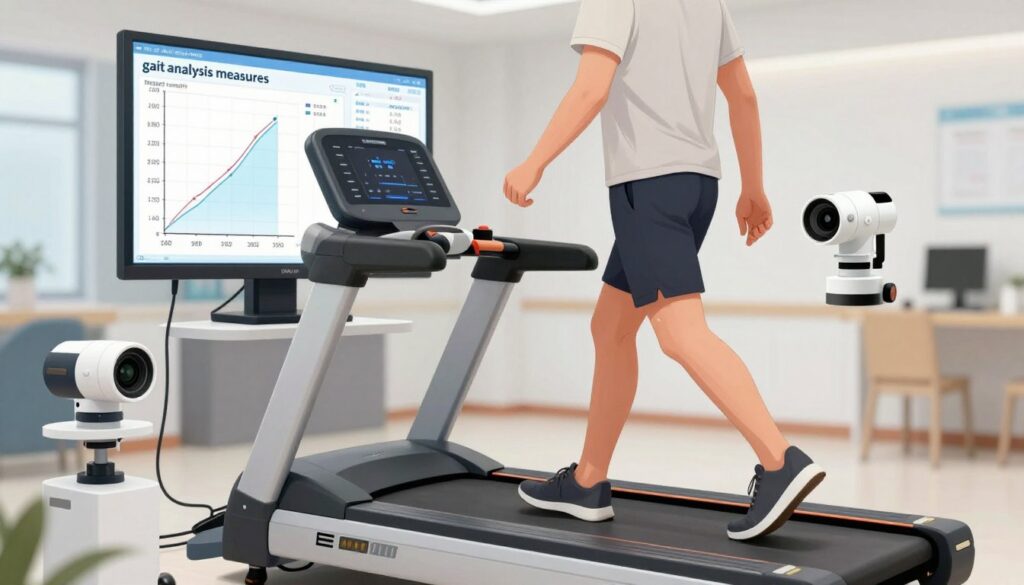
Gait analysis also looks at joint angles and movements. It checks the range of motion in hips, knees, and ankles. This helps spot any gait problems.
Muscle Activity and Force Production
It also examines muscle activity and force production. This involves muscle electrical activity and ground forces during walking. It’s crucial for understanding muscle role in gait and spotting muscle issues.
Balance and Weight Distribution
Lastly, gait analysis looks at balance and weight distribution. It checks how weight is spread on the feet and balance. These are key for fall risk assessment.
Professional Interpretation of Gait Analysis
Understanding human gait through analysis needs a team of experts. They have different skills and knowledge. Interpreting gait analysis data is complex. It involves many healthcare professionals, each with their own view.
The Role of Different Specialists
Gait analysis interpretation is a team effort. It’s not just one person’s job. Specialists from different fields work together to analyze gait data and create treatment plans.
Podiatrists and Foot Specialists
Podiatrists and foot specialists look at the foot and ankle. They see how problems in these areas affect gait. They use gait analysis to find and treat foot and ankle issues.
Physical Therapists and Rehabilitation Experts
Physical therapists and rehabilitation experts check movement patterns and muscle strength. They use gait analysis to spot areas for improvement. Then, they create plans for rehabilitation.
Sports Medicine Professionals
Sports medicine professionals use gait analysis to improve athletic performance and prevent injuries. They analyze the data to make training programs better. This helps reduce injury risk.
Connecting Data to Potential Issues
Specialists link gait analysis data to possible problems. They look for deviations from normal gait patterns. This requires clinical expertise and a deep understanding of human movement.
The Importance of Clinical Expertise
Clinical expertise is key in gait analysis interpretation. Experienced professionals can spot issues and create effective treatment plans. For more on gait analysis, visit Gait Doctor’s Education Page.
The role of clinical expertise in gait analysis is vital. It makes sure the data is used to make meaningful insights. These insights guide treatment decisions.
- Accurate diagnosis of gait abnormalities
- Development of personalized treatment plans
- Enhanced patient outcomes through targeted interventions
Applications of Gait Analysis
Gait analysis is used in many ways, from sports to rehabilitation. It helps us understand how we move. This knowledge can boost performance, prevent injuries, and help in recovery.
Sports Performance and Injury Prevention
In sports, gait analysis helps athletes perform better and stay injury-free. Coaches and trainers spot biomechanical issues that might slow them down or cause harm. They then create training plans to fix these problems.
Rehabilitation and Recovery
Gait analysis is key in rehab, helping doctors treat mobility issues. It lets them see where patients are struggling and plan treatments that fit their needs.
Neurological Assessment
In neurology, gait analysis checks how movement is affected by diseases like Parkinson’s. It shows how the disease is progressing. This helps doctors adjust treatments.
Orthotic and Prosthetic Design
Gait analysis helps design orthotics and prosthetics. It shows how a patient walks, helping create devices that fit perfectly. This improves mobility and comfort.
Aging and Fall Prevention
Lastly, gait analysis helps prevent falls in older adults. It spots gait problems that raise fall risks. Healthcare professionals then work on strategies to lower these risks, enhancing life quality.
Limitations and Considerations
It’s important to know the limits of gait analysis for it to be useful. This tool is valuable but should be used with caution. It works best when combined with professional advice and other assessments.
When Gait Analysis May Not Be Helpful
In some cases, gait analysis might not be the best choice. This is true when external factors like shoes or the environment affect a person’s walk. It’s key to think about these factors when looking at the results.
Understanding the Context of Results
The results of gait analysis need to be seen in the bigger picture. A full evaluation that includes other tests and expert opinions is usually needed.
“Gait analysis should be used as part of a comprehensive assessment to provide a complete picture of an individual’s movement patterns and potential issues.”
The Importance of Professional Guidance
Getting help from experts is crucial when using gait analysis. They can offer insights and advice based on the analysis.
Combining Gait Analysis with Other Assessments
Using gait analysis with other tests can give a clearer view of how someone moves. Different types of gait analysis can be paired with other diagnostic tools.
The Role of Comprehensive Evaluation
| Assessment Tool | Purpose |
|---|---|
| Gait Analysis | Evaluate movement patterns |
| Clinical Examination | Assess overall health and medical history |
| Imaging Studies | Examine internal structures |
A thorough evaluation that includes gait analysis, clinical checks, and imaging can fully understand someone’s movement and any problems.
Conclusion: The Future of Movement Analysis
The future of gait and movement analysis looks bright. New technology and methods are being developed. We can look forward to more advanced tools for studying human movement.
Artificial intelligence, machine learning, and wearable sensors will be key. They will help make movement assessments more precise. This could lead to better diagnosis and treatment of movement disorders.
Combining gait analysis with other tools will deepen our understanding of movement. Healthcare professionals will get a fuller picture of how people move. This will help in creating more effective treatment plans.
Gait analysis will become even more vital in many areas. This includes sports, injury prevention, rehabilitation, and neurological assessment. The future of movement analysis is full of promise for better care and understanding of human movement.