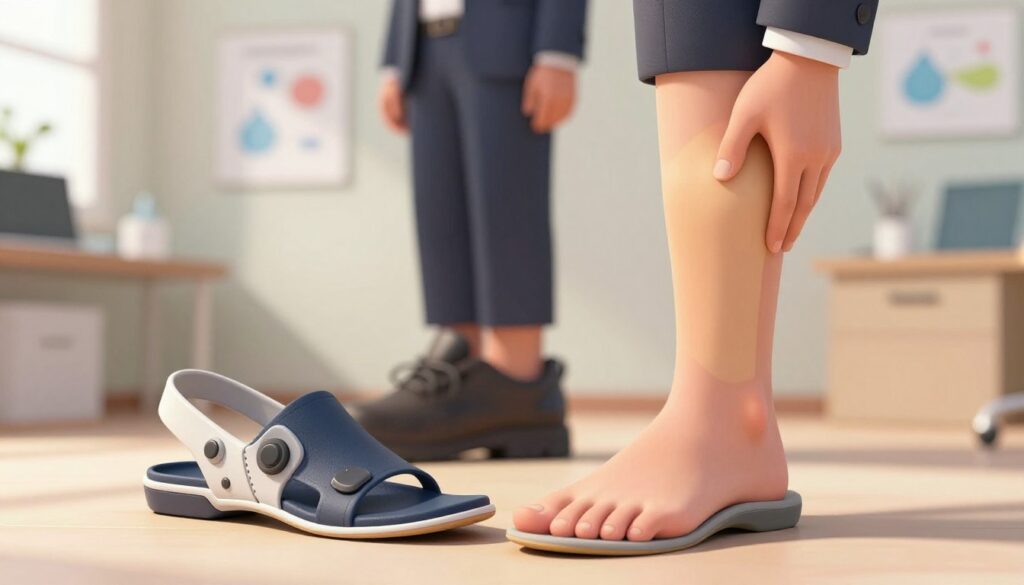
Knee pain can make simple tasks hard. It’s important to find out why you have knee pain. Foot mechanics often get overlooked but are key to knee health.
Custom orthotics offer the support and stability needed to ease knee pain. They fix foot alignment issues. This helps spread out pressure, easing the knee’s workload.
This guide will show how orthotics can help with knee pain. They improve your mobility and comfort.
Key Takeaways
- Orthotics can help alleviate knee pain by providing support and stability.
- Foot mechanics play a significant role in knee health.
- Custom orthotics can correct foot alignment issues.
- Proper foot alignment can reduce strain on the knee joint.
- Orthotics can enhance overall mobility and comfort.
Understanding Knee Pain: Causes and Common Conditions
Knowing why knee pain happens is key to fixing it. Knee pain can come from injuries, too much use, or how our body moves.
Common Causes of Knee Pain
Knee pain often comes from injuries, like sprained ligaments or torn meniscus. It also happens from doing too much, like tendinitis. Older people might get it from wear and tear, like osteoarthritis.
Biomechanical Factors Contributing to Knee Issues
How our body moves affects our knees. Bad walking or foot issues can put too much stress on the knee. For example, overpronation or supination can mess with how the knee works.
| Biomechanical Factor | Effect on Knee |
|---|---|
| Overpronation | Increased stress on medial knee structures |
| Supination | Potential for lateral knee pain due to altered gait |
| Gait Abnormalities | Uneven distribution of stress across the knee joint |
When to Seek Professional Assessment
If knee pain doesn’t go away or gets worse, see a doctor. They can check you out, maybe even with tests, to find out why. Getting help early can stop things from getting worse.
Understanding knee pain helps us manage it better. Seeing a doctor is important for figuring out what’s wrong and getting the right treatment.
The Connection Between Foot Mechanics and Knee Pain
It’s key to know how foot mechanics and knee pain are linked for better pain relief. The way our feet align and move can greatly affect our knees. This affects the health of our lower limbs.
The Kinetic Chain: How Feet Affect Knees
The kinetic chain shows how our body’s joints are connected. When one joint moves wrong, it can mess with others. For knee pain, our feet are very important. Bad foot mechanics can change how we walk, leading to knee problems.
Pronation, Supination, and Their Impact on Knee Alignment
Pronation and supination are how our feet move when we walk or run. But, too much of these movements can mess with our knee alignment. For example, too much pronation can make our tibia turn inward, causing knee pain.
Gait Abnormalities That May Affect Knee Function
Gait analysis helps find problems that can lead to knee pain. Things like uneven steps, wrong foot strike, or bad pronation/supination can hurt our knees. These issues can make our knees hurt more.
Knowing how foot mechanics and knee pain are connected is the first step to managing pain. It can help reduce knee pain by focusing on the right treatments.
Orthotics for Knee Pain: Types and Options
For those with knee pain, orthotics offer many solutions. They are tailored to fit specific needs. Orthotics support and align the foot, helping to ease knee pain.
Definition and Purpose of Orthotics
Orthotics are shoe inserts that support and stabilize the foot. They aim to fix biomechanical problems that cause knee pain. By adjusting the foot’s alignment, they reduce knee stress.
Custom vs. Over-the-Counter Options
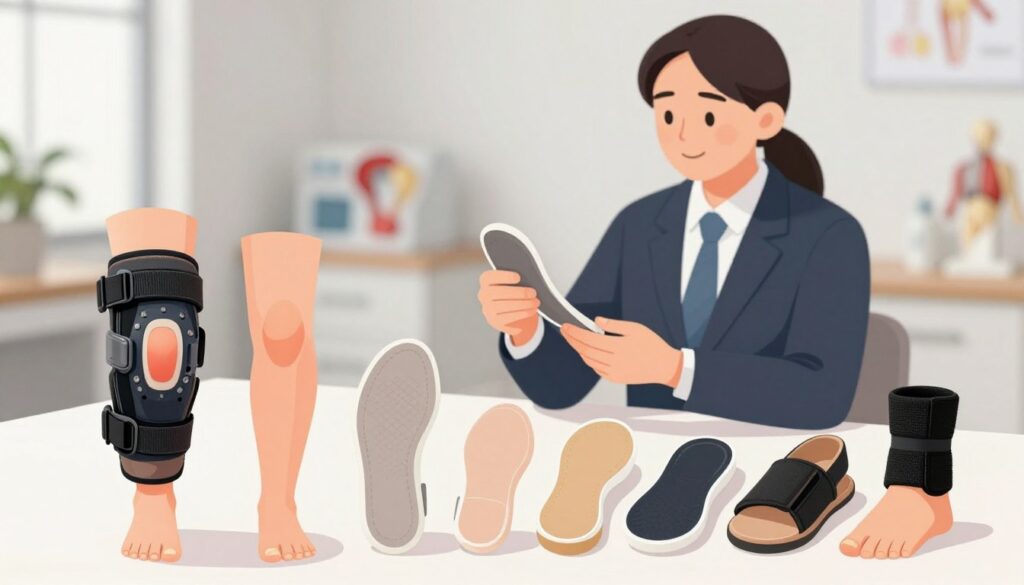
Orthotics come in two forms: custom and over-the-counter (OTC). Custom orthotics are made just for you, offering a perfect fit and support. OTC orthotics, while not as tailored, can still offer relief.
Materials and Design Considerations
Orthotics vary in materials and design, based on use and need. They can be made from plastics, carbon fiber, and various cushioning materials.
Rigid Orthotics
Rigid orthotics offer strong support and stability. They are firmer and correct major biomechanical issues.
Semi-Rigid Orthotics
Semi-rigid orthotics balance support and flexibility. They’re good for those needing some correction without losing comfort.
Soft Orthotics
Soft orthotics use cushioning for shock absorption and comfort. They’re often suggested for mild foot or knee problems.
Experts say, “The right orthotic can greatly help with knee pain.” Choosing between custom and OTC, and the materials and design, should be done with a professional’s help for the best results.
How Orthotics May Support Knee Function
Orthotics are key in supporting knee health. They address many biomechanical issues. They correct alignment, absorb shock, and improve stability.
Potential Alignment Correction
Orthotics help correct alignment problems. Proper foot alignment affects the whole lower limb. It reduces knee stress and pain.
Shock Absorption Benefits
They also offer shock absorption. This is vital for those in high-impact activities. Orthotics absorb shock, easing knee stress and improving comfort.
Stability Enhancement Possibilities
Orthotics enhance knee stability too. They support the foot and ankle. This stabilizes the lower limb, improving knee function and injury risk.
Specific Knee Conditions That May Respond to Orthotic Support
Orthotic devices can help people with certain knee problems. They support the knee and fix biomechanical issues. This can reduce pain and improve function in many knee issues.
Patellofemoral Pain Syndrome
Patellofemoral pain syndrome causes pain around or behind the kneecap. Orthotics can improve foot alignment and lessen knee stress. Key benefits include:
- Improved patellar tracking
- Reduced pain during activities
- Enhanced overall knee function
Osteoarthritis Considerations
Osteoarthritis is a degenerative joint disease that causes knee pain. Orthotics can help by spreading out pressure and reducing stress on the affected areas. Potential benefits for osteoarthritis sufferers include:
- Reduced pain during weight-bearing activities
- Improved joint stability
- Enhanced mobility
Iliotibial Band Syndrome
Iliotibial band syndrome is common in runners and cyclists, causing pain on the outside of the knee. Orthotics can address foot mechanics that cause IT band friction. Benefits may include:
- Reduced friction between the IT band and lateral femoral condyle
- Improved running or cycling biomechanics
- Decreased pain during activity
Runner’s Knee and Other Overuse Injuries
Runner’s knee, also known as patellofemoral pain syndrome, is often caused by overuse or poor biomechanics. Orthotics can correct foot and ankle alignment, reducing knee stress. Potential advantages include:
- Reduced pain during running or other activities
- Improved lower limb alignment
- Enhanced overall performance
The Assessment Process: What to Expect
When you have knee pain, getting a full check-up is key. This helps find the best way to treat it. The process looks at several important parts to figure out why you’re in pain.
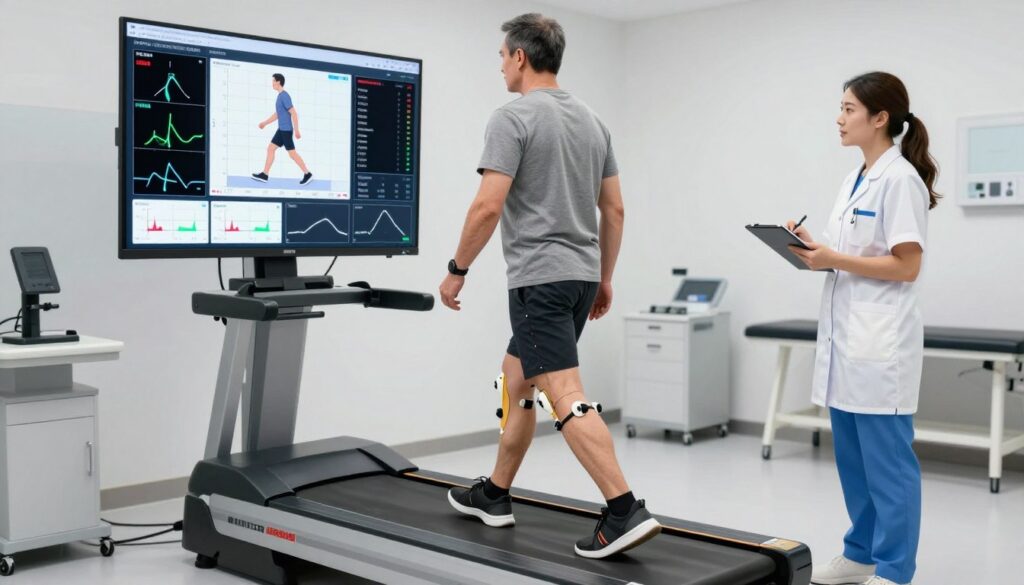
Comprehensive Gait Analysis
A detailed gait analysis is a big part of the check-up. It looks at how you walk to spot any odd patterns. This helps doctors understand what might be causing your knee pain.
Foot and Knee Examination
Checking the foot and knee is very important. Doctors look at how they line up, move, and are in shape. This helps find out if there’s a problem that’s causing your knee pain.
Imaging and Other Diagnostic Tools
Tools like X-rays and MRI scans are used to see what’s going on in your knee. They help find any problems or damage.
The Role of Different Health Practitioners
Many health experts help with knee pain. Podiatrists focus on the foot and ankle. Orthopedic specialists look at the bones and muscles. Physical therapists help with exercises to get better. Each one brings their own skills to help you.
| Practitioner | Specialization | Role in Knee Pain Assessment |
|---|---|---|
| Podiatrist | Foot and Ankle | Assesses foot mechanics and alignment |
| Orthopedic Specialist | Musculoskeletal System | Evaluates knee structure and function |
| Physical Therapist | Rehabilitation | Provides exercises and therapy for knee pain management |
By combining what each expert finds, doctors can make a treatment plan just for you. This plan is based on your specific needs.
Getting Fitted for Orthotics: The Process
Getting fitted for orthotics is key to managing knee pain. It involves several stages to make sure the orthotics fit just right.
Initial Consultation
The first step is a visit to a healthcare professional, like a podiatrist or orthotist. They check your foot mechanics, gait, and lower limb function. This helps find out what’s causing your knee pain.
Measurement and Casting Techniques
To make custom orthotics, precise measurements are taken. This might include a plaster cast of your foot or digital scanning. Advanced technology, like 3D scanning, ensures accurate measurements for a perfect fit.
Follow-up Adjustments
After the orthotics are made, you’ll have a follow-up to check the fit. Any needed adjustments are made here. Minor tweaks might be necessary for the best fit.
Breaking-in Period and Adaptation
The breaking-in period is crucial. It’s when you get used to wearing the orthotics. It’s important to follow the doctor’s advice on wearing them more gradually. This helps you adjust smoothly to wearing them regularly.
| Stage | Description | Key Considerations |
|---|---|---|
| Initial Consultation | Assessment of foot mechanics and gait | Comprehensive evaluation by a healthcare professional |
| Measurement and Casting | Creating a precise model of the foot | Use of advanced technology like 3D scanning |
| Follow-up Adjustments | Ensuring a comfortable and effective fit | Making minor adjustments as needed |
| Breaking-in Period | Gradually adapting to wearing orthotics | Following practitioner guidance on wear time |
“A proper orthotics fitting is not just about creating a device that fits; it’s about creating a solution that addresses the root cause of knee pain.”
Understanding the orthotics fitting process shows how important it is. It’s a detailed and personalized way to manage knee pain.
Orthotics in New Zealand: Access and Options
Knee pain sufferers in New Zealand can find orthotics solutions tailored to their needs. Orthotics are key in managing knee pain. New Zealand offers many options for relief.
Available Providers and Specialists
Many providers and specialists in New Zealand offer custom orthotics services. For example, Koru Orthotics provides comprehensive services. Specialists at Gait Doctor offer expert advice on orthotic shoes.
Cost Considerations
The cost of orthotics in New Zealand varies. It depends on the type, materials, and provider’s expertise. Custom orthotics usually cost between NZD $500 to $1,500.
| Orthotic Type | Average Cost (NZD) |
|---|---|
| Custom Orthotics | $500 – $1,500 |
| Over-the-Counter Orthotics | $100 – $500 |
ACC and Insurance Coverage Possibilities
In New Zealand, the Accident Compensation Corporation (ACC) and some health insurance providers may cover orthotics costs. This is if they are needed for treating an injury or condition. It’s important to check with your insurance provider to see what’s covered.
Knowing about orthotics options and costs helps people make better choices for knee pain management.
Complementary Approaches to Managing Knee Pain
There are many ways to help with knee pain besides orthotics. A good plan for knee pain often includes several steps. These steps cover different parts of a person’s health and lifestyle.
Physical Therapy and Targeted Exercises
Physical therapy is key in managing knee pain. It strengthens the muscles around the knee and improves flexibility. Targeted exercises can also lessen pain and boost mobility. For more on non-surgical knee pain treatments, check out Hinge Health.
Proper Footwear Selection
Choosing the right shoes is crucial for knee health. Shoes that support and cushion the feet can ease knee stress. Look for shoes with good arch support, the right heel height, and a comfortable fit for better knee comfort.
Weight Management Considerations
Keeping a healthy weight is important for knee health. Losing weight, even a little, can help reduce knee pain. It also improves how well you can move.
Activity Modification Strategies
Changing how you do daily activities and exercises can help with knee pain. You might switch to lower-impact activities like swimming or cycling. These are gentler on the knees.
Using these complementary approaches can help create a solid plan for managing knee pain. It’s important to talk to healthcare experts. They can help find the best mix of treatments for your specific needs.
Potential Limitations and Considerations
Orthotics can be helpful, but they have limitations and potential drawbacks. They might not solve knee pain for everyone. Sometimes, they’re not enough by themselves.
When Orthotics May Not Be Sufficient
Orthotics might not work for everyone. This could be because the knee pain is complex. Or, other factors might be at play.
Realistic Expectations and Timeframes
It’s important to have realistic expectations when using orthotics. How well they work can vary. It might take time to see if they help.
Alternative Interventions to Consider
If orthotics don’t work, alternative interventions might be needed. This could include physical therapy or specific exercises. Treatments should match the person’s needs.
The Importance of Comprehensive Treatment Approaches
A comprehensive treatment approach is key for knee pain management. Healthcare experts should guide this. It might include orthotics, physical therapy, and more.
Conclusion: Making Informed Decisions About Knee Pain Management
Managing knee pain well needs a full plan. This plan should look at foot mechanics, how you walk, and your knee’s health. Knowing your options helps you make smart choices about your care.
Orthotics are key in managing knee pain. They offer support, fix alignment problems, and make your knee stable. But, it’s important to talk to health experts to find the right treatment.
When looking at orthotics for knee pain, know the different kinds. There are custom and over-the-counter ones. A detailed check, like a gait analysis and foot exam, helps pick the best orthotic for you.
Choosing the right way to manage knee pain means looking at many things and getting expert advice. This way, you can actively manage your knee pain and live better.
This info is for learning and not a replacement for doctor’s advice. Always talk to a healthcare pro for personal advice on knee pain management.