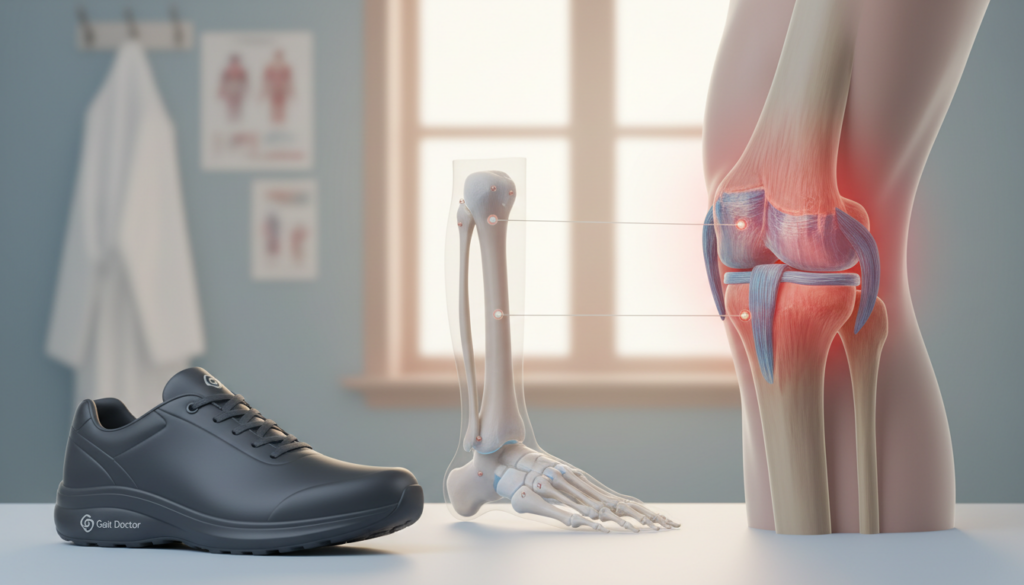
Knee osteoarthritis is a disease that hurts millions. It causes pain, stiffness, and limited mobility. Knowing about it helps manage symptoms and improve life quality.
The disease breaks down cartilage, leading to bone-on-bone contact. This causes pain and less mobility. Yet, foot support might help ease knee osteoarthritis symptoms.
Key Takeaways
- Knee osteoarthritis is a common degenerative joint disease.
- Foot support may influence knee health.
- Managing symptoms is crucial for improving quality of life.
- Osteoarthritis exercises can help alleviate symptoms.
- Understanding the condition is key to effective management.
Understanding Knee Osteoarthritis
Knee osteoarthritis is a big health problem. It happens when the cartilage and bone in the knee wear out. This makes people feel pain, stiff, and move less.
What is Knee Osteoarthritis?
Knee osteoarthritis is a disease that hurts the knee. It happens when the cartilage wears away. This causes bones to rub together, leading to pain and stiffness.
Many things can cause it, like getting older, family history, and injuries.
Prevalence and Impact in New Zealand
In New Zealand, many people have knee osteoarthritis. It really affects their life, making it hard to do everyday things and exercise.
| Age Group | Prevalence of Knee Osteoarthritis |
|---|---|
| 45-54 | 10% |
| 55-64 | 20% |
| 65+ | 30% |
Common Symptoms and Progression
The symptoms of knee osteoarthritis vary. But common ones are pain, stiffness, and trouble moving. As it gets worse, these symptoms can get much worse.
Early detection and intervention can really help. Catching it early and managing it well can make a big difference in someone’s life.
The Biomechanics of Knee Function
The lower limb is key to knee biomechanics. It’s a complex system of joints and muscles. They work together from the feet to the knees.
Normal Knee Mechanics During Walking
Walking puts stress on the knee joint. Normal knee mechanics mean a smooth motion. But, any problem can cause bad stress on the knee.
How Forces Travel Through the Lower Limb
Forces move up the lower limb, from feet to knees. Knowing how these forces spread is key for knee health. The alignment and function of the foot greatly affect the knee.
The Kinetic Chain: Connecting Feet to Knees
The kinetic chain is vital for knee biomechanics. It shows how each part of the lower limb affects others. Proper alignment and function of the foot and ankle are crucial for healthy knees.
Experts say,
“The kinetic chain is essential for understanding how forces are transmitted through the lower limb, affecting knee health.”
Understanding and fixing issues in the kinetic chain can help improve knee health. It might even reduce knee osteoarthritis effects.
The Relationship Between Foot Mechanics and Knee Health
It’s key to know how foot mechanics and knee health are linked. Our feet affect how our knees work and feel during different activities.
How Foot Positioning Affects Knee Alignment
Where our feet are positioned matters a lot for knee alignment. Problems like overpronation or supination can mess up how our lower limbs line up. This uneven stress can wear down our knees, making osteoarthritis worse.

Pronation, Supination, and Their Impact on Knee Loading
Pronation and supination are big deals for knee loading. Pronation is when your foot rolls inward. Supination is when it rolls outward. Both can cause knee pain and discomfort. People with knee osteoarthritis often have feet that roll too much.
“Abnormal foot mechanics can lead to altered biomechanics in the lower limb, potentially contributing to the development or progression of knee osteoarthritis.”
Current Research on Foot-Knee Connections
New studies show how important foot mechanics are for knee health. For example, studies in orthopedic journals found that fixing foot issues can help knees feel better. You can learn more at Gait Doctor’s Education Page.
| Foot Mechanic | Effect on Knee Alignment | Potential Outcome |
|---|---|---|
| Excessive Pronation | Inward rotation of the knee | Increased stress on the medial compartment |
| Excessive Supination | Outward rotation of the knee | Increased stress on the lateral compartment |
Knowing how feet and knees are connected helps doctors treat knee osteoarthritis better.
Risk Factors Contributing to Knee Osteoarthritis
Knee osteoarthritis has many causes. These include genetics, age, and lifestyle. Knowing these can help prevent and manage the condition.
Genetic and Age-Related Factors
Genetics play a big role in knee osteoarthritis. If your family has it, you might get it too. Age also matters. As you get older, your joints wear out more.
Weight and Lifestyle Considerations
Being overweight is bad for your knees. It makes them work harder. Your activity level and job can also affect your risk. Activities that stress your knees can lead to osteoarthritis.
Previous Injuries and Anatomical Variations
Knee injuries, like fractures or sprains, raise your risk. So do differences in your body, like leg length or knee alignment. These can change how stress is spread in your knee.
| Risk Factor | Description |
|---|---|
| Genetic Predisposition | Family history of osteoarthritis |
| Age | Increased risk with older age |
| Excess Weight | Additional stress on knee joints |
| Previous Injuries | Knee fractures or ligament sprains |
| Anatomical Variations | Leg length differences or knee alignment issues |
Knowing these risk factors helps you prevent and manage knee osteoarthritis. It’s all about taking care of your knees.
Knee Osteoarthritis Exercises and Their Benefits
Exercise is key for better knee function and less pain in those with knee osteoarthritis. It makes muscles stronger, improves flexibility, and boosts mobility. Knee exercises are vital for managing knee osteoarthritis well.
Low-Impact Strengthening Exercises
Low-impact exercises are great for knee osteoarthritis. They build strong muscles around the knee without too much strain. Examples include straight leg raises, wall squats, and leg press.
Strengthening these muscles helps support the knee and lessen pain.
Flexibility and Range of Motion Activities
Keeping the knee flexible and moving well is also important. Gentle stretches can improve flexibility and reduce stiffness. Yoga or tai chi are good because they promote gentle movement.
Aquatic and Other Joint-Friendly Exercise Options
Aquatic exercises, like swimming or water aerobics, are perfect for knee osteoarthritis. Water’s buoyancy makes exercising easier on the joints. Cycling or using an elliptical machine are also good options.
Exercise Modifications for Different Severity Levels
It’s crucial to adjust exercises based on how severe the knee osteoarthritis is. For more severe cases, exercises need to be gentler. A healthcare professional or physical therapist can help find the right exercises and adjustments.
The Role of Gait Analysis in Understanding Knee Problems
Gait analysis helps us understand knee problems. It shows how we walk and finds issues that might lead to knee osteoarthritis. It’s very important for doctors at Gait Doctor New Zealand who do biomechanical assessments.
What Happens During a Professional Gait Assessment
People walk on a treadmill or walkway during a gait assessment. They are watched by advanced technology. This includes cameras, sensors, and plates that measure forces on the ground.
This data shows how someone walks. It points out any problems that could hurt the knees.
Technology and Methods Used in Modern Gait Analysis
Modern gait analysis uses new technology. It includes 3D motion capture, EMG for muscle activity, and dynamic pedobarography for foot pressure. These tools help us see how the knees work when we walk.
How Gait Doctor Approaches Biomechanical Assessment in New Zealand
Gait Doctor New Zealand uses the latest technology for gait analysis. They look at knee function and lower limb mechanics. Their team works with patients to find the cause of knee problems.
They then create plans to help. This might include orthotics, physical therapy, or other treatments. These plans aim to improve walking and prevent osteoarthritis.
Knowing about gait analysis helps keep knees healthy. It prevents knee osteoarthritis from getting worse.
Foot Support Options That May Help Knee Osteoarthritis
Foot support options are getting more attention for helping with knee osteoarthritis. The link between foot mechanics and knee health is complex. Knowing this can help manage symptoms better.
Types of Orthotic Interventions
Orthotics are devices for supporting or correcting body parts, like the foot. There are many types, from simple shoe inserts to custom-made ones.
Common types of orthotics include:
- Arch supports
- Heel cups
- Orthotic shoe inserts
- Custom orthotics
Custom vs. Off-the-Shelf Support Options
There are custom and off-the-shelf foot support options. Custom orthotics fit your foot perfectly, while off-the-shelf orthotics come in various sizes.
Choosing depends on your condition, foot shape, and what you prefer.
What the Research Suggests About Orthotics for Knee OA
Studies show orthotics can lessen knee pain and improve function in knee osteoarthritis. They’ve looked at different orthotics, like lateral wedge insoles and foot orthoses.
A review of studies found orthotics can greatly help with pain and function.
Realistic Expectations: What Foot Support May and May Not Achieve
Foot support can help with knee osteoarthritis symptoms, but don’t expect miracles. Orthotics can ease pain and improve function, but they won’t get rid of all symptoms.
Remember, orthotics are part of a bigger plan. This plan might include exercise, lifestyle changes, and other treatments.
Comprehensive Management Approach for Knee Osteoarthritis
To manage knee osteoarthritis well, we need a big plan. This plan should cover many areas. It’s about finding the right mix for each person.
Integrating Foot Support with Other Interventions
Foot support is key in managing knee osteoarthritis. Orthotics and changing shoes help a lot. They work best when used with other treatments like physical therapy and changing how we live.
Working with New Zealand Healthcare Professionals
Working with doctors in New Zealand is important. Experts like orthotists, physiotherapists, and rheumatologists give great advice. They make plans just for you.
Lifestyle Modifications to Support Knee Health
Changing how we live helps a lot. Being at a healthy weight, exercising right, and changing daily habits ease knee pain. These changes are part of the big plan.
When to Consider Additional Management Options
Sometimes, we need more help to manage knee osteoarthritis. This might include medicine, shots, or surgery. Knowing when to try these options is key for better knee health.
By using a big plan that includes foot support, lifestyle changes, and more, we can manage knee osteoarthritis better. This improves our life a lot.
Conclusion: Taking Steps Toward Better Knee Health
Managing knee osteoarthritis needs a mix of foot support, lifestyle changes, and more. Knowing about the condition and its risks helps. It also helps to know about exercises and foot support.
By being active and using the right foot support, symptoms can lessen. This makes life better. It’s important to work with doctors to make a plan that fits you.
Using a full plan to manage osteoarthritis helps a lot. This includes making smart choices, using the right foot support, and exercising often. With the right steps, you can feel better and live better.
## FAQ
### Q: What is knee osteoarthritis?
A: Knee osteoarthritis is a disease that makes the knee joint hurt. It causes pain, stiffness, and makes it hard to move.
### Q: How does foot mechanics affect knee health?
A: Foot mechanics are very important for knee health. Problems with how the foot sits can mess up the knee’s alignment and how it loads.
### Q: What are the common symptoms of knee osteoarthritis?
A: Symptoms include pain, stiffness, and trouble moving. These can be different for everyone.
### Q: How can exercises help manage knee osteoarthritis?
A: Doing low-impact exercises, stretching, and swimming can help. These activities are good for people with knee osteoarthritis.
### Q: What is the role of foot support in managing knee osteoarthritis?
A: Foot support, like orthotics, can help lessen knee pain. It also makes it easier to move for people with knee osteoarthritis.
### Q: How can lifestyle modifications support knee health?
A: Keeping a healthy weight and staying active are good for your knees. They help manage knee osteoarthritis.
### Q: What are the benefits of a comprehensive management approach for knee osteoarthritis?
A: Using a full plan that includes foot support and staying active can help. It makes your knees feel better and lessens symptoms.
### Q: When should I consider additional management options for knee osteoarthritis?
Try more options if your symptoms don’t get better or get worse. This is after you’ve tried simpler ways to manage it.