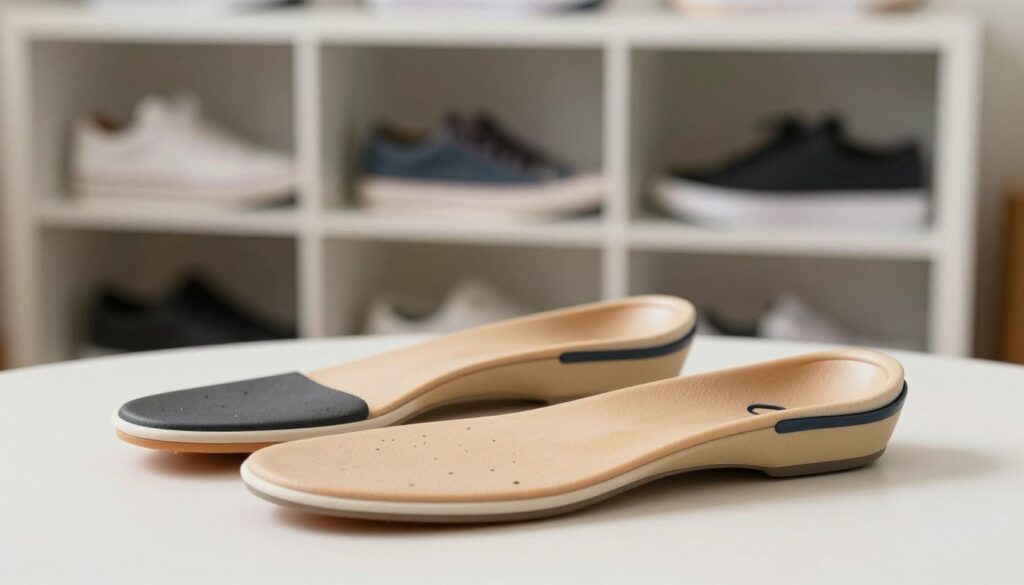
Custom orthotics are special shoe inserts made to support and align your feet. They fit your unique foot shape. If you have foot pain, these inserts can really help. They offer personalized support and ease discomfort.
Many people feel better after using custom orthotics. It’s important to talk to a qualified expert to see if they’re right for you. This step can lead to better foot health and overall well-being.
Key Takeaways
- Custom orthotics are designed to support and align feet according to unique anatomy.
- They can help alleviate foot pain and discomfort.
- Consulting a qualified practitioner is necessary to determine if custom orthotics are right for you.
- Custom orthotics can provide personalized support.
- Improved foot health can lead to overall well-being.
What Are Orthotics and How Do They Work?
Understanding orthotics is key for those with foot pain. Orthotics support, correct, and relieve the feet, ankles, and lower limbs.
Definition and Basic Functions
Orthotic devices fit inside shoes to support and align the feet. They can be custom-made or pre-fabricated. Materials vary, like rigid plastics or soft foams, based on need.
Their main job is to spread out pressure and ease pain from issues like flat feet, high arches, or plantar fasciitis.
How Orthotics Support Foot Mechanics
Orthotics are vital for foot mechanics. They ensure the feet move right during activities. This helps avoid joint and muscle damage.
For example, people with biomechanical issues might need custom orthotics that fit their foot perfectly.
Common Misconceptions About Orthotic Devices
Many think orthotics are a one-size-fits-all solution. But, they need a professional to find the right fit for each person. Another myth is that only those with severe foot problems need them.
Actually, they help athletes improve and anyone wanting to prevent foot issues.
The Science Behind Foot Biomechanics
Foot biomechanics is the study of how our feet move and function. It’s key to understanding how our body moves and stays balanced. Knowing about foot biomechanics is very important.
Normal Foot Mechanics and Gait Cycle
Our feet have bones, muscles, and ligaments that work together. This helps us move. The gait cycle, or the pattern of steps we take, is a big part of this.
A normal gait cycle has three main parts: heel strike, midstance, and toe-off. In these phases, our foot absorbs shock and helps us move forward.
How Biomechanical Issues May Develop
Many things can cause biomechanical problems. These include genetics, injuries, or doing the same thing over and over. For example, if our feet don’t land right, it can cause pain and injuries.
Wearing the wrong shoes or changing how active we are can also cause problems.
The Relationship Between Feet and Overall Body Alignment
Our feet are very important for keeping our body aligned. When our feet work right, they help our body move well and stay safe. But, if our feet have problems, it can affect our ankles, knees, hips, and back.
Understanding how our feet affect our body can help us stay healthy. It helps us prevent problems and keep our feet in good shape.
Common Signs You Need Orthotics
Knowing when you need orthotics is key for foot health. Orthotics can help with many foot problems. If you notice certain symptoms, think about adding orthotics to your foot care routine.
Persistent Foot Pain and Discomfort
Persistent foot pain or discomfort is a common sign. This pain can be in the heel, arch, or toes. If pain doesn’t go away with rest or pain meds, see a pro.

Abnormal Wear Patterns on Shoes
Abnormal wear patterns on your shoes also hint at a need for orthotics. Shoes that wear down unevenly suggest foot or gait issues. This can lead to more problems, so orthotics might help.
Recurring Foot-Related Injuries
Recurring foot-related injuries like stress fractures or plantar fasciitis might need orthotics. These injuries often point to biomechanical problems that orthotics can fix.
Balance and Stability Challenges
Also, balance and stability challenges could mean you need orthotics. Foot mechanics can affect balance. Orthotics can offer the support needed to improve stability.
In summary, if you’re seeing these signs, talk to a foot expert. They can check your foot health and see if orthotics are a good fit. Don’t guess online; get expert advice for your foot issues.
Foot Conditions That May Benefit from Orthotic Support
Many foot conditions can be helped by orthotics. These devices offer support and alignment to ease pain. A foot expert can help find the right treatment, which might include orthotics.
Plantar Fasciitis and Heel Pain
Plantar fasciitis causes heel pain due to inflammation. Orthotics help by supporting the arch and cushioning. This reduces stress on the plantar fascia. For those with plantar fasciitis, custom orthotics can be very helpful.
Flat Feet and Fallen Arches
Flat feet happen when the arch collapses. This can cause foot and ankle pain. Orthotics offer arch support to ease this discomfort. A specialist can make custom orthotics for flat feet.
Bunions and Hammertoes
Bunions and hammertoes can be very painful. Orthotics can redistribute pressure and cushion the affected areas. For those with bunions or hammertoes, orthotics can be a key part of treatment.
Morton’s Neuroma and Metatarsalgia
Morton’s neuroma and metatarsalgia affect the ball of the foot. Orthotics provide support and cushioning. People with these conditions may find relief with orthotics.
| Foot Condition | Symptoms | Orthotic Benefits |
|---|---|---|
| Plantar Fasciitis | Heel pain, inflammation | Arch support, cushioning |
| Flat Feet | Foot pain, ankle discomfort | Arch support, alignment |
| Bunions/Hammertoes | Toe deformity, pain | Pressure redistribution, cushioning |
| Morton’s Neuroma/Metatarsalgia | Ball of foot pain | Metatarsal support, cushioning |
Learn more about orthotics for foot conditions at https://www.ibji.com/services/foot/orthotics/. A professional can help find the best treatment, which might include custom orthotics.
How Orthotics May Help With Pain Beyond the Feet
Orthotic devices are made to fix foot mechanics. This can help ease pain in the knees, hips, and lower back. They offer personalized support to tackle discomfort in these areas.
Knee Pain and Alignment Issues
Knee pain often comes from foot alignment and gait problems. Orthotics can realign the feet, easing knee strain and pain. For example, those with overpronation or supination can find relief with orthotics that fix these issues.
Hip and Lower Back Discomfort
Hip and lower back pain can stem from foot mechanics. Orthotics correct alignment and support, spreading pressure evenly. This helps reduce strain on the hips and lower back, especially for those with abnormal gait.
Potential Postural Improvements
Orthotics also aid in potential postural improvements. They ensure feet are aligned right, helping keep a natural posture. This reduces muscle and skeletal system strain. For more on orthotics benefits, talk to a pro like those at Gait Doctor.
In summary, orthotics are key in easing pain beyond the feet. They help with knee pain, hip discomfort, and lower back pain by fixing foot mechanics and improving posture.
Lifestyle Factors That Might Indicate Orthotic Benefits
Daily life and activities can change how our feet work. This might mean we need orthotics. Knowing how our lifestyle affects our feet can help us see if we need orthotics.
Occupational Considerations
Jobs that make you stand a lot, like in healthcare or retail, can hurt your feet. Orthotics can help by giving extra support and easing pain. They make standing more comfortable and can boost your work performance.
Athletic Activities and Sports Performance
People who are active or play sports might also need orthotics. They help by supporting and stabilizing the feet. Good foot alignment and cushioning can make you perform better and recover faster.

Age-Related Foot Changes
As we get older, our feet change. This can affect how they work. Orthotics can offer support and comfort for these changes.
Pregnancy and Weight Fluctuations
Pregnancy and big weight changes can hurt your feet. The extra weight and how your body moves can cause pain. Orthotics can help by supporting your feet and spreading out the pressure.
Understanding how our lifestyle affects our feet is key to good foot care. Talking to a healthcare expert can help figure out if you need orthotics.
Types of Orthotics and Their Potential Applications
It’s important to know about the different types of orthotics for foot problems. Each type is made from various materials and designs. They are tailored to meet specific needs.
A professional can help figure out if you need orthotics. They can also suggest the right type for you. For more information, check out https://gaitdoctor.co.nz/education/.
Over-the-Counter vs. Custom Orthotics
Orthotics are divided into over-the-counter (OTC) and custom types. OTC orthotics offer general support. Custom orthotics are made for your foot, providing better support and correction.
Rigid, Semi-Rigid, and Soft Orthotic Options
Orthotics differ in material and flexibility. Rigid ones control foot motion and help with plantar fasciitis. Semi-rigid ones balance support and flexibility, great for athletes. Soft orthotics offer cushioning, ideal for diabetic foot issues.
Sport-Specific Orthotic Devices
Sport-specific orthotics help athletes perform better and avoid injuries. They are made for specific sports, offering support and stability.
Specialty Orthotics for Specific Conditions
Some conditions need special orthotics. For example, those with severe flat feet or Morton’s neuroma may need custom orthotics.
| Type of Orthotic | Description | Potential Application |
|---|---|---|
| Custom Orthotics | Tailored to individual foot shape | Personalized support and correction |
| Rigid Orthotics | Control foot motion | Plantar fasciitis, severe overpronation |
| Semi-Rigid Orthotics | Balance support and flexibility | Athletic performance, mild to moderate foot issues |
| Soft Orthotics | Provide cushioning | Diabetic foot care, comfort |
The Professional Assessment Process
Finding the right orthotic solution starts with a detailed professional assessment. This step is key to understanding your foot health needs. It helps find the best orthotic device for you.
Qualified Practitioners: Podiatrists, Orthotists, and Other Specialists
Podiatrists and orthotists lead the assessment process. They have the skills to check your foot mechanics and suggest orthotics. Podiatrists focus on foot and ankle health. Orthotists specialize in making and fitting orthotics.
During the assessment, expect a thorough check-up. This might include:
- Looking at your medical history.
- Examining your feet for any problems.
- Watching how you walk to spot biomechanical issues.
What to Expect During a Professional Evaluation
At a professional evaluation, you’ll get a full foot health check. This might involve several tests to find the cause of foot issues. The practitioner will look at your feet, ankles, and even your legs and lower back.
Gait Analysis and Pressure Mapping Techniques
Gait analysis and pressure mapping are used during assessments. Gait analysis shows how walking affects your foot mechanics. Pressure mapping measures foot pressure, helping understand how feet function.
The Custom Fitting Process
After deciding on orthotics, the next step is custom fitting. This makes orthotics that fit your exact needs. The practitioner will take precise measurements and might make a foot mold for a perfect fit.
In summary, a professional assessment is crucial for orthotics. It ensures orthotics are made just for you. By getting a detailed evaluation, you can get orthotics that improve your foot health and overall well-being.
Conclusion: Considering Orthotics as Part of Your Foot Health Plan
Orthotics can greatly help with foot pain and discomfort. They support the foot’s mechanics and help with many foot issues. This makes them a key part of a good foot health plan.
When thinking about considering orthotics, it’s important to talk to a podiatrist or orthotist. They can figure out what you need and suggest the best orthotics for you.
This info is for learning and not to replace doctor’s advice. Always talk to a healthcare expert for advice on your foot health plan.