
Falls are a big worry for older adults. They can lead to injuries that hurt their quality of life. Changes in balance, muscle strength, vision, and hearing can make falls more likely. Knowing these risks is key for senior safety.
Keeping feet healthy and balanced is key to avoiding falls. Seniors can improve their well-being by focusing on these areas.
Key Takeaways
- Understanding risk factors is crucial for senior safety.
- Maintaining good foot health is essential for fall prevention.
- Gait analysis can help identify issues with foot mechanics.
- Balance and muscle strength play a significant role in preventing falls.
- Proactive steps can be taken to reduce the likelihood of falls.
The Impact of Falls on Senior Health
Falls hurt seniors in many ways. They affect their bodies, minds, and money. Falls are a big reason for injuries in older adults. They cause a lot of sickness, death, and cost a lot of money for healthcare.
Statistics on Falls Among Older Adults
Falls are a big problem for seniors. They happen a lot and can be very serious. Every 11 seconds, an older person goes to the emergency room for a fall.
Falls are the top reason for head and hip injuries in people 65 and older.
| Age Group | Fall-Related Injury Rate | Common Injuries |
|---|---|---|
| 65-74 | Moderate | Bruises, fractures |
| 75-84 | High | Fractures, head injuries |
| 85+ | Very High | Hip fractures, serious head injuries |
Physical and Psychological Consequences
Falls can really hurt seniors. They can make it hard to move around and need help. Falls can also make people scared, anxious, and sad.
Economic Burden of Fall-Related Injuries
Falls cost a lot of money. This includes medical bills, rehab, and care for a long time. It also includes lost work time and money for caregivers.
Knowing about falls can help prevent them. Doctors and nurses are key in helping prevent falls. They check for fall risks and suggest ways to stay safe.
Understanding the Aging Foot: Anatomical Changes
As people get older, their feet change a lot. These changes can make it harder to balance and move around. They can also make it easier to fall.
Common Age-Related Foot Transformations
The aging foot goes through many changes. These include less fat padding, toe alignment changes, and less ankle movement. These changes can make it hard for the foot to support the body’s weight and keep balance.
Common age-related foot changes include:
- Decreased fat padding under the heels and balls of the feet
- Changes in toe alignment, such as hammertoes or claw toes
- Reduced ankle mobility due to stiffness or arthritis
- Flattening of the arch
How Foot Structure Changes Affect Balance
Changes in the foot’s structure can really affect balance. For example, less fat padding makes it harder for the foot to absorb shock. Also, toe alignment changes can make the foot less stable.
| Foot Change | Effect on Balance |
|---|---|
| Decreased fat padding | Reduced shock absorption |
| Changes in toe alignment | Affected stability |
| Reduced ankle mobility | Impaired ability to adjust to uneven surfaces |
The Connection Between Foot Health and Mobility
Foot health is very important for mobility. Poor foot health can cause bad walking patterns, less mobility, and a higher risk of falls. It’s key to take care of your feet and see a doctor regularly to stay mobile and avoid falls.
Healthcare experts can help by understanding the aging foot’s changes. They can then find ways to improve foot health and lower fall risks.
Biomechanics of Balance and Gait in Older Adults
It’s key to know how balance and gait work in older adults. As people get older, their bodies change. These changes can make it harder to stay balanced and walk.
Normal vs. Altered Gait Patterns
Normal walking is a mix of balance, feeling where your body is, and muscle strength. Older adults might walk slower, take shorter steps, or stand wider. These changes can happen for many reasons, like weak muscles or foot issues.
Altered gait patterns raise the chance of falling. Walking slow can make it tough to catch yourself if you stumble.
The Role of Proprioception in Balance
Proprioception helps us know where our body is and how it moves. Proprioceptive input from our feet and ankles helps us stay balanced. It keeps us from falling over.
In older adults, proprioception can get worse. This can happen because of nerve problems or other health issues. When this happens, staying balanced becomes harder, and the risk of falling goes up.
How Gait Changes Increase Fall Risk
Gait changes in older adults can make falling more likely. For example, standing wider can mean you’re not stable. Walking slow can make it hard to react to things in your path.
Healthcare workers need to understand these changes. They can then work on ways to help improve balance and lower the risk of falls.

Common Foot Conditions That Contribute to Falls
Some foot conditions can make it hard to balance and move. This can lead to more falls in older adults. It’s important to know about these issues to prevent falls.
Peripheral Neuropathy and Sensory Loss
Peripheral neuropathy damages nerves in the feet. It causes pain, numbness, and weakness. This makes it hard to balance because the feet help the brain know where the body is.
For more info on foot problems and falls, check out Madison Foot Clinic.
Arthritis and Joint Stiffness
Arthritis makes joints stiff and painful. This can mess up how you move and balance. It can also change how you walk, making falls more likely.
Wearing the right shoes and doing exercises can help with arthritis. This can lower the chance of falling.
Foot Deformities and Their Impact
Foot deformities like bunions and hammertoes can change how you walk. They can also make it hard to balance. These issues can cause pain and discomfort.
Bunions and Hammertoes
Bunions and hammertoes are common and can hurt. They can make you walk differently, which can increase fall risk. Wearing the right shoes and using orthotics can help manage these problems.
Collapsed Arches and Pronation Issues
Having collapsed arches or pronation issues can mess up your walk. This can lead to balance problems. Using the right orthotics and shoes can help fix these issues and lower fall risk.
Fall Prevention for Seniors: A Comprehensive Approach
Stopping falls in seniors means knowing and fixing many things. We need a big plan to find and fix all the risks.
Risk Assessment Strategies
Checking for fall risks means looking at health and physical issues. It also means checking the home and what shoes are worn. Doctors use tools like walking tests to check for risks.
Multifactorial Interventions
After finding risks, we make a big plan to fix them. This plan might include exercise programs and medication management. It also includes making the home safer.
Creating a Personalized Prevention Plan
Every senior gets a plan made just for them. It looks at their health, lifestyle, and what they like. Doctors and caregivers work together to make a good plan.
With a big plan to prevent falls, seniors can stay safe. This helps them keep their independence and enjoy life more.
The Role of Footwear in Preventing Falls
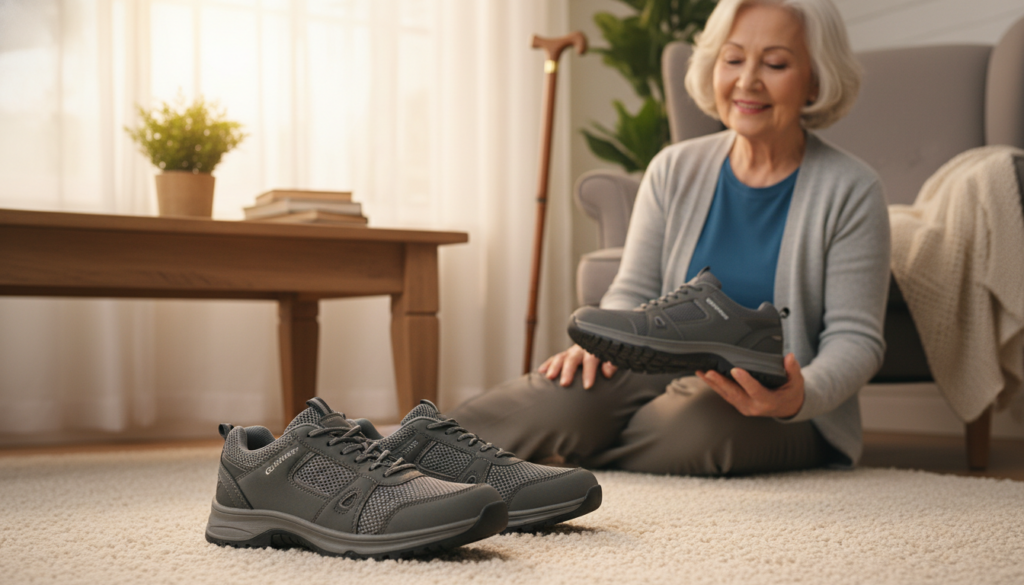
Footwear is key for older adults to stay balanced and avoid falls. The right shoes offer support and stability. This helps lower the chance of falling.
Characteristics of Safe Footwear for Seniors
Safe shoes for seniors have special features. These help prevent falls. Here are some:
- Non-slip soles: These soles help prevent slipping on different surfaces.
- Good arch support: This support keeps balance and eases foot strain.
- Comfortable fit: Well-fitting shoes prevent discomfort and tripping.
- Low heels: Shoes with low heels or flat ones are safer to avoid tripping.
Common Footwear Mistakes to Avoid
Seniors often make mistakes with their shoes. These mistakes can raise their fall risk. Here are some:
- Wearing high heels, which can increase the risk of tripping.
- Using slip-on shoes without proper grip.
- Not ensuring a proper fit, leading to discomfort and potential tripping hazards.
Seasonal Footwear Considerations
Seasons also affect shoe choices. For example:
- In wet or icy conditions, shoes with good traction are crucial to prevent slipping.
- In hot weather, breathable shoes can help keep feet cool and dry.
Gait Analysis: Identifying Movement Patterns That Increase Fall Risk
Healthcare providers look at how we walk to find out if we might fall. They use special tools to check our walking. This helps them suggest ways to stay safe.
What Happens During a Professional Gait Assessment
A healthcare expert watches how we walk. They look for things like uneven steps or trouble balancing. They might use special devices to track our movements.
Technology Used in Modern Gait Analysis
Today, we use cool tech like motion capture and sensors. These tools give detailed info on our walking. This helps doctors find and fix problems.
How Identifying Gait Abnormalities Can Prevent Falls
When doctors spot walking problems, they can help. They might suggest exercises or changes in how we walk. This can make us safer and more balanced.
The Gait Doctor Assessment Process
The Gait Doctor looks at our walking in detail. They use the latest tech to find issues. Then, they give us tips to get better.
Interpreting Biomechanical Findings
Understanding walking patterns is key. Doctors use this knowledge to help us avoid falls. They create plans to make us more stable and mobile.
Foot-Specific Exercises to Improve Balance and Stability
Balance and stability are key for good health. Foot exercises can help a lot. As we get older, we might fall more. So, it’s good to do exercises that make our feet stronger and more flexible.
Strengthening Exercises for Foot Muscles
Stronger foot muscles help us balance better and fall less. You can do toe curls and toe spreads to make your feet stronger.
- Toe curls: Curl your toes under, then release. Repeat 10-15 times.
- Toe spreads: Spread your toes as far apart as possible, then bring them together. Repeat 10-15 times.
Flexibility and Range of Motion Activities
Being flexible in the feet also helps with balance. Toe raises and ankle circles are good for keeping your feet flexible.
- Toe raises: Lift your toes up, then lower them. Repeat 10-15 times.
- Ankle circles: Rotate your ankle in both clockwise and counterclockwise directions. Repeat 5-10 times in each direction.
Balance Training Techniques
Balance training is very important. It helps seniors stay stable.
Single-Leg Stance Exercises
Standing on one leg improves balance. Start by holding onto a chair, then let go when you feel steady.
Balance Training Methods
Other ways to train balance include heel-to-toe walking and using a balance pad or cushion.
| Exercise | Description | Repetitions |
|---|---|---|
| Single-Leg Stance | Stand on one leg, holding onto a chair if necessary | 3 sets of 30 seconds per leg |
| Heel-to-Toe Walking | Walk along a straight line, placing the heel of one foot directly in front of the toes of the other foot | 3 walks of 10 steps |
| Balance Pad Training | Stand on a balance pad or cushion, with or without support | 3 sets of 30 seconds |
Conclusion: Creating a Sustainable Fall Prevention Strategy
Creating a plan to prevent falls takes time and effort. Healthcare experts, like podiatrists, help a lot. They work with seniors to lower fall risks.
Seniors can make their homes safer. They can also use tools to help them walk better. Regular exercise helps keep them strong and balanced.
It’s important to know how to prevent falls. A safe home and the right tools are key. This way, seniors can stay safe and independent.
Keeping up with fall prevention is important. With help, seniors can live better. They won’t have to worry about falling.
## FAQ
### Q: What are the most significant risk factors for falls in seniors?
Seniors face a higher risk of falls due to age-related changes and health conditions. Medications and environmental hazards also play a role. Knowing these factors helps in preventing falls.
### Q: How does foot health impact balance and fall risk in older adults?
Foot health is key to balance and fall risk. Changes with age, like decreased sensation, can affect balance. This increases the risk of falls.
### Q: What is gait analysis, and how can it help prevent falls?
Gait analysis examines how someone walks. It spots issues that might lead to falls. Healthcare pros use it to suggest ways to improve balance and lower fall risk.
### Q: What characteristics should seniors look for in safe footwear?
Seniors should choose shoes that support well and have non-slip soles. Shoes that fit securely, like those with laces, help prevent slipping.
### Q: Can foot-specific exercises improve balance and stability?
Yes, exercises for the feet can help balance and stability. Strengthening foot muscles and improving flexibility can lower fall risk.
### Q: How can healthcare professionals help seniors develop a personalized fall prevention plan?
Healthcare pros, like podiatrists, can assess risks and suggest interventions. They help create a plan to prevent falls.
### Q: What are some common foot conditions that contribute to falls in seniors?
Conditions like peripheral neuropathy and arthritis can lead to falls. Proper management is key to preventing falls.
### Q: How can seniors and their caregivers work together to prevent falls?
Seniors and caregivers can prevent falls by understanding risks and taking steps. Making their environment safer is also important. Together, they can lower fall risk.