
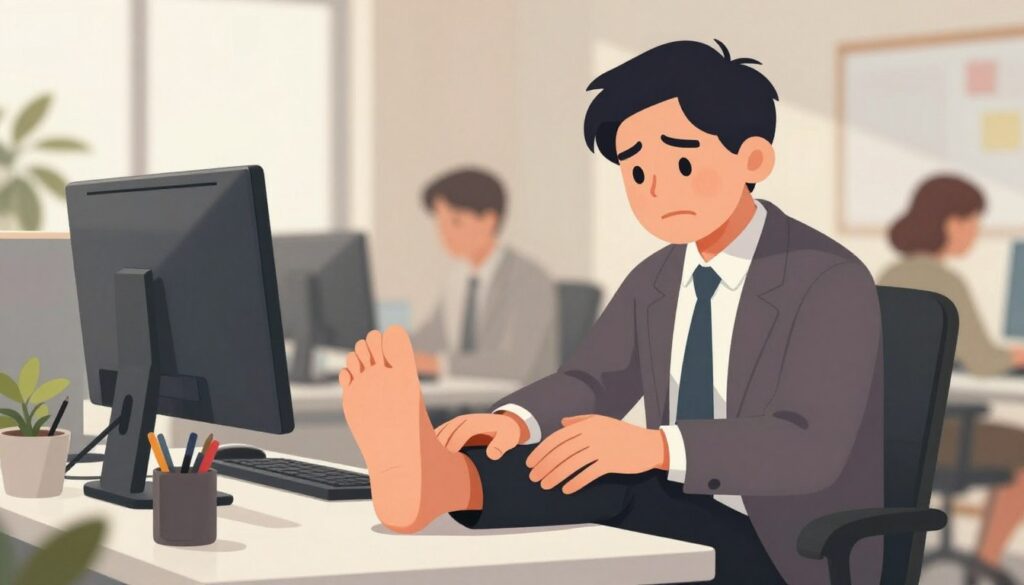
Many office workers face foot discomfort from sitting too long, wearing the wrong shoes, and bad posture. These problems lead to foot issues, hurting their health and work performance.
It’s key to know how workplace ergonomics and foot health matter. By spotting the causes of foot pain, both bosses and workers can make their work spaces better.
Key Takeaways
- Sitting for too long causes foot pain.
- Wearing the wrong shoes can lead to foot problems.
- Bad posture harms foot health.
- Good workplace ergonomics help reduce foot pain.
- Knowing about foot health is vital for feeling good.
The Prevalence of Foot Pain Among Office Workers
Studies show that foot pain is common in office jobs. It can make a big part of the workforce uncomfortable and less productive.
Statistics on Foot Discomfort in New Zealand Workplaces
In New Zealand, many office workers have foot pain. Foot pain statistics show it’s a big problem. It affects office worker health a lot.
Impact on Productivity and Overall Well-being
Foot pain can really hurt productivity. It makes office workers less efficient and affects their workplace well-being. It’s important to fix foot pain for a healthy work place.
Knowing about foot pain helps employers and workers make a better work place.
How Office Environments Contribute to Foot Problems
Office settings can cause foot discomfort and pain. They are designed for work, but often ignore foot health.
Sedentary Behavior and Its Effects on Circulation
Many office jobs involve sitting a lot. This can lead to poor circulation and affect foot health. Sitting for long periods can make blood pool in the legs, reducing circulation and causing foot pain.
Office Design Factors That Impact Foot Health
Office design is key to foot health. Flooring and workspace layout can greatly affect foot comfort at work.
Flooring Considerations
Flooring in an office can impact foot health. Hard floors can be tough on feet, while carpeted floors may be softer but can collect allergens and dust.
Workspace Layout Issues
A bad workspace layout can cause foot discomfort. It can lead to awkward foot positions and pressure on certain areas. Ergonomically designed workstations can help solve these problems.
| Office Design Element | Impact on Foot Health |
|---|---|
| Hard Flooring | Can be harsh on feet, potentially leading to discomfort |
| Carpeted Flooring | May offer more comfort but can harbor allergens and dust |
| Poor Workspace Layout | Can lead to awkward foot positioning and increased pressure |
For more info on fixing foot problems like plantar fasciitis, talk to a professional.
Common Causes of Foot Pain in Office Workers
The modern office setting can lead to foot pain in workers. It’s important to know why this happens to avoid discomfort and prevent long-term problems.
Prolonged Sitting and Its Biomechanical Impact
Sitting for long periods can cause poor posture and affect the foot’s natural biomechanics. This strain can lead to plantar fasciitis.
Extended Standing at Desks
Standing for long periods, especially on hard surfaces, can cause foot fatigue and pain. It’s key to have adequate flooring and use anti-fatigue mats.
Improper Footwear Choices in Professional Settings
Wearing the wrong shoes can worsen foot problems. Shoes that are too tight, too loose, or lack arch support can cause discomfort.
Poor Ergonomic Setups and Positioning
Incorrect ergonomic setups can lead to poor foot positioning, affecting overall foot health. It’s vital to ensure workstations promote good posture and foot alignment.
| Cause | Effect | Prevention |
|---|---|---|
| Prolonged Sitting | Poor Posture, Biomechanical Strain | Regular Breaks, Ergonomic Adjustments |
| Extended Standing | Fatigue, Pain | Anti-fatigue Mats, Comfortable Footwear |
| Improper Footwear | Discomfort, Long-term Issues | Supportive Shoes, Regular Foot Care |
Understanding foot pain causes helps office workers take steps to prevent it. This improves their comfort and health.
Understanding Plantar Fasciitis in the Office Context
More office workers are getting plantar fasciitis. This is a pain in the heel and the bottom of the foot. It can really hurt your work life and how well you do your job.
Recognizing Potential Symptoms
The signs of plantar fasciitis can be different. But, they often include sharp pain in the heel or the bottom of the foot. Spotting these signs early is key to managing it well.

How Desk Work May Contribute to Fascia Strain
Working at a desk can strain the fascia. Sitting for a long time tightens the calf muscles. This extra stress can hurt the plantar fascia even more. Plus, bad desk setups can make it worse.
Morning Pain Patterns and Their Significance
Morning pain is a big sign of plantar fasciitis. It usually happens after resting and can be very bad. Knowing about morning pain can help figure out and treat plantar fasciitis.
| Symptom | Description | Significance |
|---|---|---|
| Morning Pain | Pain in the heel or bottom of the foot after rest | Indicative of plantar fasciitis |
| Fascia Strain | Strain on the plantar fascia due to tight calf muscles | Contributes to plantar fasciitis development |
Knowing the reasons and signs of plantar fasciitis helps office workers. They can prevent and handle it better. This improves their health and work performance.
Heel Pain and Its Relationship to Desk Jobs
Heel pain is common among office workers. It’s caused by sitting too long, wearing the wrong shoes, or bad desk setups.
Common Heel Conditions in Office Workers
Office workers often face several heel problems, including:
- Heel spurs
- Achilles tendon issues
Heel Spurs
Heel spurs are bony growths on the heel’s underside. They hurt a lot when you stand or walk.
Achilles Tendon Issues
Achilles tendonitis is when the tendon gets inflamed. It happens from too much use or strain.
Contributing Factors in Office Settings
Several things in offices can lead to heel pain, such as:
| Factor | Description | Impact |
|---|---|---|
| Prolonged Sitting | Sitting for extended periods | Reduced circulation and stiffness |
| Inadequate Footwear | Lack of proper arch support or cushioning | Increased strain on heel |
| Poor Ergonomics | Incorrect desk or chair height | Altered posture and strain |
Arch Pain and Flat Feet Considerations
Long hours at the office can cause arch pain and worsen flat feet. This affects how comfortable and productive we are. Sitting for a long time can also harm the natural arch support of our feet.
How Office Work Affects Natural Arch Support
Sitting for hours can make the arch collapse. This puts strain on the plantar fascia. This strain can lead to arch pain and discomfort, especially for those with foot problems.
Potential Accommodations for Different Foot Types
Different foot types need different solutions. For example, people with flat feet might need orthotics or exercises to strengthen their foot muscles.
| Foot Type | Recommended Accommodations |
|---|---|
| Flat Feet | Orthotic supports, foot exercises |
| High Arch | Cushioned footwear, arch support |
Progressive Changes in Arch Structure
Office work can change the arch structure over time, especially without proper support. Regular foot checks can spot problems early.
Knowing how office work impacts arch pain and flat feet helps both employers and employees. It leads to better foot health and a more comfortable workplace.
The Role of Footwear in Office-Related Foot Discomfort
The shoes you wear at work can really affect your foot health and comfort. Many offices have dress codes that might make you choose shoes that aren’t the most comfortable.
Problematic Shoe Types for Long-Term Office Wear
Some shoes are more likely to cause foot pain when worn for a long time at work.
High Heels and Their Biomechanical Impact
High heels can change how your foot works, causing muscle and joint strain. This can lead to pain and might even cause plantar fasciitis.
Flat Shoes Without Support
Flat shoes might seem comfy, but if they don’t support your arch, they can cause problems. They can lead to overpronation or supination, putting strain on your foot.
Characteristics of Supportive Office-Appropriate Footwear
Supportive shoes for work should have good arch support, cushioning, and fit well. These features can help prevent foot pain.
Transitioning Between Different Footwear Types
If you switch between different shoes for work and other activities, pick ones that are comfy and supportive. Slowly switching between shoes can also help lessen discomfort.
Ergonomic Considerations for Foot Health
The way an office is set up can really affect your feet and comfort. It’s important to think about ergonomics to avoid foot pain and other problems.
Proper Desk and Chair Height Adjustments
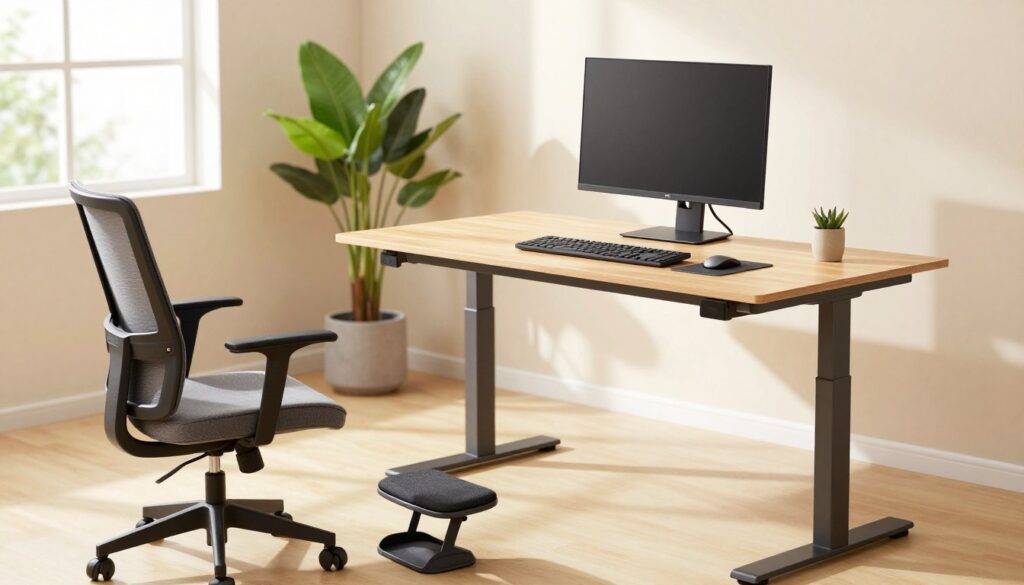
Getting the desk and chair at the right height is key. Your feet should be flat or on a footrest, with your knees at or below hip level.
Foot Positioning and Support Options
Having your feet in the right spot and supported is crucial. You can use footrests and anti-fatigue mats for this.
Footrests and Their Proper Use
Footrests help keep your feet and legs comfortable. They should be adjustable and easy to switch positions with.
Anti-Fatigue Mats for Standing Desks
Anti-fatigue mats offer cushioning and support for those who stand at their desks. They help lessen foot and leg fatigue.
| Ergonomic Adjustment | Benefit |
|---|---|
| Proper Desk Height | Reduces strain on shoulders and neck |
| Chair Height Adjustment | Promotes good posture and reduces foot strain |
| Footrest Use | Enhances comfort and reduces leg fatigue |
| Anti-Fatigue Mats | Reduces discomfort and fatigue when standing |
Movement Strategies to Reduce Foot Discomfort
Simple movements can greatly help reduce foot pain at work. Taking regular breaks and doing exercises during the day can support foot health. This can also lower the chance of chronic foot pain.
Incorporating Regular Movement Breaks
Regular breaks to move can help counteract the harm of sitting or standing too long. Office workers can use a timer to remind them to stand, stretch, and move every 30-60 minutes.
- Stand up and stretch
- Take a short walk around the office
- Perform simple foot exercises
Simple Foot and Ankle Exercises for the Office
Simple desk exercises can help ease foot pain. These include:
Seated Stretches
- Toe curls and releases
- Ankle rotations
- Foot flexes
Standing Movements
- Heel raises
- Toe stands
- Single-leg stands
For more tips on preventing foot pain, especially from standing, check out Clover Podiatry’s blog.
Creating Movement Reminders in Your Workday
Setting reminders to move can be easy. Just set an alarm on your phone or use a reminder app. You can also ask a coworker to remind you to take breaks and move.
By adding these movement tips to your daily routine, you can significantly reduce foot discomfort. This will also improve your overall well-being.
When to Seek Professional Assessment
Knowing when to get help for foot pain is key to feeling better. Office workers often face foot discomfort from sitting too long, standing a lot, or wearing the wrong shoes.
Recognizing Warning Signs That Warrant Attention
Some signs mean you need professional help. These include ongoing pain, swelling, or numbness in your feet. If pain stops you from doing daily tasks or work, it’s time to see a doctor.
Types of Healthcare Providers in New Zealand Who May Help
In New Zealand, many healthcare experts can help with foot pain. These include:
Podiatrists
Physiotherapists
Occupational Health Specialists
Podiatrists are experts in foot problems. They can give you custom orthotics and suggest the right shoes.
Physiotherapists can improve your foot’s movement and strength. They do exercises and stretches to help.
Occupational health specialists work on making your workplace better. They can suggest changes to lessen foot strain.
What to Expect During a Professional Assessment
At a professional assessment, a healthcare provider will check your feet. They’ll talk about your symptoms and health history. They might do tests too. Then, they’ll create a treatment plan just for you.
Potential Support Options for Office-Related Foot Pain
There are many ways to help with foot pain at work. This includes using orthotics and practicing self-care. These methods can be adjusted to fit your needs, helping your feet feel better.
Orthotic Considerations for Office Workers
Orthotics are key for easing foot pain at work. They can be custom-made or bought off the shelf. They offer support, cushioning, and help your feet move right.
Supportive Accessories for the Workplace
There are also other things that can help your feet at work. You can use ergonomic footrests, anti-fatigue mats, and shoes that support your feet.
Self-Care Approaches That May Provide Relief
Self-care is important for managing foot pain at work. Here are some ways to help:
Contrast Therapy
Switching between hot and cold water can help lessen swelling and pain.
Massage Techniques
Foot massages can boost blood flow and ease muscle tightness.
Strengthening Exercises
Doing simple exercises like toe curls and heel raises can make your foot muscles stronger. This can also improve your foot’s health.
| Self-Care Method | Benefits |
|---|---|
| Contrast Therapy | Reduces inflammation, relieves pain |
| Massage Techniques | Improves circulation, reduces muscle tension |
| Strengthening Exercises | Strengthens foot muscles, improves foot health |
By adding these support options to your daily routine, you can lessen foot pain. This can also make you feel better overall.
Conclusion: Creating a Foot-Friendly Work Environment
Creating a foot-friendly work environment is key for office workers. They often spend long hours on their feet or sitting. By using workplace ergonomics and promoting foot health, employers can lower the risk of foot pain.
A foot-friendly workplace is more than just ergonomic furniture. It also means encouraging employees to wear supportive shoes and take breaks. This helps improve well-being and productivity.
Remember, this info is for education, not medical advice. If you have ongoing foot pain, see a doctor for help.
By focusing on foot-friendly work environment practices, employers can make their workplace healthier and more comfortable for everyone.