
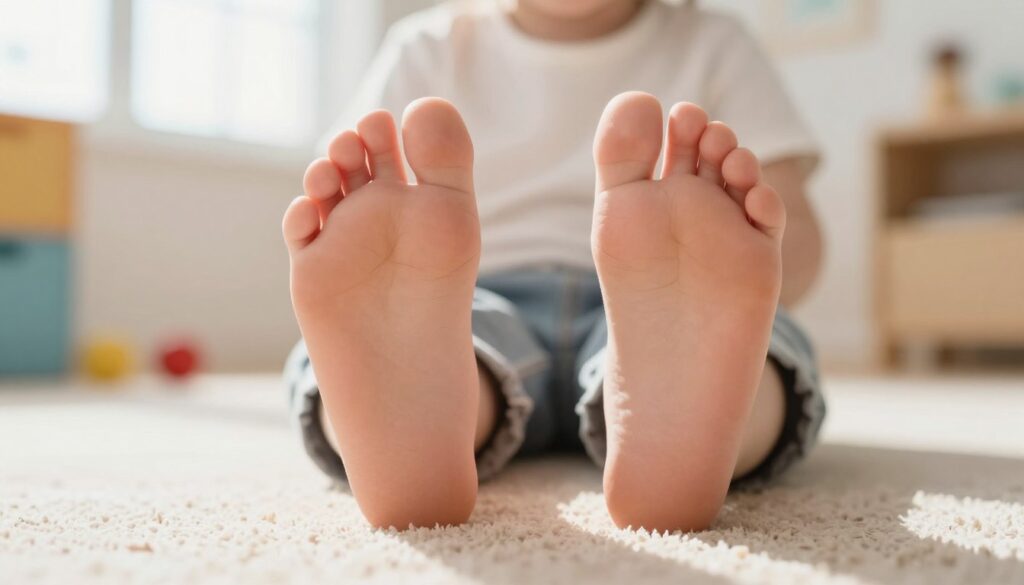
Flat feet happen when the arches of the feet are flat, making the whole sole touch the ground. This is common in young children because their arches are still growing.
Understanding this condition is key for parents and caregivers to keep kids’ feet healthy.
Flat feet can make walking or running uncomfortable for a child. It might change how they walk. Getting a professional check-up is important to find the right treatment.
Key Takeaways
- Flat feet are common in young children due to developing arches.
- Understanding the condition is crucial for proper foot health.
- A professional assessment is necessary to determine the best course of action.
- Flat feet can affect a child’s gait and overall comfort.
- Proper foot health is essential for kids’ overall well-being.
What Are Flat Feet in Children?
Children’s foot arches grow and change as they develop. It’s important to understand these changes to spot any problems early.
Flat feet, where the arch is not visible, are common in kids. They can be a normal part of growing up or a sign of a bigger issue.
Normal Arch Development Timeline
Children’s arches usually start to show between 3 and 5 years old. Watching for this is key to catch any issues early.
But, every child is different. Some might take longer to get a visible arch.
Defining Pediatric Flat Feet (Pes Planus)
Pediatric flat feet, or Pes Planus, means the foot arch is flat. It can be caused by genes or developmental problems. Knowing the causes helps in managing the condition.
Prevalence in New Zealand Children
Flat feet are common in New Zealand kids. Research shows many children have flat feet, but the exact number varies.
| Age Group | Prevalence of Flat Feet |
|---|---|
| 0-3 years | High |
| 3-5 years | Moderate to High |
| 5+ years | Low to Moderate |
The number of kids with flat feet goes down as they get older. Most get normal arches by 5. But, some might still have flat feet and need a doctor’s check-up.
Types of Flat Feet in Children
Flat feet in children come in different types. They are not all the same. Knowing the types helps figure out the best treatment.
Flexible Flat Feet
Flexible flat feet are very common in kids. The foot has an arch when not on the ground. But, this arch goes away when they stand.
Characteristics and Identification
The arch shows up when sitting or standing on tiptoes. But, it disappears when standing flat. Looking at how the foot changes in different positions is key to spotting flexible flat feet.
Natural History and Development
Flexible flat feet often go away as kids grow. Watching how the foot develops is important. Sometimes, it stays, but it usually doesn’t cause big issues.
Rigid Flat Feet
Rigid flat feet don’t have an arch, even when not on the ground. This type is less common but might mean there’s another problem.
Distinguishing Features
The main sign of rigid flat feet is no arch in any position. This could mean there’s a bigger issue that needs a doctor’s check.
Associated Conditions
Rigid flat feet can link to other problems, like birth defects. Getting a full medical check is important to find out why.
Causes and Risk Factors
Flat feet in kids come from many things like genes, growth, and the environment. Knowing these helps parents and doctors deal with it better.
Genetic and Family Patterns
Genes are a big part of flat feet. If your parents have it, you might too. Studies show that genes can shape the foot’s structure, making flat feet more likely.
Developmental Considerations
Kids’ feet change a lot as they grow. The arch usually forms in the first 10 years. How fast it develops and any growth issues can affect flat feet.
Health Conditions That May Contribute
Some health issues raise the risk of flat feet. This includes muscle, bone, and nerve problems like cerebral palsy. Foot injuries or conditions, like tarsal coalition, also play a part.
Environmental Factors
Things like lifestyle and shoes can also cause flat feet. Wearing the wrong shoes can make it worse.

| Risk Factor | Description | Impact on Flat Feet |
|---|---|---|
| Genetic Predisposition | Family history of flat feet | Increases likelihood |
| Developmental Factors | Abnormal foot development | Contributes to flat feet |
| Health Conditions | Conditions like cerebral palsy | May cause or exacerbate flat feet |
| Environmental Factors | Poor footwear choices | Can contribute to development |
Knowing what causes flat feet helps parents and caregivers act early. This can prevent bigger problems or the need for serious treatments later.
Recognizing Flat Feet in Your Child
Spotting flat feet early is key to managing it well. Parents are crucial in noticing the signs and symptoms in their kids.
Visual Indicators and Foot Appearance
Looking at the foot’s shape is a good start. Kids with flat feet often have a footprint with little to no arch. Their feet might look like they’re touching the ground all over when they stand.
Gait and Movement Patterns
Watching how a child walks can also help. Kids with flat feet might walk with their feet turned out or have an odd gait. They might also get tired or hurt their feet or legs after playing.
Footwear Wear Patterns
Shoe wear can also hint at flat feet. Kids with this condition often wear out the soles of their shoes unevenly, especially on the inside.
Simple Home Assessment Methods
A simple test you can do at home is the wet footprint test. Wet your child’s feet and have them stand on a flat surface. If the footprint looks like a complete or almost complete copy of their foot, it might mean they have flat feet.
| Assessment Method | Indicator of Flat Feet |
|---|---|
| Visual Inspection | Lack of visible arch when standing |
| Gait Observation | Abnormal gait patterns or turning outward |
| Shoe Wear | Uneven wear, especially on the inner sole |
| Wet Footprint Test | Complete footprint impression |
Knowing these signs and using simple tests can help parents figure out if their child has flat feet. If so, they should get professional advice.
When Flat Feet May Require Professional Assessment
Not all flat feet in kids need a doctor’s visit. But, some signs show it’s time for a professional assessment. If your child’s flat feet don’t go away, it might be a sign to see a doctor.
Age-Related Considerations
Kids usually get arches between 3 to 6 years old. If your child still has flat feet after 6, it’s time for a professional evaluation. Studies show that flat feet in kids get less common with age. But, some factors can change this.
Symptomatic vs. Asymptomatic Cases
Kids with symptomatic flat feet might feel pain in their feet, ankles, or legs. Kids without symptoms might not show any signs. Research shows kids with pain need to see a doctor more often.
Signs That May Indicate Further Evaluation
Some signs mean you should check further, like:
- Persistent pain or discomfort
- Frequent tripping or falling
- Abnormal gait patterns
- Severe flat feet with pronounced heel tilting
Differentiating Normal Development from Concerns
Telling normal from not-so-normal is key. A doctor can look at your child’s feet, how they walk, and their health. This helps figure out what to do next.
| Indicators for Professional Assessment | Description |
|---|---|
| Age | Persistence of flat feet beyond age 6 |
| Symptoms | Presence of pain or discomfort |
| Gait Patterns | Abnormal walking patterns |
“Early assessment and intervention can significantly impact the management of flat feet in children, potentially preventing future complications.”
Treatment Options for Children’s Flat Feet
It’s important to know the right treatment for children’s flat feet. The treatment depends on how severe the condition is, if the child has symptoms, and their overall health.
Observation and Monitoring Approach
Many times, flat feet in kids don’t cause any problems. An observation and monitoring approach is often used. This means watching the child’s condition to see if it changes. This is especially true for young kids, as their arches might develop on their own.
Conservative Management Strategies
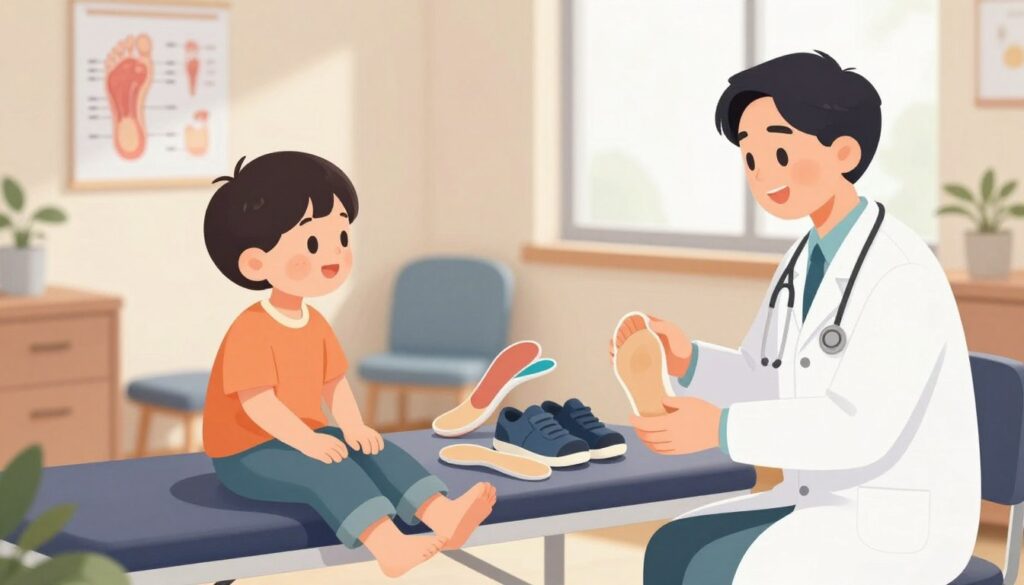
For kids with symptoms or more serious flat feet, conservative management strategies are used. This includes orthotics, physical therapy, and advice on shoes. These methods help reduce pain and improve how the foot works. For more info, visit https://gaitdoctor.co.nz/understanding-and-resolving-plantar-fasciitis/.
When Intervention May Be Beneficial
In some cases, more serious intervention might be needed. This could mean surgery to fix the foot’s structure. But, this is usually only for very severe cases where other treatments didn’t work.
Setting Realistic Expectations
Parents should have realistic expectations about treatment results. Not every treatment will get rid of flat feet completely. But, it can make a big difference in symptoms and how the foot works. Knowing what each treatment can do is key to making good choices.
Supportive Measures and Home Care
Managing flat feet in kids needs a mix of support and home care. Parents can greatly help their child’s foot health and overall well-being by using these methods.
Appropriate Footwear Selection
Choosing the right shoes is key for kids with flat feet. The right shoes can offer support and ease discomfort.
Features to Look For
Look for shoes with strong arch support, a comfy fit, and a solid sole. Avoid flat, flexible shoes to lessen foot strain.
Common Footwear Myths
Some think certain shoes can fix flat feet. But, there’s no proof that specific shoes can correct flat feet. Shoes should mainly be comfy and supportive.
Foot Strengthening Exercises
Exercises to strengthen the foot can help kids with flat feet. These exercises are simple and fun, making them great for kids.
Age-Appropriate Activities
Young kids can do toe curls and heel raises. Older kids can try ankle circles and toe spreads.
Making Exercises Fun and Engaging
Make exercises fun by turning them into games or adding them to daily activities. For example, picking up small objects with their toes is both fun and helpful.
Orthotic Support Considerations
In some cases, orthotics are needed to manage flat feet. Orthotics offer extra support and spread out foot pressure.
Types of Pediatric Orthotics
There are many orthotics, like custom-made and over-the-counter options. The right one depends on the child’s needs and how severe their flat feet are.
Proper Fit and Usage
It’s important to make sure orthotics fit right. Regular check-ups with a healthcare professional can help adjust or change them if needed.
| Supportive Measure | Description | Benefits |
|---|---|---|
| Appropriate Footwear | Shoes with good arch support and a sturdy sole | Provides comfort and support |
| Foot Strengthening Exercises | Activities like toe curls and heel raises | Improves foot function and reduces discomfort |
| Orthotic Support | Custom-made or over-the-counter orthotics | Provides additional support and redistributes pressure |
“The key to managing flat feet in children is a combination of supportive measures and professional care. By working together with healthcare professionals, parents can help their child lead an active, healthy life.”
Professional Assessment and Care Options
Getting a professional assessment is key for treating flat feet in kids. Healthcare providers are essential in figuring out the best treatment. They help decide what care options are best.
Healthcare Providers in New Zealand
In New Zealand, many healthcare professionals can help with flat feet in kids. These include:
- Podiatrists
- Physiotherapists
- Orthopedic specialists
Podiatrists and Their Role
Podiatrists focus on foot and ankle problems. They create treatment plans for kids with flat feet. This includes advice on shoes and orthotics.
Physiotherapists and Orthopedic Specialists
Physiotherapists work on foot strength and mechanics with exercises. Orthopedic specialists might suggest surgery if needed. Together, they offer full care for kids with flat feet.
What to Expect During an Evaluation
At a professional check-up, the healthcare provider will look at the child’s feet closely. They check the foot’s structure, how the child walks, and how much the foot can move. They also talk about the child’s health history and any pain they feel.
Potential Treatment Approaches
Treatment for flat feet in kids depends on how bad it is and if there are symptoms. Possible treatments include:
| Treatment Approach | Description |
|---|---|
| Non-Surgical Interventions | These may include exercises to strengthen the foot muscles, orthotics to support the arch, and recommendations for appropriate footwear. |
| Surgical Options | In some cases, surgical intervention may be considered if the condition is severe and other treatments have not been effective. |
Non-Surgical Interventions
Non-surgical treatments are often the first step for flat feet in kids. They help reduce symptoms and improve foot function.
When Surgical Options May Be Considered
Surgery is usually for very severe flat feet that don’t get better with other treatments. The decision to have surgery is made with a healthcare provider’s advice.
Conclusion
Flat feet, or pes planus, are common in kids. They happen when the foot arch is missing or not fully formed. Some kids grow out of it, but others might need help to avoid problems.
It’s important for parents and caregivers to know about flat feet in kids. They should look for signs, understand why it happens, and know when to get help. This helps manage the condition.
Flat feet in kids can be a big worry, but it can be handled with the right care. Getting a professional check-up is key to finding the best treatment. This might include watching it, using conservative methods, or using orthotics.
By staying informed and taking action, parents can help their kids deal with flat feet. This ensures they get the care they need for healthy feet.