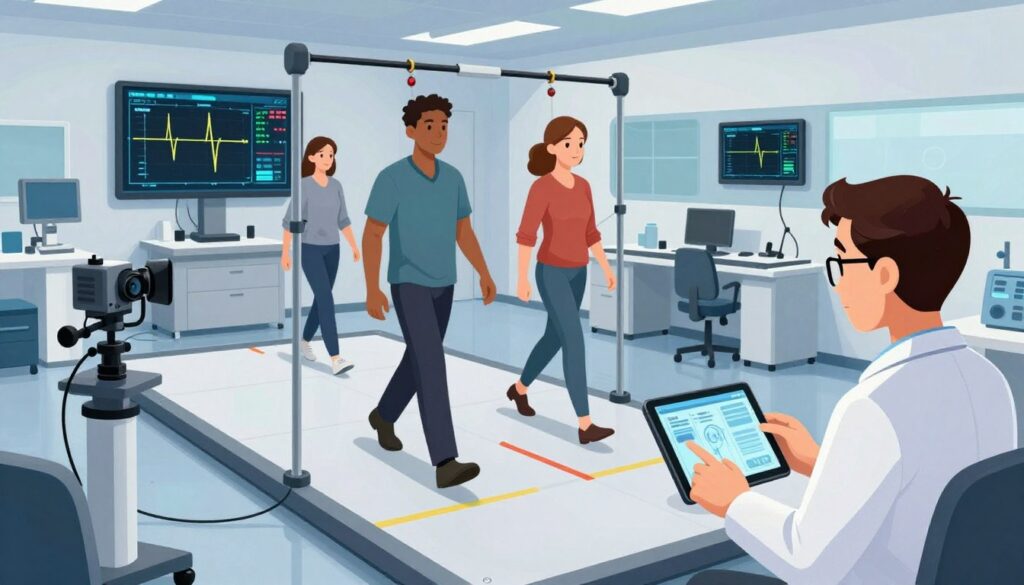
Gait analysis looks at how our bodies move, like when we walk or run. It finds problems in how we move and helps figure out muscle, nerve, or bone issues.
This tool is key for doctors to understand how we move. It lets them spot problems and plan the best treatment. By studying how we walk or run, they can help fix any issues.
Key Takeaways
- Gait analysis assesses the body’s movement patterns.
- It detects abnormalities in locomotion.
- Gait analysis helps identify the source of muscle, nerve, or skeletal problems.
- This tool is valuable for understanding movement patterns.
- It aids in developing effective treatment plans.
The Science Behind Human Movement
Human movement is a complex process. It involves the work of many physiological systems. The visual, somatosensory, and vestibular systems help keep us balanced and moving.
The Biomechanics of Walking and Running
The study of walking and running focuses on the musculoskeletal system’s movement. It looks at how joints, muscles, and bones work together. Problems in these interactions can cause injuries and make movement less efficient.
The Gait Cycle Explained
The gait cycle is the sequence of events in walking or running. It has two main parts: the stance phase and the swing phase. Knowing the gait cycle helps spot problems and improve how we move.
Factors Affecting Movement Patterns
Many things can change how we move, like age, neurological conditions, and injuries. Professional gait analysis can find these issues and suggest fixes. Always get a professional assessment instead of trying to diagnose yourself online.
What Is Gait Analysis? A Comprehensive Overview
Gait analysis studies how people walk or run. It gives insights into their movement patterns. This overview will cover what gait analysis is, its technology, and how it’s used.
Definition and Core Concepts
Gait analysis looks at how the body moves when walking or running. It checks things like foot strike, ankle and knee alignment, hip movement, and how pressure is distributed. This helps health professionals spot and fix gait problems.
The basics of gait analysis come from biomechanics. It studies the body’s movement patterns. This helps in diagnosing and treating movement disorders.
The Evolution of Gait Analysis Technology
Technology has made gait analysis better. Now, we use tools like video recording, pressure mapping, and 3D motion capture. These tools give a detailed look at how someone moves.
Evidence-Based Applications
Gait analysis is used in sports medicine, physical therapy, and rehab. It helps health professionals create treatment plans that fit each person’s needs.
It’s used for injury prevention, improving performance, and rehab. This analysis helps athletes perform better and avoid injuries.
Types of Gait Analysis Methods
Gait analysis uses many methods, from simple observations to advanced tech. These help experts check how we move and find problems.
Observational Analysis
Observational analysis is basic. Experts watch how a patient walks. They use their knowledge to spot any oddities.
Video Recording Techniques
Video recording captures a patient’s walk on tape. It lets experts slow down and analyze each step. This makes their job more precise.

Pressure Mapping Systems
Pressure mapping systems show how much pressure the feet put on the ground. This info is key for seeing how weight is distributed and finding issues.
3D Motion Capture Technology
3D motion capture technology tracks the body’s movement in 3D. It uses markers to give exact data on how joints move and how long each step is.
| Method | Description | Advantages |
|---|---|---|
| Observational Analysis | Visual assessment of gait | Quick, low-cost |
| Video Recording Techniques | Video capture for detailed analysis | Enhanced accuracy, slow-motion analysis |
| Pressure Mapping Systems | Measures pressure distribution | Detailed pressure data, useful for orthotics |
| 3D Motion Capture Technology | Tracks body movement in 3D | Highly accurate, detailed kinematic data |
The Gait Analysis Process: What to Expect
When you get a gait analysis, you’ll have your movement patterns checked closely. This helps find any problems that might be causing pain or making you move less efficiently.
Initial Assessment and History Taking
The first step is an initial assessment. A healthcare expert will talk about your medical history and what’s bothering you. This helps them understand your gait better.
The Testing Procedure
The testing procedure uses different methods to get detailed gait information. You might see video recording, pressure mapping, or 3D motion capture technology.
Data Collection and Interpretation
Data collection is key, where exact measurements are taken. Then, the data is interpreted by experts to spot any problems or areas for betterment.
Follow-Up Recommendations
After analyzing, you’ll get follow-up recommendations to fix any found issues. These might include exercises, orthotics, or other specific treatments for you.
| Stage | Description |
|---|---|
| Initial Assessment | Medical history and current concerns discussion |
| Testing Procedure | Use of technology to capture gait data |
| Data Collection and Interpretation | Analysis of gait patterns to identify issues |
| Follow-Up Recommendations | Personalized advice for improvement |
Experts say, “A full gait analysis can spot small problems that aren’t seen in regular checks. This lets for specific treatments to boost mobility and lower injury risk.”
“Gait analysis is a key tool in sports medicine and rehab. It gives a deep look into how we move.”
Who Can Benefit from Gait Analysis?
Healthcare professionals use gait analysis to help many people. It shows how people move and helps find the right treatments. This tool is great for understanding movement in different groups.
Athletes and Sports Enthusiasts
Athletes get a lot from gait analysis. It helps them run better and avoid injuries. Coaches use it to make training plans that improve performance.
Individuals with Chronic Pain
People with chronic pain find gait analysis helpful. It helps find out why they hurt. Doctors use it to suggest the best treatments.
Post-Injury and Surgical Rehabilitation
Gait analysis is key in recovery after injuries or surgery. It checks how well someone is healing. It also helps make sure they move safely again.
People with Neurological Conditions
Those with conditions like Parkinson’s or cerebral palsy benefit too. It helps them move better and avoid falls. It’s a big help in their daily lives.
In short, gait analysis helps many people. It’s good for athletes and those recovering from injuries. It’s a powerful tool in healthcare and sports.
Common Gait Abnormalities and Their Potential Causes
Many people face gait issues that can really impact their life. Gait analysis is key in spotting these problems. It helps doctors find the right treatments.
Overpronation and Supination
Overpronation and supination are two common foot problems. Overpronation is when the foot rolls too much inward. Supination is when it rolls too much outward. Both can cause pain and injuries.
A study showed runners with overpronation are more likely to get hurt. Gait analysis checks how the foot moves. It helps find these issues.
Asymmetrical Movement Patterns
Asymmetrical movement means one side of the body moves differently. This can cause more problems. Gait analysis spots these differences by looking at leg, hip, and back movement.
Experts say uneven gait can show deeper issues. For more on gait analysis, check out Gait Doctor’s Education Page.
Stride Length and Cadence Issues
Stride length and cadence are important for a good walk or run. Problems with stride length can make walking or running less efficient. This can cause tiredness or injuries.
Issues with cadence can also affect how well you move. Gait analysis checks these to find problems. It then suggests ways to improve your gait.
Weight Distribution Imbalances
Uneven weight distribution during walking can put too much pressure on some joints. Gait analysis looks at how weight is spread. It helps find and fix these problems.
This way, people can avoid injuries and move better.
In summary, gait problems like overpronation, supination, and uneven movement can really affect someone’s life. Gait analysis helps doctors find these issues. They then create plans to fix them.
How Gait Analysis Can Support Injury Prevention
Gait analysis looks closely at how we move. It helps prevent injuries by checking our walking or running patterns. It finds any problems or ways we move that aren’t efficient.
Identifying Mechanical Inefficiencies
Gait analysis helps find mechanical inefficiencies. These can cause too much stress on our bodies, leading to injuries. By finding these issues, experts can create plans to fix them.
Addressing Movement Compensations
Gait analysis also spots movement compensations. These happen when we change how we walk or run because of pain or injury. It’s important to fix these to avoid more problems.
Customized Preventative Strategies
From gait analysis, experts can make customized plans. These plans are made just for each person. They aim to fix problems and make our movements better.
Limitations and Realistic Expectations
Even though gait analysis is great for preventing injuries, it’s not perfect. It can’t stop all injuries. How well it works depends on the expert and how well we follow their advice.
In summary, gait analysis is a key tool for preventing injuries. It helps find and fix problems early. Knowing its strengths and weaknesses helps us use it wisely in our training or rehab.
Gait Analysis for Athletic Performance Enhancement
Gait analysis is key for athletes wanting to boost their performance. It looks at how athletes move to find ways to get better. This helps athletes perform at their best.
Running Economy Optimization
Gait analysis is great for improving running economy. Running economy is how well a runner uses energy. By studying a runner’s gait, coaches can spot and fix issues. This makes runners more efficient, especially in long races.
Sport-Specific Movement Analysis
Gait analysis isn’t just for running. It’s used in many sports to check movement patterns. For fast sports like soccer or basketball, it helps athletes move quicker. Coaches use this info to create better training plans.
Performance Metrics and Benchmarking
Gait analysis gives important data to track athlete progress. By watching how gait changes, coaches can see if training works. This helps them make better plans to improve performance.
Case Studies and Research Findings
Many studies show gait analysis boosts athletic performance. For example, a study on runners found it fixed biomechanical problems. This led to better running and less injuries. These findings highlight gait analysis’s role in sports improvement.
| Performance Metric | Pre-Gait Analysis | Post-Gait Analysis |
|---|---|---|
| Running Economy | 200 ml/kg/min | 180 ml/kg/min |
| Stride Length | 2.5 meters | 2.7 meters |
| Cadence | 160 steps/min | 170 steps/min |
Finding Qualified Gait Analysis Practitioners in New Zealand
Looking for gait analysis services in New Zealand means finding the right experts. Gait analysis is complex, needing a deep understanding of how we move and the mechanics behind it.
Professional Qualifications to Look For
Experts in gait analysis usually have degrees in sports science, physiotherapy, or podiatry. Look for those with postgraduate qualifications or specialized certifications in gait analysis. These show they are highly skilled and keep up with new methods and research.
Types of Specialists Offering Gait Analysis
Many specialists offer gait analysis, each with their own area of expertise.
Podiatrists
Podiatrists focus on foot and lower limb disorders. They are key in gait analysis, especially for foot and leg issues.
Physiotherapists
Physiotherapists work on movement disorders. They help find and fix movement problems, improving mobility and reducing pain.
Biomechanists
Biomechanists apply mechanical principles to living systems. They are great for analyzing human movement, especially in sports and injury prevention.
Questions to Ask Before Booking an Assessment
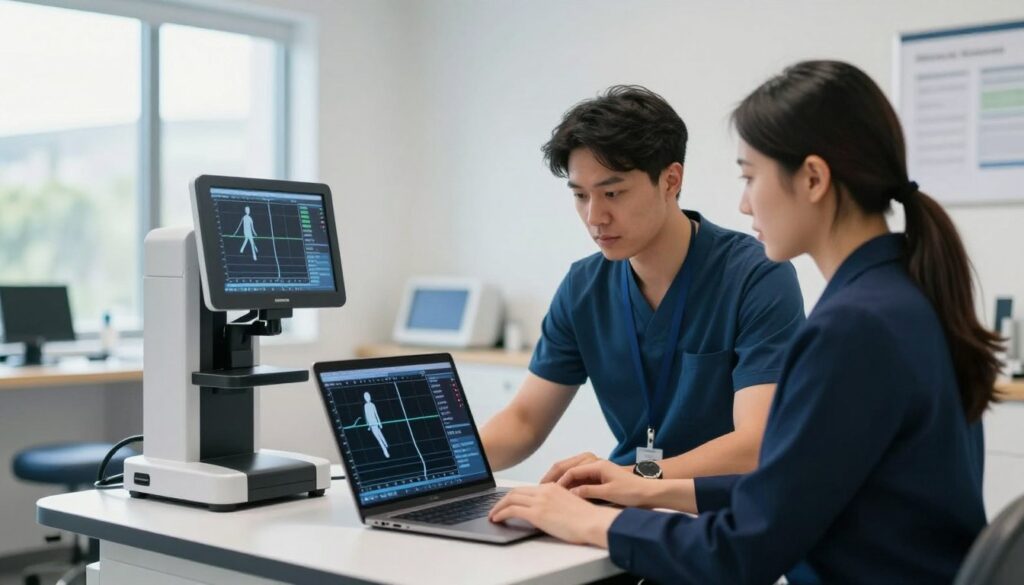
Before getting a gait analysis, ask about the practitioner’s experience and qualifications. Find out about their technology and techniques. Also, ask how they tailor recommendations based on your analysis.
Conclusion: Making Informed Decisions About Gait Analysis
Gait analysis helps us understand how we move and find problems. Healthcare experts use it to give advice on how to move better. This can help avoid injuries and improve health.
Thinking carefully about gait analysis is important. Knowing its benefits, like better sports performance and less pain, helps decide if it’s right for you.
In New Zealand, you can talk to healthcare experts about your needs. They can help figure out the best way to improve your movement. This is a big step towards reaching your health goals.