
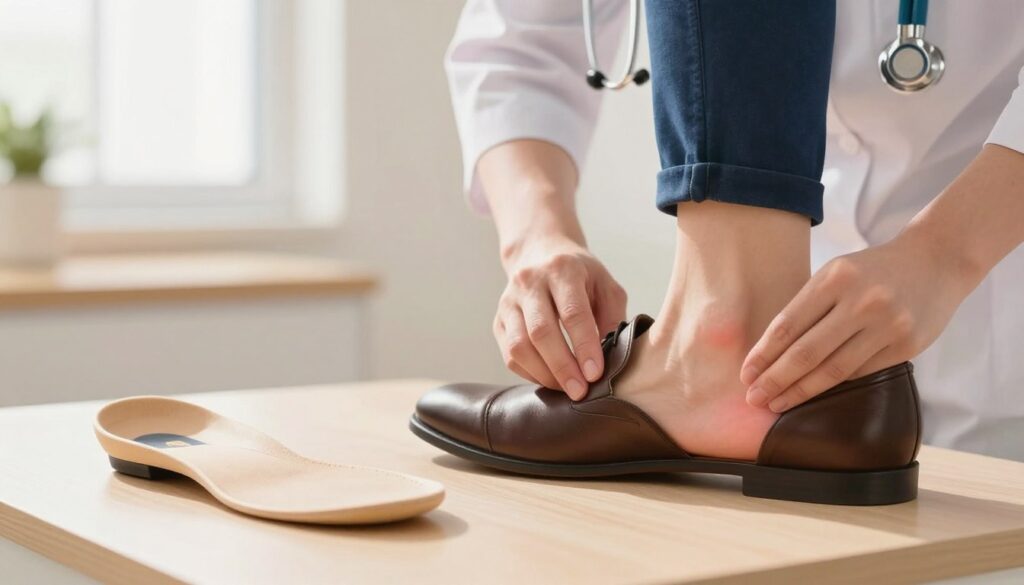
Plantar fasciitis is a common condition that causes heel pain and discomfort. It affects daily activities. This happens when the plantar fascia, a band of tissue, becomes inflamed.
It’s important to understand the causes and treatment options for relief. Orthotics can help support recovery and ease symptoms.
Exploring treatment options is the first step to finding relief from foot pain.
Key Takeaways
- Plantar fasciitis is a common condition causing heel pain.
- Orthotics can support recovery and alleviate symptoms.
- Understanding the causes is crucial for effective treatment.
- Various treatment options are available for plantar fasciitis.
- Relief from foot pain is achievable with proper treatment.
What is Plantar Fasciitis?
Plantar fasciitis is a condition that causes pain in the heel and bottom of the foot. It happens when the plantar fascia, a band of tissue, gets inflamed. This tissue supports the arch of the foot.
Common Symptoms and Signs
The symptoms of plantar fasciitis include sharp heel pain and stiffness. This pain is usually worse in the morning or after resting. It may feel better with activity but comes back after standing for a long time or when getting up from sitting.
- Pain in the heel and bottom of the foot
- Stiffness in the foot, especially in the morning
- Pain that worsens after exercise or activity
Risk Factors and Prevalence
Some factors increase the risk of getting plantar fasciitis. These include age, obesity, and jobs that involve standing or walking on hard surfaces. Athletes, especially runners, are also at higher risk because of the repetitive strain on their heels.
Impact on Daily Activities
Plantar fasciitis can make it hard to walk or stand for long periods. It affects not just athletes but also people with jobs that require standing. This can really impact their quality of life.
Getting a professional assessment is key for a proper diagnosis and treatment. With the right care, plantar fasciitis can be managed effectively.
The Biomechanics of Plantar Fasciitis
Biomechanical factors are key in plantar fasciitis. Knowing these factors helps in preventing and treating the condition.
Foot Structure and Function
The foot’s shape and how it works are important in plantar fasciitis. The plantar fascia, a tissue supporting the arch, gets strained. Issues like overpronation or flat feet can make this worse.
How Plantar Fasciitis Develops
Plantar fasciitis comes from biomechanics and repeated strain. Running or jumping can make it worse by adding stress. It causes pain and inflammation in the heel and foot’s bottom.
The Role of Gait Analysis
Gait analysis helps in managing plantar fasciitis. It looks at how a person walks to find biomechanical problems. This info guides treatments, like orthotics or shoe changes.
| Biomechanical Factor | Impact on Plantar Fasciitis |
|---|---|
| Overpronation | Increased strain on the plantar fascia |
| Flat Feet | Additional stress on the plantar fascia due to lack of arch support |
| Abnormal Gait | Uneven distribution of pressure, leading to increased risk of plantar fasciitis |
Conservative Treatment Approaches
Many people start with conservative treatments for plantar fasciitis. These methods aim to lessen pain and swelling. They also help improve how the foot works.
Rest and Activity Modification
Rest and activity modification are key strategies. Avoiding activities that make the pain worse helps. This lets the plantar fascia heal.
Stretching and Strengthening Exercises
Stretching and strengthening exercises are vital. They make the foot work better, reduce pain, and aid in recovery. Calf, toe, and heel raises are good examples. Studies show that regular exercise can greatly help (PMC1839987).
Ice and Anti-inflammatory Measures
Using ice on the affected area can lessen swelling and pain. Anti-inflammatory measures, like ibuprofen, also help. Always follow a doctor’s advice to use these safely and effectively.

- Rest and modify activities to avoid exacerbating the condition.
- Engage in stretching and strengthening exercises to improve foot mechanics.
- Utilize ice and anti-inflammatory measures to reduce pain and inflammation.
Understanding Orthotics for Plantar Fasciitis
Orthotics can help those with plantar fasciitis feel better. They support and stabilize the foot. This helps manage the condition well.
What Are Orthotics?
Orthotics are custom-made to support and align the foot. They’re made for specific foot problems, like plantar fasciitis. They help by spreading out pressure and easing stress on the plantar fascia, aiding in healing.
How Orthotics May Support Recovery
Orthotics help by easing the strain on the plantar fascia. This creates a better healing environment. They keep the foot in the right position and reduce bad foot movements. They also add arch support and cushioning, which cuts down on pain and discomfort.
“Orthotics can be a game-changer for individuals with plantar fasciitis, offering a non-invasive solution to manage pain and support healing.”
Different Types of Orthotics
There are many types of orthotics, each for different needs and conditions.
Heel Cups and Inserts
Heel cups and inserts focus on the heel area. They offer support and cushioning. This helps lessen the impact on the heel and eases pain from plantar fasciitis.
Full-Length Insoles
Full-length insoles support the whole foot. They spread out pressure evenly. This reduces strain on the plantar fascia.
Specialized Orthotic Devices
Specialized orthotics are made for complex foot problems. They might have metatarsal pads, arch supports, and extra cushioning. These features provide relief and support.
In summary, orthotics are key in treating plantar fasciitis. Knowing about the different types and their benefits helps people choose the right treatment.
Orthotic Materials and Features
Understanding orthotics is key for those with plantar fasciitis. The materials and features of these devices greatly affect their relief. They can make a big difference in how well they work.
Common Materials Used in Orthotics
Orthotics come in many materials, each with its own benefits. You’ll find plastic, carbon fiber, and soft foams among them. The right material depends on your needs and how much support you need.
Arch Support Variations
The arch support is vital in orthotics. It helps spread out pressure and eases strain on the plantar fascia. You can get flat, moderate, or high arch supports, fitting different foot types.
Cushioning and Pressure Distribution
Cushioning is also crucial in orthotics. It absorbs shock and lessens pain. Good cushioning and pressure distribution make orthotics more comfortable and effective.
| Material | Support Level | Cushioning |
|---|---|---|
| Plastic | High | Low |
| Carbon Fiber | High | Moderate |
| Soft Foams | Low | High |
Over-the-Counter vs. Custom Orthotics
People with plantar fasciitis often have to choose between over-the-counter orthotics and custom-made orthotics. The right choice depends on how bad the condition is, the shape of your feet, and what you prefer.
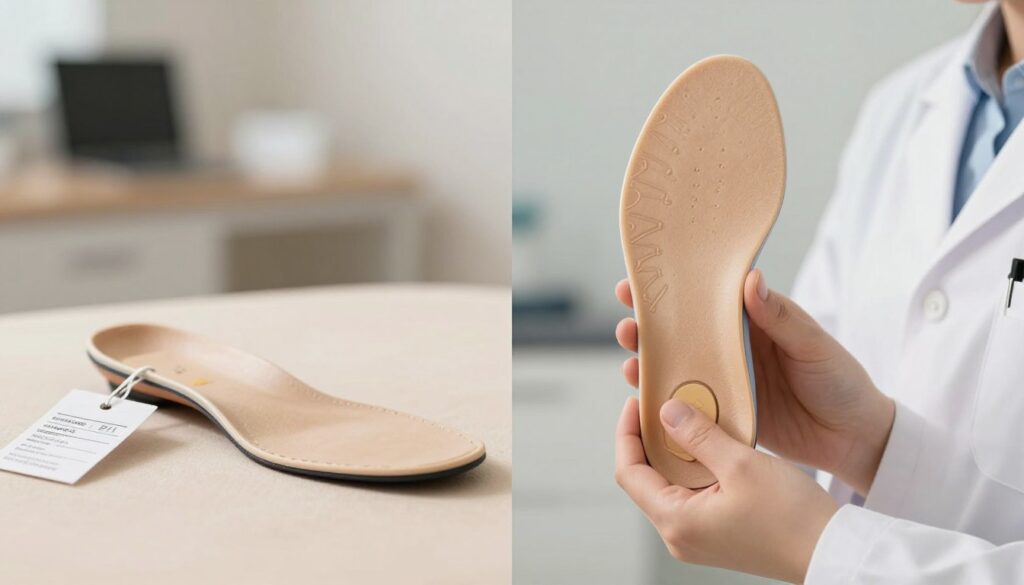
Prefabricated Orthotic Options
Over-the-counter (OTC) orthotics are easy to find at pharmacies and online. They are a budget-friendly option for those with mild to moderate plantar fasciitis. These ready-made devices come in different sizes and offer basic support and cushioning.
While they might not fit as well as custom orthotics, OTC options can still help a lot of people feel better.
Custom-Made Orthotic Process
Custom orthotics are made just for you, based on your foot’s shape and how you walk. You’ll need to see a podiatrist or foot specialist for this. They’ll check your feet and take impressions or scans to make your custom orthotics.
This personal approach can give you better support and help with complex foot problems.
For more details on the differences between prefabricated and custom orthotics, check out Foot Education. They have a detailed comparison.
Cost Considerations and Insurance
The cost is a big factor when deciding between OTC and custom orthotics. Custom ones are pricier because they’re made just for you. But, some insurance plans might help cover the cost if they’re needed for health reasons.
It’s important to check your insurance and talk about the costs with your doctor.
Research Evidence on Orthotics for Plantar Fasciitis
Research on orthotics for plantar fasciitis shows promising results. Many studies have looked into how well orthotics work as a treatment.
Clinical Studies and Their Findings
Studies show that orthotics can help a lot with plantar fasciitis. A study in the Journal of Orthopaedic & Sports Physical Therapy found that custom orthotics helped more than a control group.
“The use of custom foot orthotics is associated with significant improvements in pain and function for patients with plantar fasciitis.”
Another study compared different orthotics. It found that the type of orthotic used made a big difference in results.
| Type of Orthotic | Pain Reduction | Functional Improvement |
|---|---|---|
| Custom Orthotics | Significant | Marked Improvement |
| Over-the-Counter Orthotics | Moderate | Some Improvement |
Limitations of Current Research
Even with good results, there are limits to the research. Many studies have small groups, and different orthotics were used. This makes it hard to say for sure what works best.
What the Evidence Suggests Overall
The evidence suggests that orthotics can help with plantar fasciitis. They can reduce pain and improve how well you can move. But, more research is needed to understand the best types of orthotics.
When to Consider Professional Assessment
If plantar fasciitis symptoms don’t go away, it’s time to get professional help. Even if some treatments help, bad or lasting symptoms need a closer look.
Signs That May Indicate Professional Help Is Needed
Some signs show you need a pro. These include:
- Persistent pain that makes daily life hard
- Severe pain or swelling
- Not getting better with simple treatments
For more info on plantar fasciitis, check out https://gaitdoctor.co.nz/understanding-and-resolving-plantar-fasciitis/.
What to Expect During a Podiatric Evaluation
A podiatric check-up looks at your foot closely. It includes checking how you walk and your foot’s shape. This helps find what’s causing the pain.
Finding Qualified Practitioners in New Zealand
To find good podiatrists in New Zealand, look at professional groups or ask doctors for names. Here are some useful places to start:
| Organization | Description | Contact Information |
|---|---|---|
| Podiatry New Zealand | Professional organization for podiatrists | Website: podiatry.org.nz |
| New Zealand Health Practitioners | Directory of registered health practitioners | Website: ahpra.gov.au |
Conclusion
Understanding plantar fasciitis and its treatment is key for those seeking relief. Orthotics are a big help in recovery and easing symptoms. They offer arch support and spread out pressure, easing the strain on the plantar fascia.
Orthotics are a valuable treatment for plantar fasciitis. To start feeling better, see a qualified practitioner for an assessment. The right orthotics can help lessen symptoms and enhance your life quality.
If symptoms don’t go away, it’s important to get professional help. A podiatric evaluation can guide the best treatment, including orthotics. Knowing the causes and treatment options helps make informed care choices.