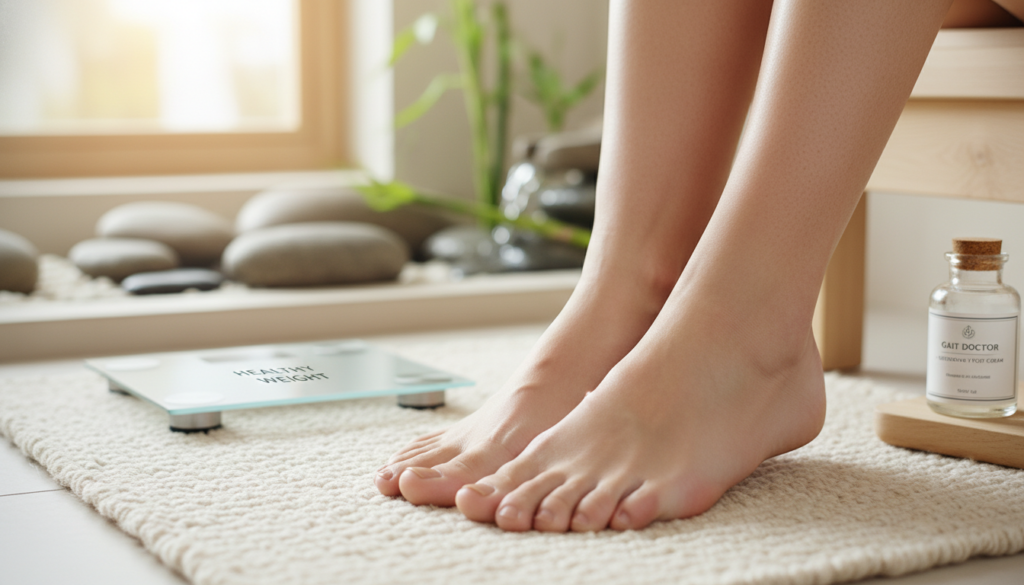
Carrying extra weight can hurt your health, mainly your foot health. The extra weight puts more pressure on your feet. This can cause pain and chronic issues.
To ease foot pain from extra weight, managing your weight is key. Eating well and exercising often can help. This not only eases foot pain but also makes you feel better overall.
Key Takeaways
- Excess weight can lead to increased pressure on the feet.
- Managing weight is crucial for alleviating foot pain.
- A balanced diet and regular exercise are key to weight management.
- Reducing strain on the feet contributes to overall well-being.
- Understanding the link between weight and foot health is essential.
The Relationship Between Body Weight and Foot Health
The human foot is made to carry our body’s weight. It helps us move and absorbs shock. But, too much weight can hurt our foot health.
How Your Feet Support Your Body Weight
Your feet spread your weight across the soles. The heel and ball of the foot take most of it. The arch acts like a spring, helping you move.
When you walk, your feet move in a special way. This involves bones, muscles, and ligaments working together.
The Physics of Weight Distribution on Feet
Weight on your feet isn’t spread evenly. It changes based on how you stand, walk, and if you have foot problems. Studies say your feet handle forces up to several times your body weight.
For example, a 70 kg person can put 210 kg of force on their feet when running. Too much weight means more stress on your feet. This can hurt the plantar fascia, Achilles tendon, and metatarsal bones.
Knowing how weight affects your feet is key to keeping them healthy. It helps prevent problems like plantar fasciitis, flat feet, and osteoarthritis. By managing your weight, you can protect your feet.
Understanding Foot Pain from Obesity
## Understanding Foot Pain from Obesity
Being overweight can hurt your feet a lot. This part talks about why obese people often have foot pain.
### The Biomechanical Stress Factors
Carrying extra weight makes your feet work harder. This extra effort can hurt your joints and muscles. It often causes pain in the heel and arch.Biomechanical stressis a big reason for foot pain in heavy people.
#### Pressure Points and Weight Distribution
Our feet don’t spread weight evenly. In heavy people, some spots get even more stressed. This can cause problems likeplantar fasciitis.
| Pressure Point | Description | Common Issues |
|---|---|---|
| Heel | Bears significant body weight | Plantar fasciitis, heel spurs |
| Arch | Supports body weight and facilitates movement | Flat feet, arch pain |
| Ball of Foot | Transfers weight during gait | Metatarsalgia, toe pain |
### Structural Changes Over Time
Long-term weight can change your feet. Feet might flatten or stretch. Knowing these changes helps find ways to feel better.
In short, knowing how weight affects feet is key to feeling better. By tackling these issues, people can ease their pain and improve their foot health.
Common Foot Conditions Associated with Excess Weight
Carrying extra weight can hurt your feet a lot. It makes your feet work harder, leading to many problems.
Plantar Fasciitis
Plantar fasciitis is a big problem for people who are overweight. It makes the bottom of your foot hurt. You might feel pain and stiffness in your heel and foot in the morning.
Learn more about plantar fasciitis and how to deal with it at Gait Doctor’s guide.

Heel Spurs
Heel spurs are hard growths on the heel. They often come with plantar fasciitis. They can hurt a lot, making it hard to walk or stand.
Flat Feet and Fallen Arches
Flat feet happen when your foot arch falls. Being overweight makes this worse. It can hurt your feet and ankles a lot.
Metatarsalgia and Forefoot Pain
Metatarsalgia is pain in the ball of your foot. Being overweight puts more pressure on your foot. This can make your forefoot hurt and feel uncomfortable.
| Condition | Symptoms | Impact of Excess Weight |
|---|---|---|
| Plantar Fasciitis | Heel pain, stiffness | Increased inflammation |
| Heel Spurs | Pain under the heel | Exacerbated by additional stress |
| Flat Feet | Foot pain, strain | Arch collapse |
| Metatarsalgia | Forefoot pain | Increased pressure |
Recognizing Symptoms and Warning Signs
It’s key to spot foot pain signs early. People with extra weight often face foot pain. This can really hurt their life quality.
Characteristic Pain Patterns
Weight-related foot pain shows up in different ways. You might feel pain in your heel, arch, or foot’s ball. It can be sharp, dull, or just ache. Knowing these pain patterns helps find the cause.
Progressive Nature of Foot Problems
Foot issues from extra weight get worse if not treated. This can lead to more pain and serious problems. Spotting these problems early stops long-term harm.
| Symptom | Description |
|---|---|
| Heel Pain | Pain in the heel, often linked to plantar fasciitis |
| Arch Pain | Pain in the arch, might mean flat feet or fallen arches |
| Ball of Foot Pain | Pain in the foot’s ball, often from metatarsalgia |
Differentiating Serious from Minor Conditions
Telling serious from minor foot issues is crucial. Serious ones might need a doctor, while minor ones can be treated at home. Seeing a healthcare pro helps get the right care.
How Excess Weight Alters Gait Mechanics
Excess weight changes how we walk. It affects our gait mechanics and can cause foot pain.
Changes in Walking Pattern
Extra weight stresses our legs and feet. This makes us change how we walk. We might walk slower or with a different step.
Compensatory Movement Strategies
People try to feel better by changing how they move. They might stand differently or step differently. But, these changes can cause more problems over time.
The Cycle of Pain and Movement Adaptation
Extra weight and bad walking create a cycle of pain. Changing how we walk can help, but it can also make things worse. To stop this cycle, we need to manage our weight and walk better.
Understanding how weight affects our walk is key. It helps us manage pain and move better.
The Importance of Professional Assessment
A healthcare professional must check your feet to understand problems. They find the cause of foot pain and suggest the right treatment.
Clinical Evaluation Methods
A healthcare pro will look at your feet closely. They check the foot’s shape, how you walk, and for injuries or diseases. They also ask about your medical history to find other causes of foot issues.
Imaging and Diagnostic Approaches
They might use X-rays or MRI scans to see inside your feet. These tools help them see any damage or disease. This info helps them make a good treatment plan for you.
When to Seek Specialist Assessment
If you have ongoing or bad foot pain, see a specialist. This is very important if your pain is because of being overweight. Seeing a specialist early can stop more problems and help you feel better.
Biomechanical Assessment and Gait Analysis
Understanding how extra weight affects our feet is key. We need biomechanical assessment and gait analysis for this. These tools help doctors see how weight, foot mechanics, and movement work together.
What a Comprehensive Gait Analysis Involves
A detailed gait analysis looks at how we walk. It checks things like how long our steps are and how fast we walk. It finds out if our walking is causing foot pain.
How Gait Doctor Assesses Movement Patterns
Gait doctors use cool tech like motion capture and pressure plates. They look at the data to find out what’s wrong with our walking. This helps them figure out why our feet hurt.
Using Assessment Data to Inform Management Options
The data from these tests helps doctors make plans just for you. These plans might include special shoes, therapy, or orthotics. They aim to ease foot pain and help you move better.
Doctors can really help by understanding our gait and biomechanics. They can then give us treatments that fix the real problems. This makes our treatment more effective.
Management Options for Foot Pain from Obesity
Managing foot pain from obesity needs a mix of treatments. This includes both simple steps and special tools. These methods can make you feel better and move easier.
Conservative Approaches
First, we try simple ways to fix foot pain. These are often the best first steps.
Rest and Activity Modification
It helps to stop doing things that hurt your feet. Taking breaks is also key. Changing how you do daily tasks can help your feet too.
Appropriate Footwear Selection
Wearing the right shoes is very important. Look for shoes with good arch support and soft soles. They can make your feet feel better.
Supportive Interventions
Along with simple steps, we also use special tools to help. These tools can make a big difference.
Custom Orthotics as a Potential Support Option
Custom orthotics are special shoe inserts made just for you. They help spread out the pressure on your feet. A study on the National Center for Biotechnology Information website shows they can really help with foot pain from being overweight.
If custom orthotics are not an option, over-the-counter (OTC) orthotics are a good choice. They are cheaper but still offer support and cushioning. This can help ease foot pain.
| Management Option | Description | Benefits |
|---|---|---|
| Rest and Activity Modification | Reducing aggravating activities and incorporating rest | Alleviates symptoms, reduces stress |
| Appropriate Footwear Selection | Choosing supportive and cushioned shoes | Reduces foot pain, provides support |
| Custom Orthotics | Personalized orthotic devices | Redistributes pressure, alleviates pain |
| OTC Orthotics | Over-the-counter orthotic devices | Provides additional support and cushioning |
Lifestyle Modifications to Support Foot Health
Supporting foot health is a big step towards feeling better. Making a few simple changes can help a lot. This way, you can ease the pressure on your feet.
One great change is gradual weight management. Losing weight helps take the pressure off your feet. This makes them feel less painful. A good plan for losing weight includes eating right and staying active.
Gradual Weight Management Approaches
Starting a weight loss plan is about eating well and moving more. Always talk to a doctor before you start.
Foot-Friendly Exercise Options
Doing foot-friendly exercises makes your foot muscles stronger. This improves your foot’s health. Here are some good ones:
- Swimming or water aerobics
- Cycling
- Low-impact aerobics
Strengthening and Flexibility Exercises
Adding strengthening and flexibility exercises to your routine helps a lot. Toe curls and heel raises are good for your feet.

By making these lifestyle changes, you can help your feet a lot. This reduces the pain from being too heavy.
Creating a Comprehensive Management Plan
Creating a good plan is key for foot pain from being too heavy. This plan helps manage the pain by using many strategies.
Integrating Different Management Strategies
A good plan mixes different strategies. It includes conservative approaches like changing your lifestyle. And supportive interventions like using orthotics and physical therapy.
For example, a person might need to lose weight, do exercises that are easy on the feet, and wear the right shoes. It’s important to make the plan fit the person’s needs.
| Management Strategies | Description | Benefits |
|---|---|---|
| Lifestyle Modifications | Includes weight management and foot-friendly exercises | Reduces pressure on the feet, improves overall health |
| Supportive Interventions | Orthotics, physical therapy, and supportive footwear | Provides support, reduces pain, and improves mobility |
| Professional Assessment | Clinical evaluation and diagnostic approaches | Accurate diagnosis, tailored treatment plan |
Setting Realistic Expectations
It’s important to set realistic goals when making a plan. Patients need to know that fixing foot pain takes time and effort.
For more info on managing pain in people with obesity, visit Obesity Medicine.
Monitoring Progress and Adjusting Approaches
Keeping track of how things are going is key to a good plan. Regular checks help see what works and what doesn’t.
Conclusion: Steps Toward Healthier Feet and Improved Mobility
Managing foot pain is key for healthier feet and better mobility. Knowing how body weight affects feet helps a lot. This knowledge lets people take steps to ease pain and stop it from getting worse.
Handling foot pain well means using many methods. This includes making lifestyle changes and getting help from experts. Doing exercises that are good for your feet and strengthening them helps a lot.
It’s important to make a plan for managing foot pain. This plan should include different ways to help and be realistic. Keeping track of how things are going and changing the plan if needed is crucial.
Being active and informed about foot pain can really improve life. With the right steps and support, people can have healthier feet and move better.